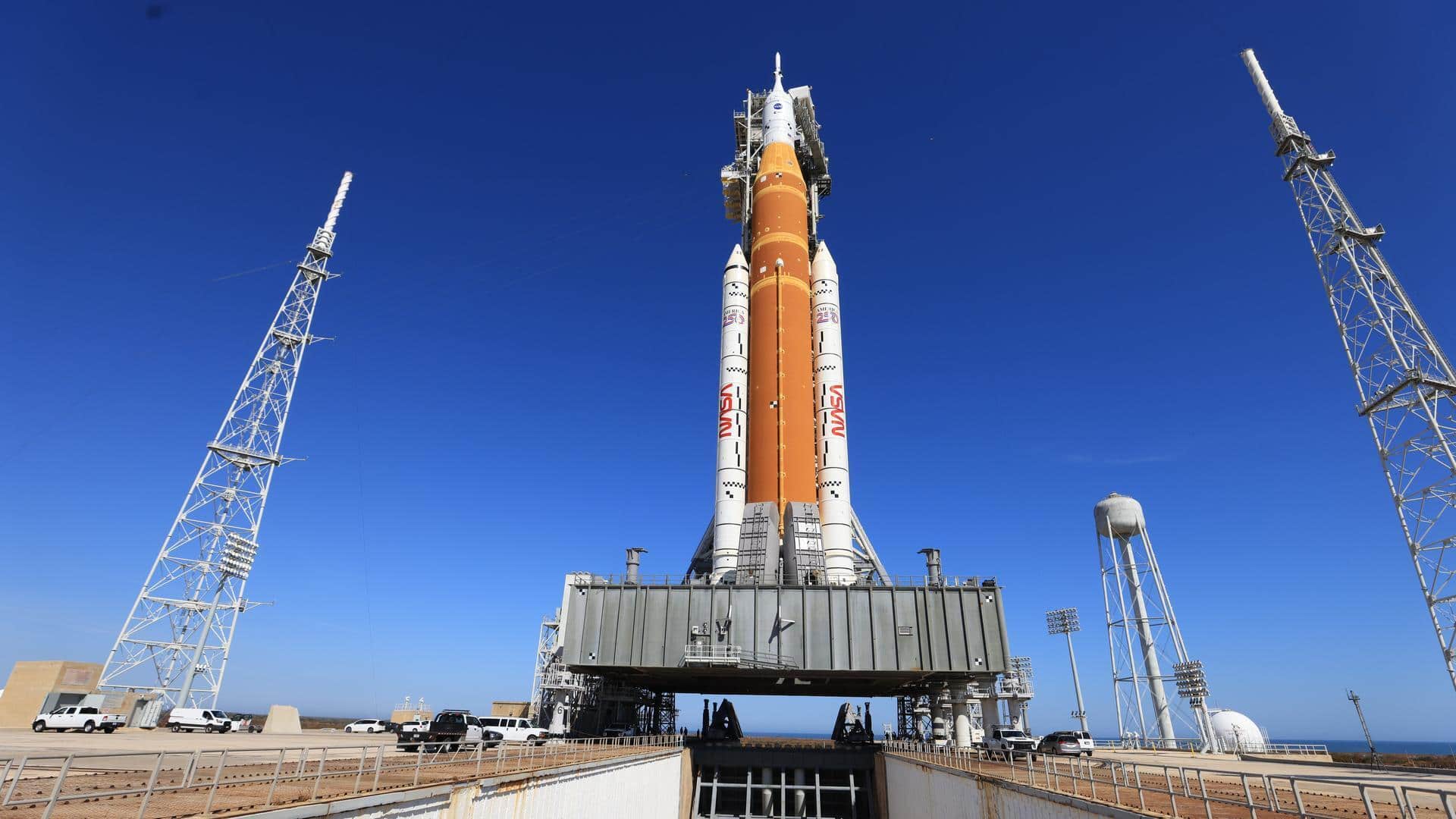
NASA's Artemis II Moon mission won't take off in March
What's the story
NASA has announced a delay in its Artemis II mission, the first crewed lunar flight in over 50 years. The space agency had initially targeted a March 6 launch date but has now said that this is "out of consideration." The decision comes after an interruption in the flow of helium, a last-minute issue detected during routine checks, which could prevent the lift-off.
Technical glitch
What is the latest issue?
The latest problem involves an interruption in the flow of helium, a key component for launch operations.
The gas is used to pressurize fuel tanks and cool rocket systems.
NASA Administrator Jared Isaacman said that a faulty filter, valve or connection plate could be behind this stalled helium flow.
Regardless of the cause, he noted, the only way to access the area and fix the problem is in the Vehicle Assembly Building at Kennedy Space Center.
Next steps
Next possible launch dates are early or late April
Isaacman said they will begin preparations for rollback, ruling out the March launch window. The next possible dates are early or late April.
Yesterday, NASA had announced plans to return the 98-meter rocket to its hangar for repairs but also hinted that work could be done at the pad.
"I understand people are disappointed by this development," Isaacman said. "That disappointment is felt most by the team at NASA, who have been working tirelessly to prepare for this great endeavor."
Distinction
Helium issue not related to earlier hydrogen fuel leaks
Notably, the helium issue is not related to the hydrogen fuel leaks that marred a countdown dress rehearsal of the Space Launch System rocket earlier this month.
A second fueling test on Thursday revealed hardly any leaks, giving managers confidence for a March liftoff.
The interrupted helium flow is confined to the SLS rocket's interim cryogenic propulsion stage, which plays a crucial role in placing the Orion crew capsule into high-altitude orbit around Earth for checkout after liftoff.