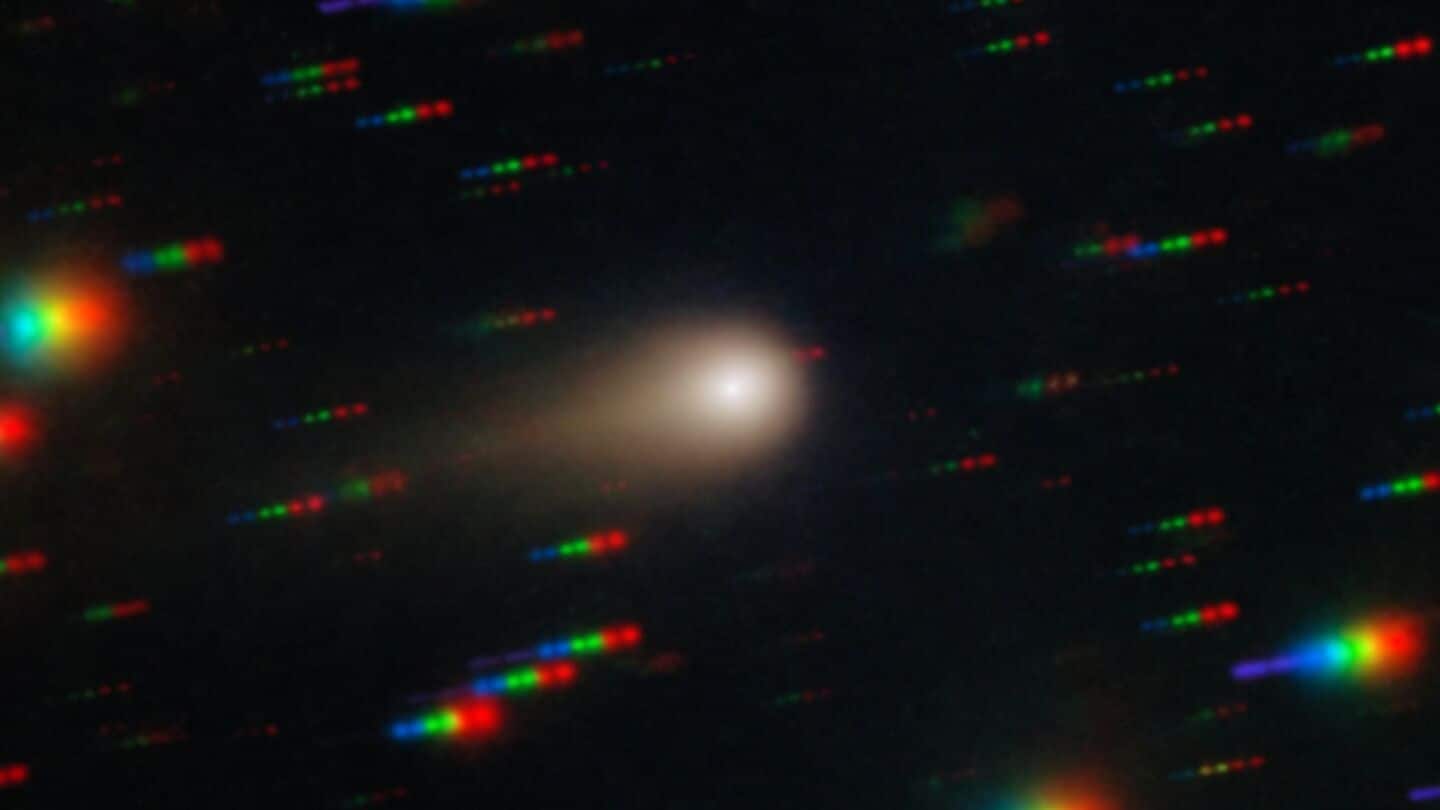
NASA finds unusual 3I/ATLAS isotope ratios hinting at galaxy origins
Meet 3I/ATLAS, an interstellar comet spotted in July 2025 that's got scientists seriously intrigued.
NASA's Martin Cordiner and his team used the James Webb Space Telescope and ALMA to study its chemistry, finding unusual hydrogen and carbon isotope ratios.
Turns out, this comet might have formed when our galaxy was just starting out.
Comet likely born below minus 243°C
Its water has a deuterium-to-hydrogen ratio over 10 times higher than any Solar System comet, suggesting it was born in freezing conditions (below minus 243 degrees Celsius).
The high carbon-12 levels also point to its origins before our galaxy had heavier elements.
Cordiner summed it up: The ice likely formed under very cold conditions present in the early stages of our galaxy.
Currently beyond Jupiter, 3I/ATLAS is expected to leave the Solar System by 2035, offering rare clues about how our galaxy evolved.