NASA delays Moon landing to 2028 in historic Artemis shift
What's the story
NASA has announced a major shift in its Artemis III mission, which was supposed to be the first crewed Moon landing in over 50 years. The change comes as the agency grapples with technical challenges and criticism of taking on too much too soon. The new strategy was revealed by Jared Isaacman, NASA's recently confirmed administrator.
Revised strategy
NASA pushes back Artemis II mission
Under the revised plan, NASA will conduct at least one new Moon flight before attempting to land humans on the lunar surface in 2028.
This incremental approach is aimed at giving the team enough time to test and refine its technology.
The Artemis II mission, which was supposed to fly humans around the Moon this year without landing, has also been pushed back from its latest scheduled launch on March 6 to April 1 at the earliest.
Safety concerns
Independent space safety panel slams NASA's current plans
The revised strategy comes as NASA continues to deal with delays and technical issues.
Earlier this week, an independent space safety advisory panel slammed the agency's current plans as too risky.
The panel urged NASA to reconsider its objectives for Artemis III, given the demanding mission goals.
Isaacman said that under the new plan, the Moon landing would be achieved via evolutionary steps rather than big leaps in technological procedures.
Mission delays
Artemis II rocket back in hangar for final checks
The first step in the revised plan is the launch of the delayed Artemis II Moon mission.
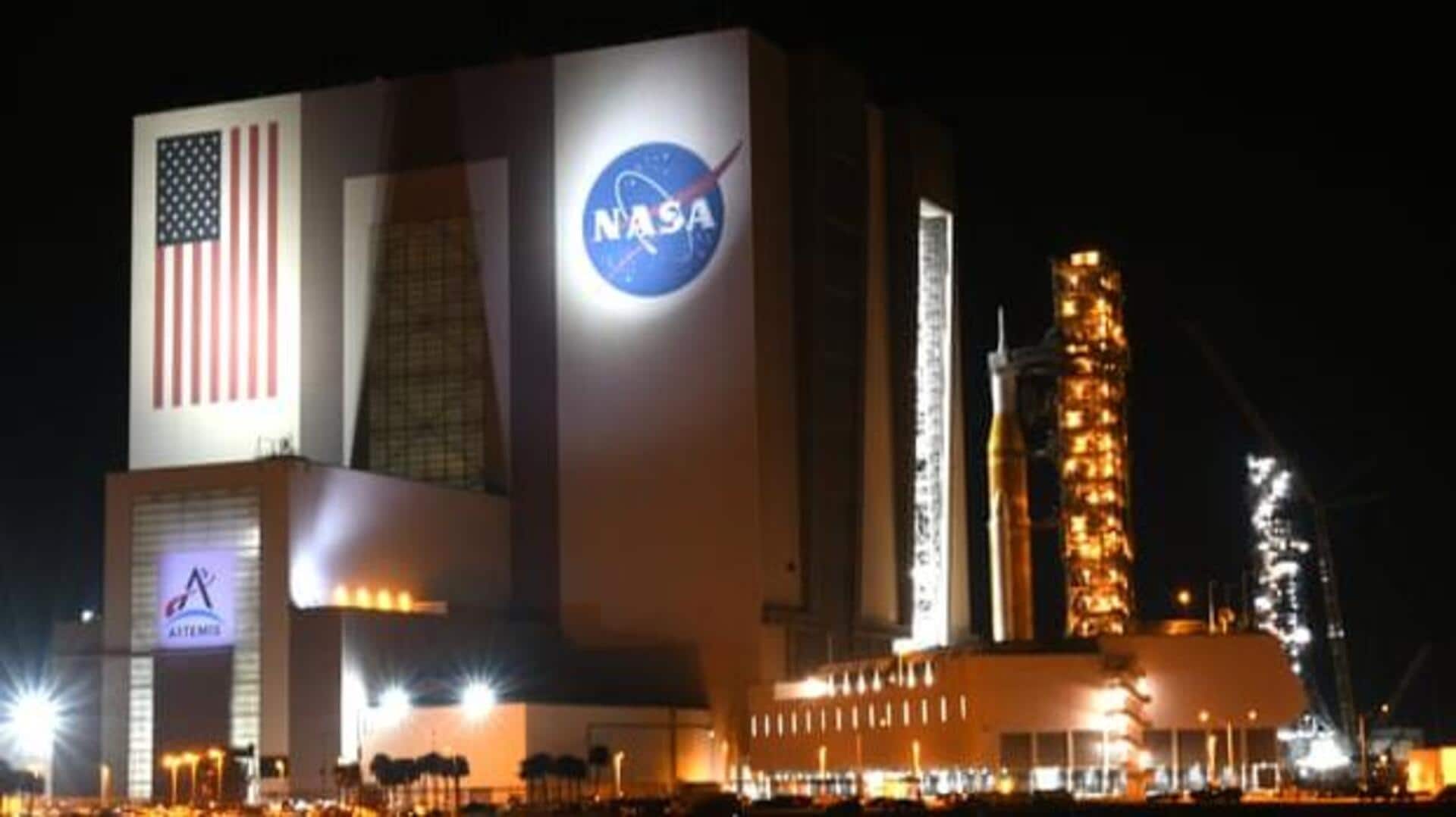
The rocket was taken back to its hangar at Florida's Kennedy Space Center earlier this week after engineers discovered a blockage in helium flow in the upper stage of the booster.
This delay comes after a hydrogen leak was detected from its Space Launch System rocket, forcing NASA to postpone Artemis II's launch last month.
Mission expansion
New mission to be added to Artemis program
Isaacman announced that an additional mission would be added to the Artemis program.
This is similar to NASA's original Moon landing strategy, where Neil Armstrong and Buzz Aldrin first set foot on the lunar surface on July 20, 1969.
That historic event was only attempted after three separate Moon missions had been completed.
The Artemis III mission will no longer aim for a Moon landing but will be launched by mid-2027 as a low-Earth orbit test of essential technologies.
Timeline
Incremental approach for Moon landings
The revised plan is to give NASA more flight experience with complex advanced systems and test its space vehicles before attempting a human Moon landing.
If all goes according to plan, a new Artemis IV mission would be launched in 2028 for the Moon landing.
The ultimate goal is to land astronauts near the Moon's south pole.
A second Moon landing, Artemis V, could take place in the same year, followed by annual attempts thereafter.