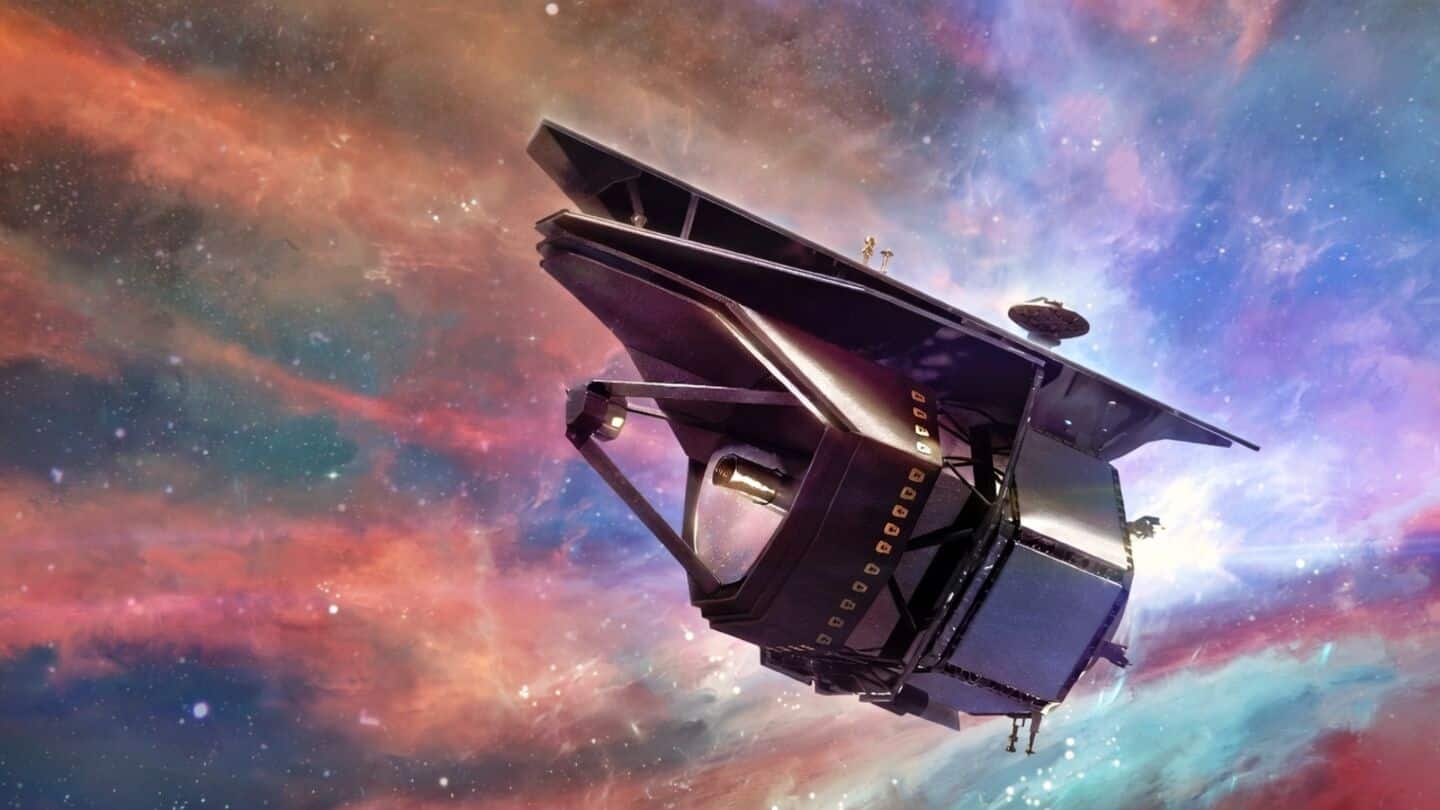
NASA's new $1.2B telescope to study planet formation
What's the story
NASA has announced the development of a new far-infrared telescope called Prima (PRobe far-Infrared Mission for Astrophysics). The mission, which will be capped at $1.2 billion, is aimed at studying how planets, stars and galaxies form and evolve. The observatory will be the first in a new class of NASA astrophysics missions known as Probe Explorers under the agency's long-running Explorers Program.
Mission objectives
Prima will observe the universe in far-infrared wavelengths
Prima will observe the universe in far-infrared wavelengths, a region of the electromagnetic spectrum that is not visible to optical telescopes.
This capability will bridge the gap between existing infrared observatories like the James Webb Space Telescope and radio telescopes.
One of its key goals will be to understand how planets form outside our solar system by studying cold dust and gas associated with planet-forming environments.
Cosmic exploration
The telescope will also look into the evolution of galaxies
In addition to studying planet formation, Prima will also look into the evolution of galaxies and their central black holes over cosmic time.
The observatory will also investigate how dust and heavy elements have built up in the universe.
These studies could provide valuable insights into our understanding of cosmic history and the processes that shaped it.
Mission management
Prima is scheduled for launch in 2033
Prima is scheduled for launch in 2033, with a planned five-year mission.
The Jet Propulsion Laboratory in Southern California will manage the mission with contributions from Goddard Space Flight Center and Marshall Space Flight Center.
International partners include space agencies/institutions from France, Italy, Germany, Canada, South Korea, Japan, and the UK.