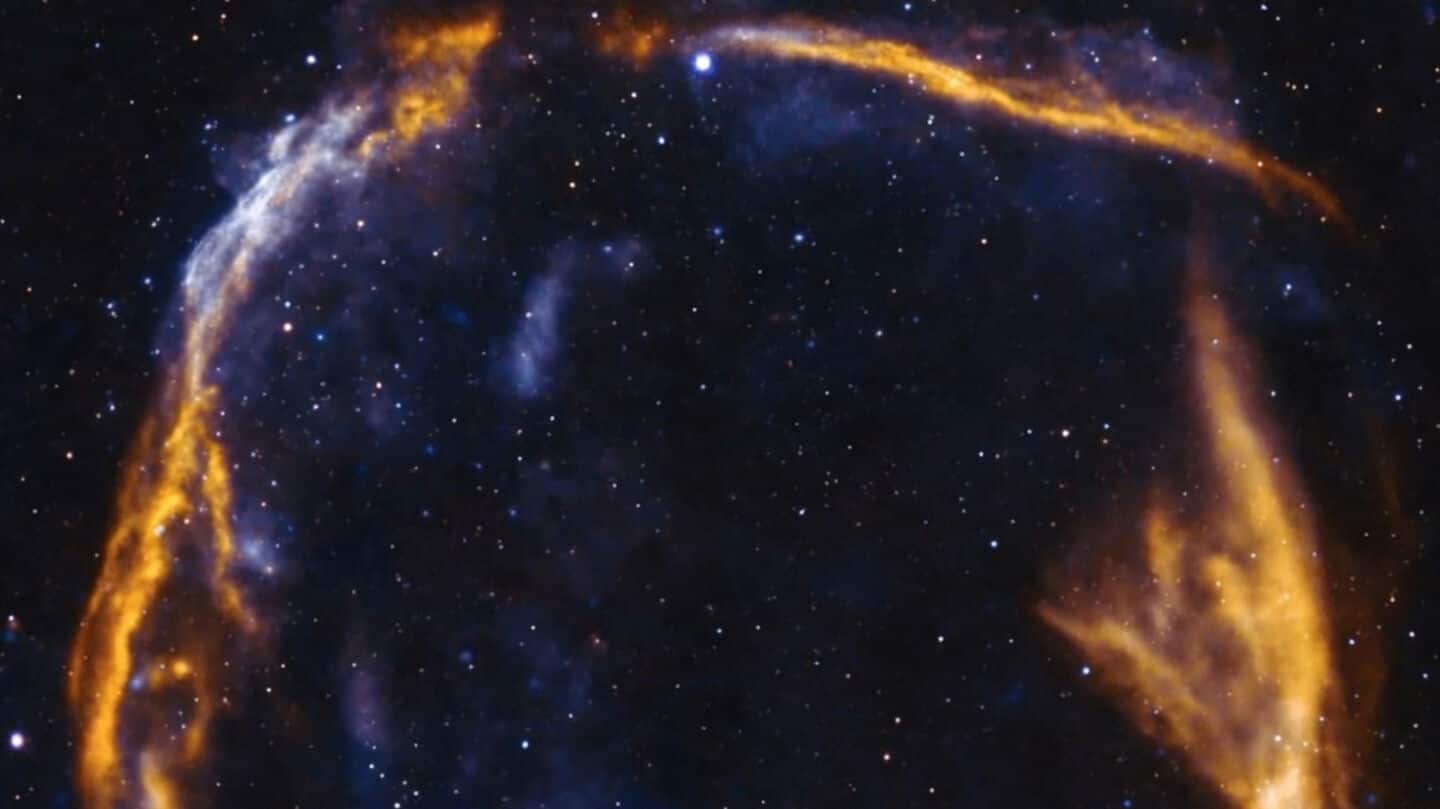
NASA's IXPE finds reflected shock in RCW 86 supernova remnant
NASA's IXPE telescope has given scientists a closer look at RCW 86, a supernova that exploded about 2,000 years ago.
Earlier research suggested its weird expansion was caused by a bubble of low-density space around it.
Now, IXPE has spotted the supernova's outer layers slowing down at the edge of this bubble, creating a "reflected shock" that makes its structure even more interesting.
Researchers create RCW 86 X-ray composite
Scientists combined data from IXPE, NASA's Chandra, and ESA's XMM-Newton telescopes to create an eye-catching composite image (think yellow for low-energy X-rays and blue for high-energy ones) with background stars snapped by NOIRLab.
This teamwork is helping researchers piece together how RCW 86 expanded and why its shape stands out compared to other supernovas.