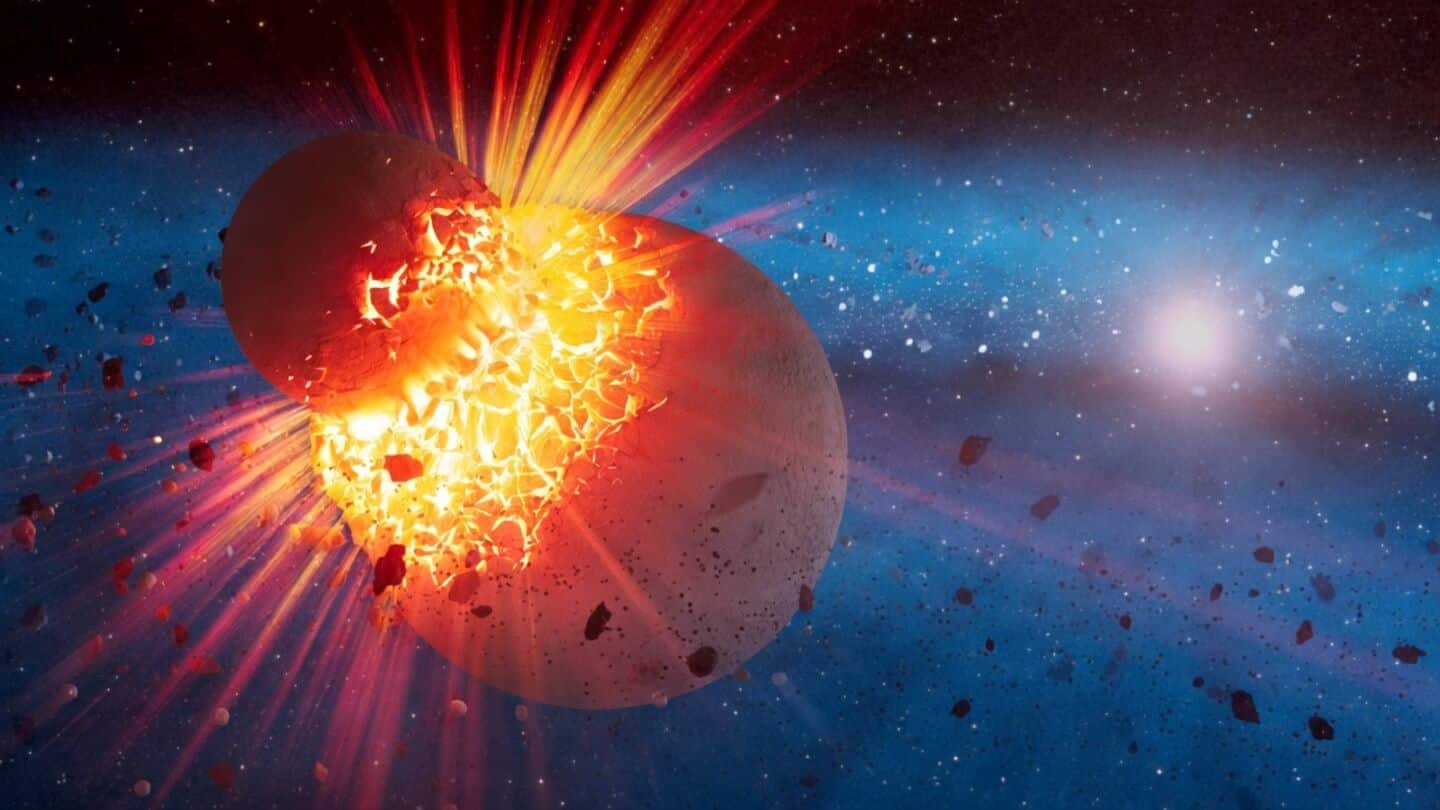
NASA's James Webb probes extreme debris disks to study collisions
NASA's James Webb Space Telescope (JWST) is digging into the messy business of planetary smash-ups, like the one that created our Moon.
By focusing on rare "extreme debris disks" (think: giant clouds of warm dust left after massive impacts), JWST hopes to unravel how these cosmic collisions shape planets.
JWST links disk composition to impacts
After studying 21 of these extreme debris disks, JWST found they are made up of tiny dust grains and can get surprisingly bright.
Some disks are rich in silica from Mars-sized crashes, while others come from smaller, moon-sized impacts.
Interestingly, silica-rich disks show up mostly around younger stars, hinting that a star's age plays a role in what kind of debris forms.
All this helps scientists piece together how our solar system and others came to be.