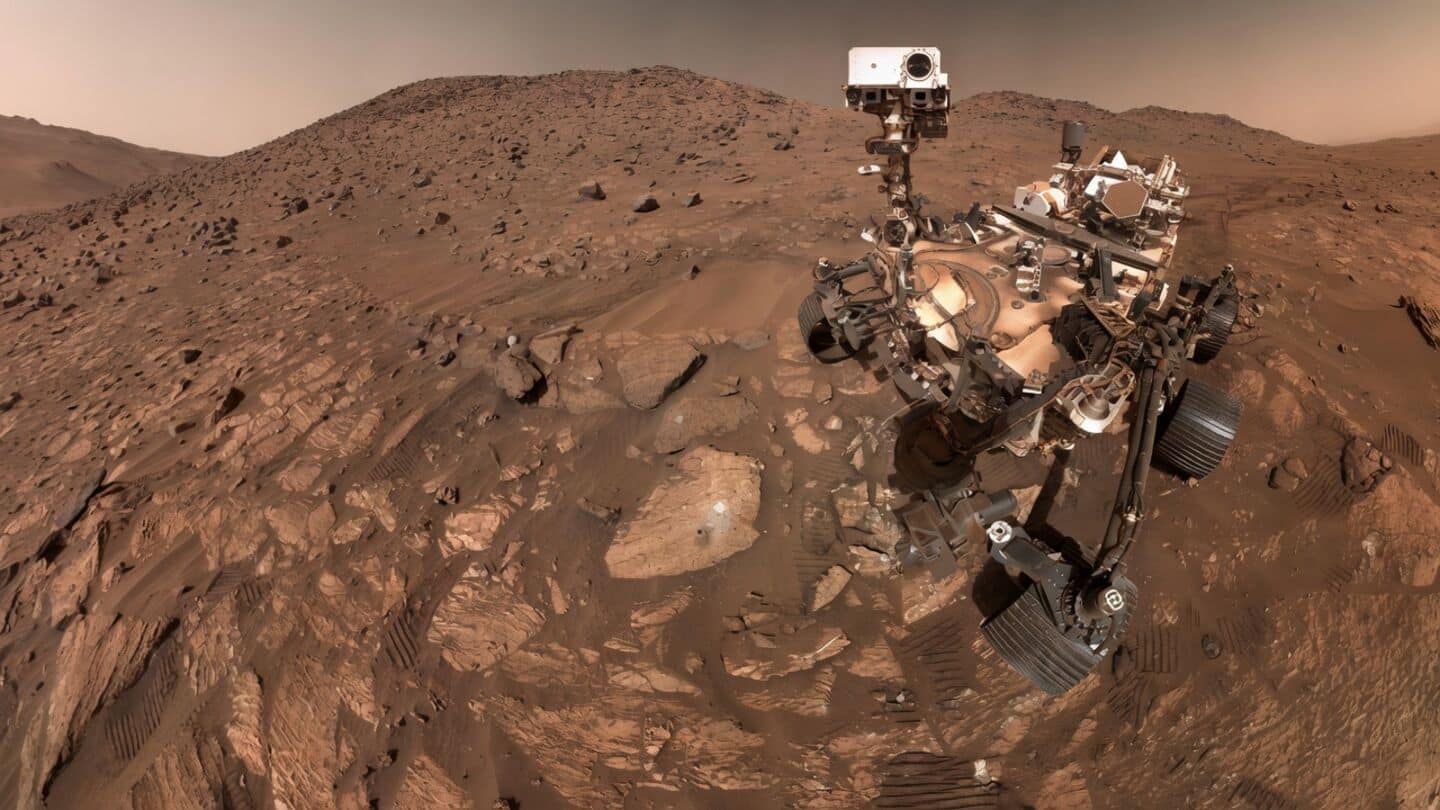
NASA's Perseverance reports shallowest macromolecular carbon detection in Jezero Crater
NASA's Perseverance rover just found macromolecular carbon (MMC) in Jezero Crater, which used to be a lake about 3.7 billion years ago.
Using its SHERLOC instrument, the rover made the shallowest detection of organic matter ever on Mars: these molecules might have been protected from harsh solar radiation by minerals.
Findings do not confirm Martian life
This doesn't mean there was life on Mars, but it definitely adds to the evidence that the planet could have supported chemistry needed for life.
The MMC was found alongside other key ingredients like carbonates and phosphates.
Spectral analysis shows these molecules are similar to those found in both living things (like microbial mats) and nonliving sources (like meteorites).
Scientists say more research (and maybe some returned samples) will help figure out where these organics came from.