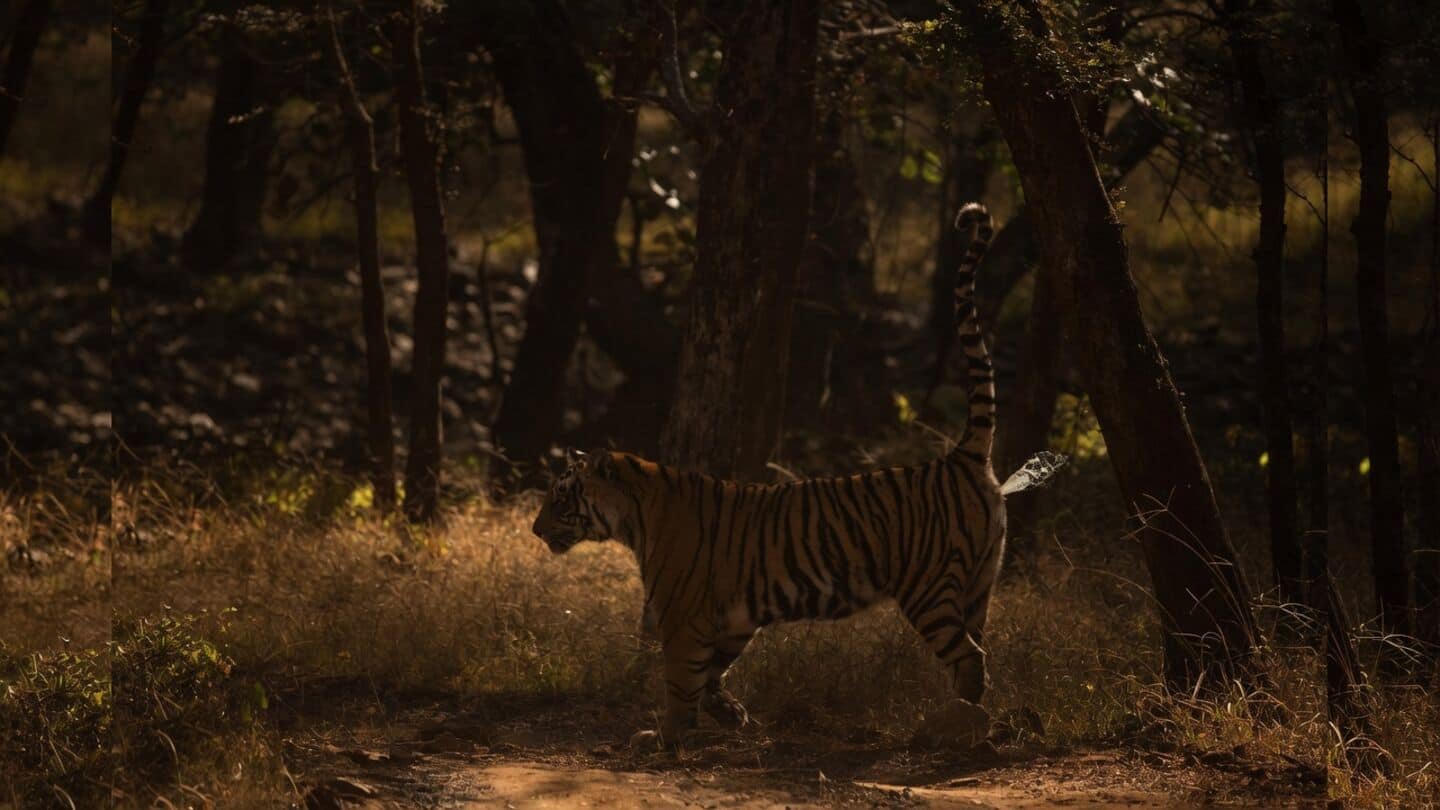
NCBS scientists develop noninvasive urine feces method for tigers, leopards
Scientists at NCBS have come up with a noninvasive way to track tigers and leopards by studying their urine and feces.
Using gas chromatography and machine learning, they can now identify not just the species but also details like age, sex, and reproductive status.
No need for direct animal contact means less stress for the animals and more practical information for researchers.
Method complements camera traps, DNA
These scent marks last a long time in the wild, making it easier for teams to collect data for hours and sometimes days.
The method works well alongside camera traps and DNA analysis, giving conservationists a fuller picture of big cat populations.
Researchers think this approach could help monitor other wildlife too, making global conservation efforts smarter and less intrusive.