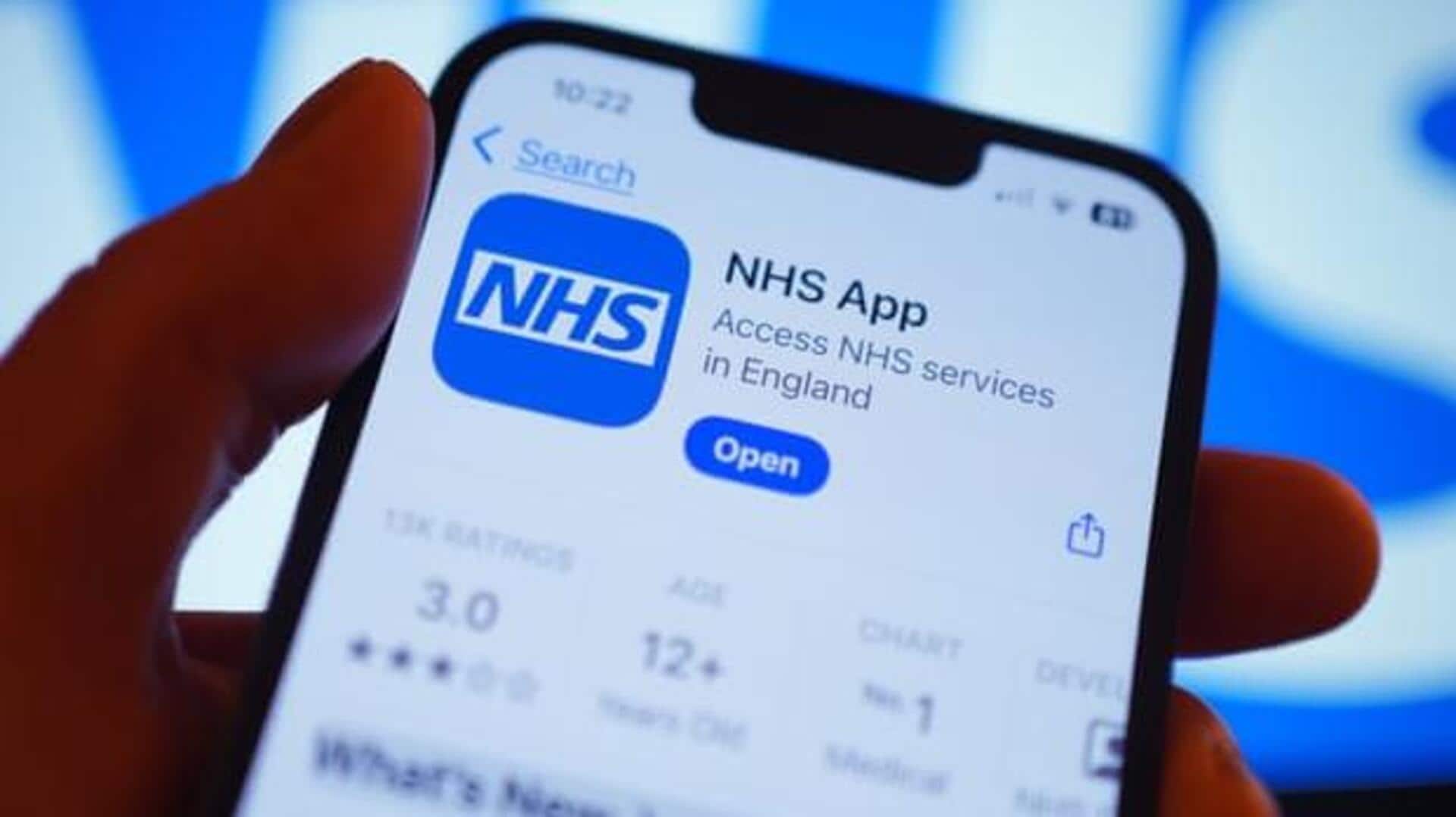
How NHS plans to use AI in its app
What's the story
The National Health Service (NHS) is set to integrate artificial intelligence (AI) into its app. The move is aimed at directing patients to the right services, depending on their health condition. The new tool will be used for triaging patients and deciding if they need a GP appointment or should visit a pharmacy or local A&E department instead.
Appointment access
AI integration in NHS app
The integration of AI into the NHS app is part of a larger effort to make it easier for patients to book appointments.
The update will be available to 200,000 patients over the next year and will be rolled out to all users by April 2028.
This move is in line with the Labour manifesto promise made before its 2024 election victory.
Trial success
Trial results and government funding
A trial conducted at Wealden Ridge Medical Partnership in Sussex showed that the new AI tool could reduce patient queues for GP appointments by 29%.
The move is part of a £10 billion government funding package aimed at modernizing technology and data systems within the health service to improve efficiency.
Paperwork reduction
AI to record patient consultations
The NHS also plans to use AI to record patient consultations, which is expected to reduce note-taking time.
A trial by Great Ormond Street Hospital across nine sites in London found that staff spent 25% more time with patients when using the tool.
Health Secretary James Murray expressed confidence that these technological advances would help direct patients to appropriate care faster and reduce waiting times.
Implementation concerns
Concerns over patient privacy and long-term strategy
Despite the potential benefits, health leaders have raised concerns over the need for a broader long-term strategy for AI use in the NHS.
They are worried about patient privacy and the possibility of tech-averse patients being left behind.
Lynn Woolsey, chief nursing officer at the Royal College of Nursing, emphasized that any new systems handling patient information must be accurate and protect confidentiality.