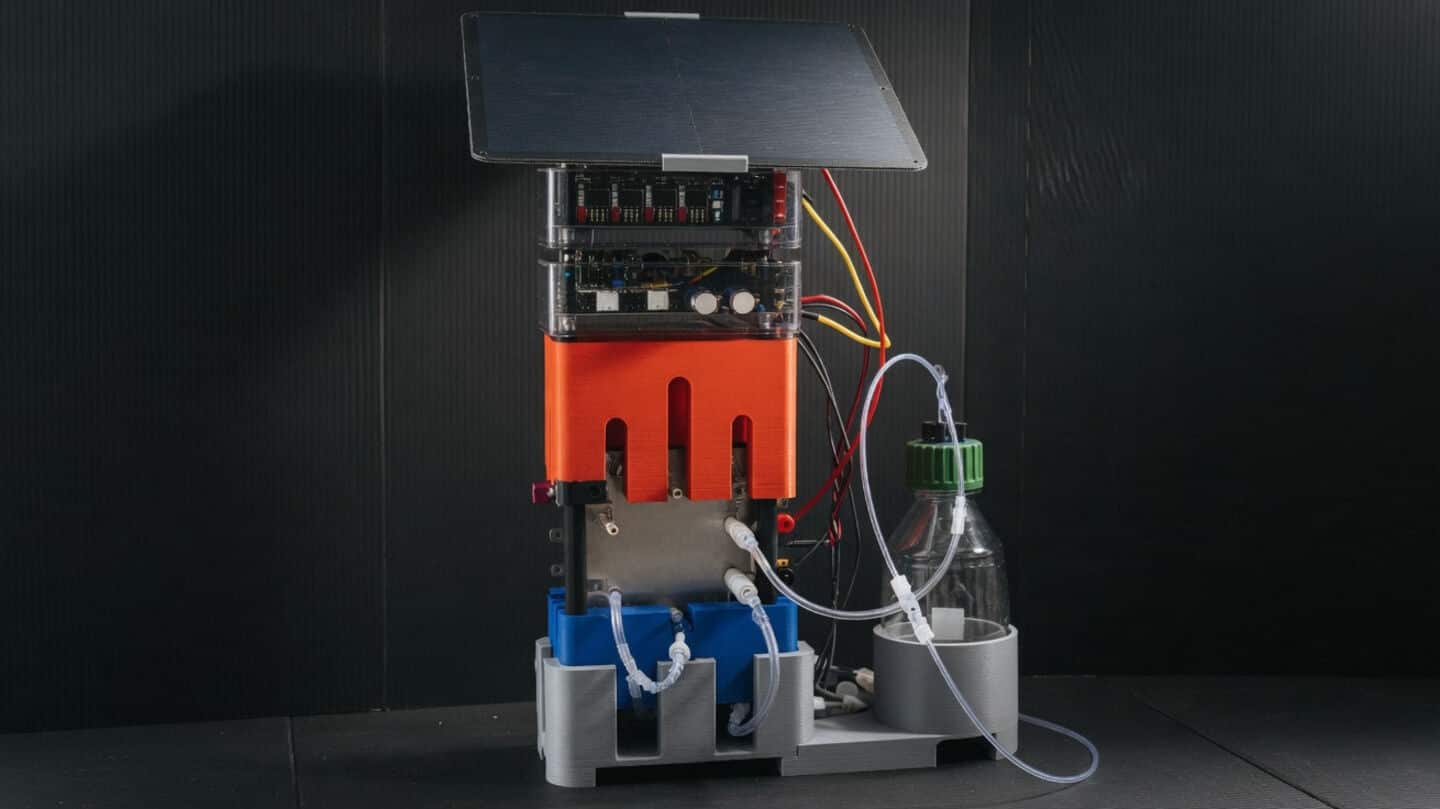
Osaka Metropolitan University designs solar artificial photosynthesis producing formic acid
Researchers at Osaka Metropolitan University have designed a new artificial photosynthesis system that turns carbon dioxide and water into formic acid using sunlight.
Unlike older setups, this one keeps working all day, even when the sun isn't perfect, without needing any battery controls or fancy hardware.
The study was published in EES Solar.
Self-regulating electrolyzer avoids battery controls
The system's clever self-regulating electrolyzer adjusts to changing sunlight automatically, so it doesn't need battery-based MPPT/control hardware.
It consistently produces a pure aqueous formic acid solution throughout the day, making the process both efficient and potentially cheaper, simpler, and more autonomous in the future.
While still being tested, this innovation could make solar-fuel production way more accessible in the future.