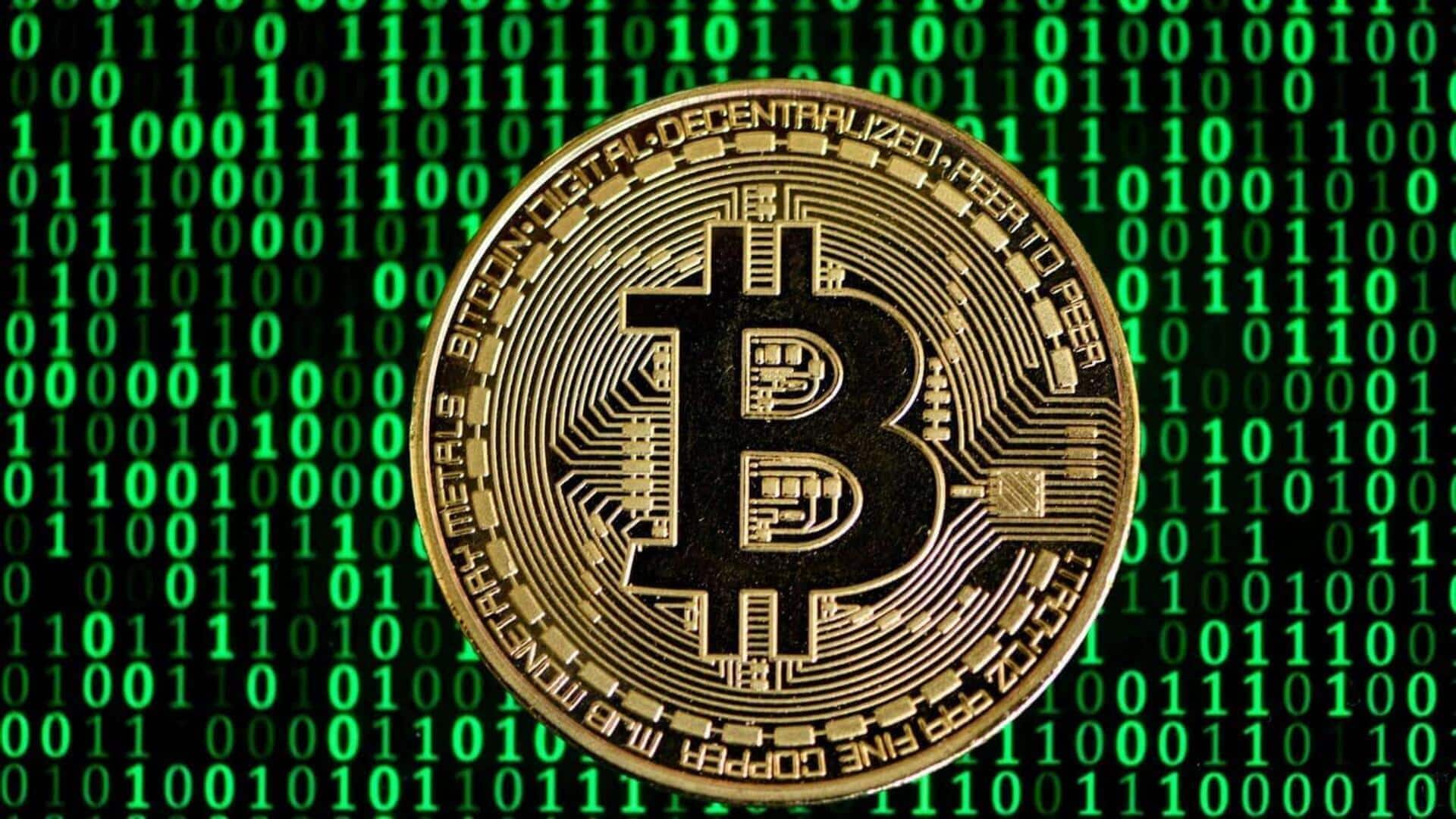
Quantum computers could crack Bitcoin security in minutes, Google warns
What's the story
A recent research paper from Google has raised alarms in the crypto community. The study warns that quantum computers could crack the blockchain security of Bitcoin and Ethereum with fewer resources and in less time than previously thought. The paper was co-authored by researchers from Google Quantum AI, the Ethereum Foundation, and Stanford University.
Quantum threat
On-spend attacks and new quantum threats
The research paper outlines a hypothetical scenario where advanced quantum computers could crack a Bitcoin private key in just nine minutes.
This presents a major risk of an 'on-spend attack,' wherein an attacker could exploit an exposed public key during an ongoing transaction.
The study also categorizes these new quantum threats into three types: on-spend attacks, at-rest attacks, and on-setup attacks.
Cryptographic vulnerability
The role of Shor's algorithm
Most blockchains, including Bitcoin and Ethereum, rely on the Elliptic Curve Discrete Logarithm Problem (ECDLP) for security.
However, quantum computers running Shor's algorithm can break this assumption.
If they do, an attacker could derive private keys from public ones—effectively gaining control over wallets.
Unlike traditional banking systems, blockchain transactions are irreversible. A single compromised key could lead to permanent loss of funds with no recourse.
Dormant assets
Dormant cryptocurrencies at risk
A major concern is the large amount of dormant cryptocurrency—funds in wallets whose private keys are lost.
These assets can't be upgraded to quantum-safe systems and could be targeted once quantum computers become capable.
For example, billions of dollars worth of Bitcoins are sitting in dormant wallets with many users having lost their keys.
Cryptographic transition
Transitioning to post-quantum cryptography
The long-term solution to this problem is a shift to post-quantum cryptography (PQC), which can defend against such quantum attacks.
However, in the short to medium term, due to uncertainty about timelines, the paper recommends immediate interim measures for tightening security.
These include reducing exposure of public keys, avoiding key reuse, implementing transaction-level protections and strengthening wallet security practices.
Industry reaction
Changpeng Zhao, Elon Musk respond to potential threat
Despite the alarming findings, industry leaders like Binance founder Changpeng Zhao and Elon Musk aren't overly concerned.
Zhao said there's "no need to panic" as it's just a matter of crypto needing to upgrade to quantum-resistant algorithms. He also pointed out potential challenges in organizing upgrades in a decentralized world.
Musk had a humorous take on the situation, saying "On the plus side, if you forgot the password to your wallet, it will be accessible in the future."