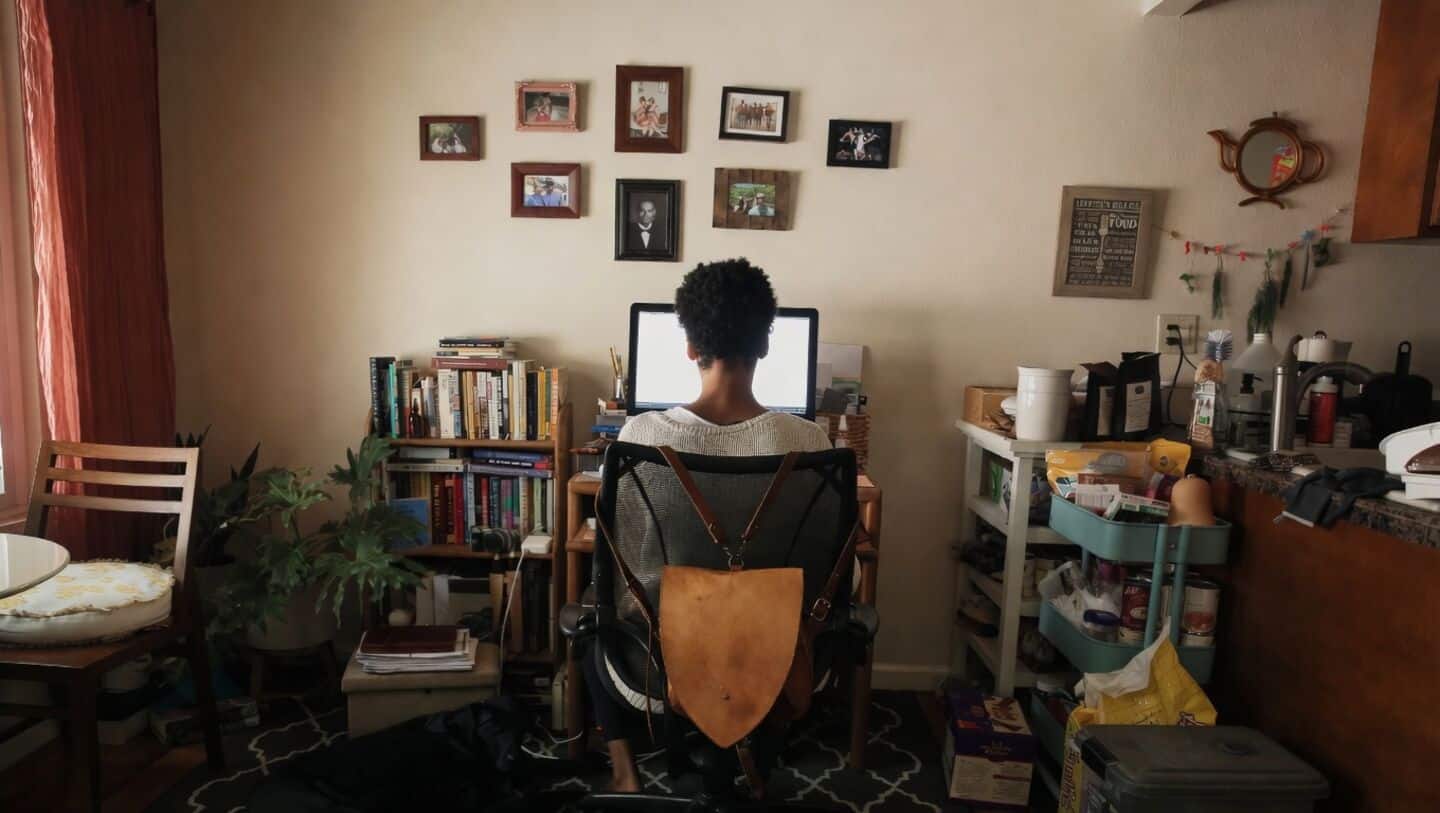
Remote working might not be good for your mental health
What's the story
A recent study published in the journal Science has revealed that remote workers are more likely to suffer from depression and anxiety than their office-based counterparts. The research was led by Natalia Emanuel, an economist at the Federal Reserve Bank of New York. It found that while many people prefer remote work over traditional office jobs, this mode of working can lead to increased social isolation and mental health issues.
Mental toll
Remote work and mental health
The study found that people in remote jobs spend more time alone during the workday and visit mental health care providers more often.
They also rate their own mental health negatively.
This suggests that despite the flexibility of remote work, it may not be as beneficial for overall well-being as previously thought.
Loneliness surge
Increase in isolation during workday
The study analyzed data from five national surveys of American workers in both remote and non-remote jobs.
It found that workers in "remotable jobs" (like software engineering and marketing) experienced a 58% increase in hours spent alone compared to those in "non-remotable jobs" (like surgery or mechanical engineering).
These remote workers also had a 72% higher chance of spending their entire day without any human contact.
Emotional distress
Emotional distress and psychiatric medication
The study also found that remote workers showed an increase in symptoms of emotional distress, as measured by a standardized questionnaire on anxiety and depression.
They had more visits to mental health care providers and used more prescription psychiatric medications.
The effects were even worse for those living alone, who had an 83% higher chance of spending their days without social contact.
Health risks
Impact of loneliness on physical health
The study highlights the negative effects of isolation and loneliness on both mental and physical health.
Nicholas Epley, a behavioral science professor at the University of Chicago's Booth School of Business, said that being alone can compromise immune system functioning and cardiovascular system functioning.
This underscores the importance of social connections for overall well-being.
Work-life balance
Recommendations for remote workers and employers
Epley doesn't recommend forcing everyone to work in the office but suggests making it more attractive.
He also emphasizes that as companies start bringing employees back, they should ensure that those coming in have other co-workers there too.
Gillian Sandstrom, a psychologist at Sussex University and author of Once Upon a Stranger: The Science of How 'Small' Talk Can Add Up to a Big Life, advises remote workers to intentionally seek daily human interactions.