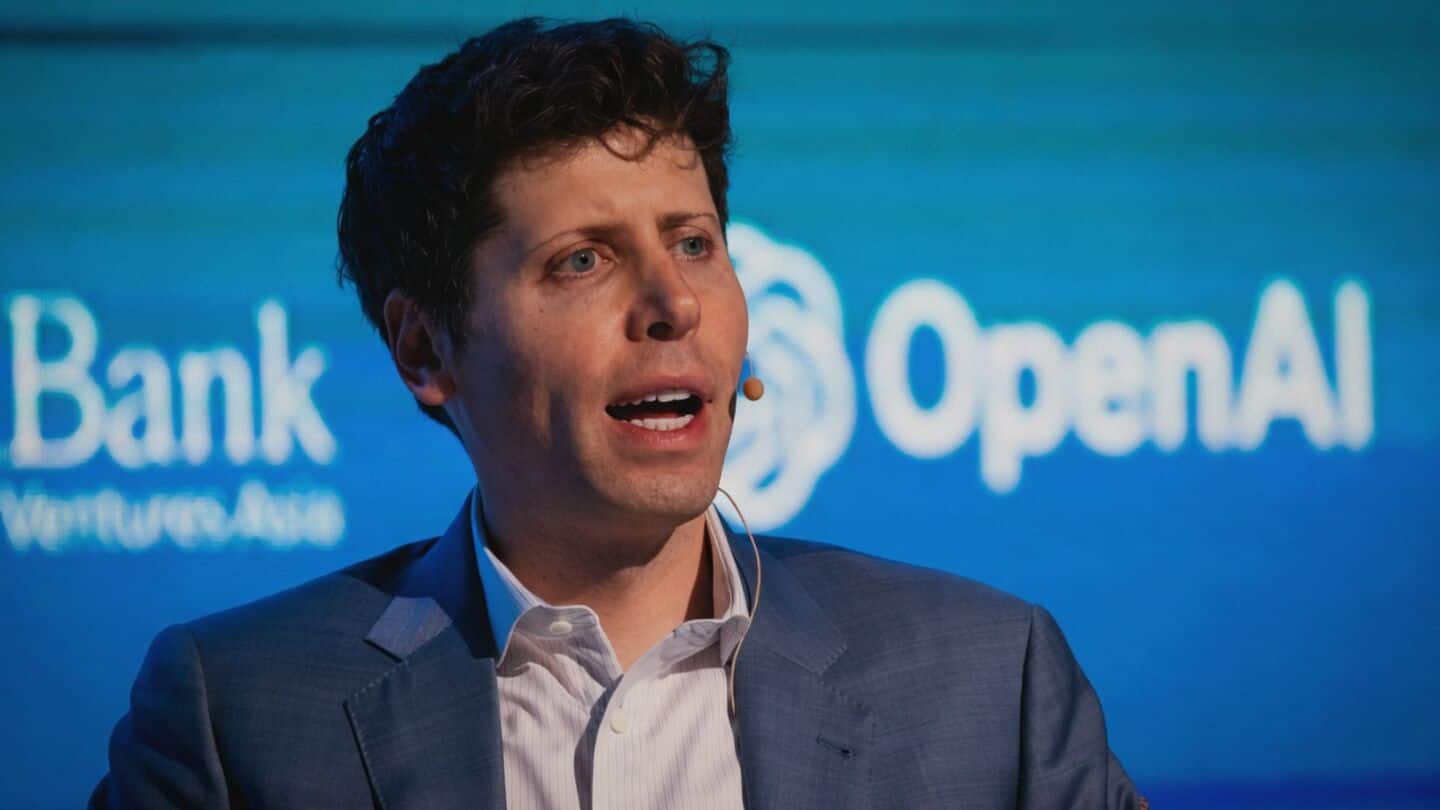
Sam Altman says world should accept some AI risks
What's the story
OpenAI's CEO Sam Altman has defended the idea of making AI widely accessible, even if it means accepting some level of misuse. His stance highlights a growing regulatory divide with Anthropic, as policymakers and AI companies debate how much risk should be accepted. In an interview with Politico, Altman said society should be willing to accept some negative consequences in order to maintain public access to AI and allow people the freedom to use it as they see fit.
Regulatory debate
Centralized model unacceptable compromise for Altman
Altman challenged the idea of a centralized model where a few leading AI developers would control access to the technology to prevent misuse.
He found this approach an unacceptable compromise and questioned whether regulation could really stop all major forms of abuse, such as cyberattacks, fraud, and other harmful uses of AI.
"I wouldn't take a trade of saying, 'We'll make sure there's no major hacks, there's no misuse of this technology,'" he said.
Positive outlook
'Legitimate uses of AI will outweigh potential harm'
Altman's argument is based on the belief that legitimate uses of AI will yield benefits far outweighing any potential harm from misuse.
"Because I think people will do tremendously, orders of magnitude more, good stuff than bad stuff," he said.
This view sets OpenAI apart from Anthropic, another leading developer of advanced AI systems, with whom Altman admitted there is "a lot of daylight" between their respective views on regulation.
Industry divergence
Amodei has called for slowing development of frontier AI systems
Anthropic CEO Dario Amodei has called for slowing the development of frontier AI systems and establishing greater control over their capabilities.
This is in contrast to Altman's support for pacing frontier development while advocating relatively light-touch regulation.
Concerns about the behavior of advanced systems have added weight to this debate, with an Anthropic researcher, Jacob Coxon, resigning in September and saying some people working on AI believed the technology could pose an existential threat within the decade.
Regulatory landscape
Trump resists calls for AI-specific restrictions
The concerns over advanced AI systems come amid a separate political debate in Washington.
US President Donald Trump has largely resisted calls for more AI-specific restrictions, saying too much regulation could hurt American companies competing with China.
Instead, he has pointed to existing law-enforcement mechanisms like the Justice Department as adequate safeguards against misuse of technology.