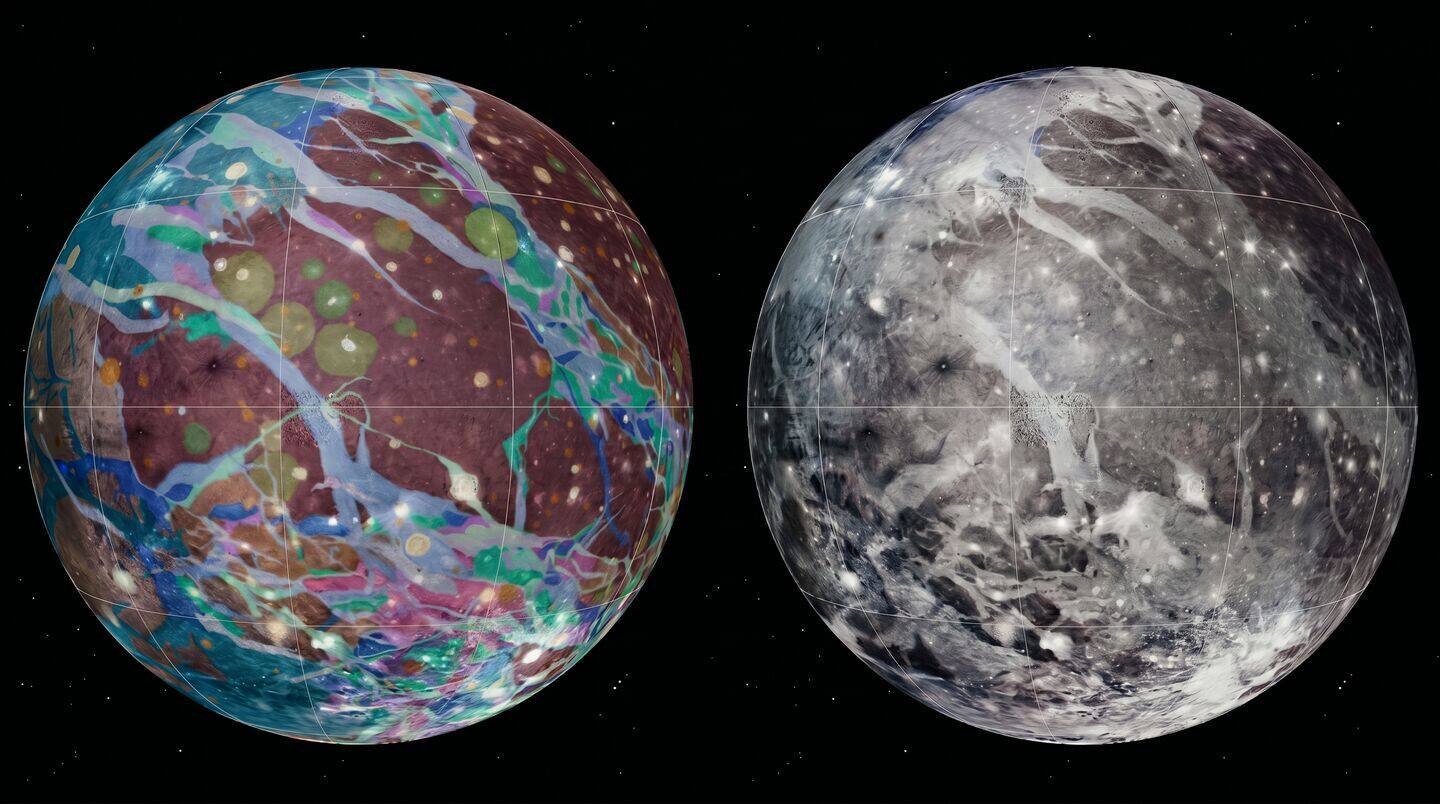
Science Advances study suggests Ganymede's metallic core still forming today
Jupiter's biggest moon, Ganymede, stands out as the only moon with its own magnetic field, and scientists may have found an explanation.
A new study published in Science Advances suggests that Ganymede's metallic core may still be forming today, not frozen in time since its birth 4.5 billion years ago.
This fresh take challenges old theories and gives us a peek into how planetary bodies evolve.
Kevin Trinh models Ganymede magnetism
The research suggests that Ganymede's slowly evolving core fuels its magnetic field, a process first spotted by the Galileo spacecraft's magnetosphere discovery back in 1996.
Led by Caltech scientist Kevin Trinh, the team modeled a "cold start" scenario where the core builds up gradually.
Callisto has no obvious evidence of a dynamo. As Trinh put it, "Both of these things cannot be simultaneously true."
The findings open doors to understanding other icy moons like Europa and Callisto. Pretty exciting for anyone curious about space!