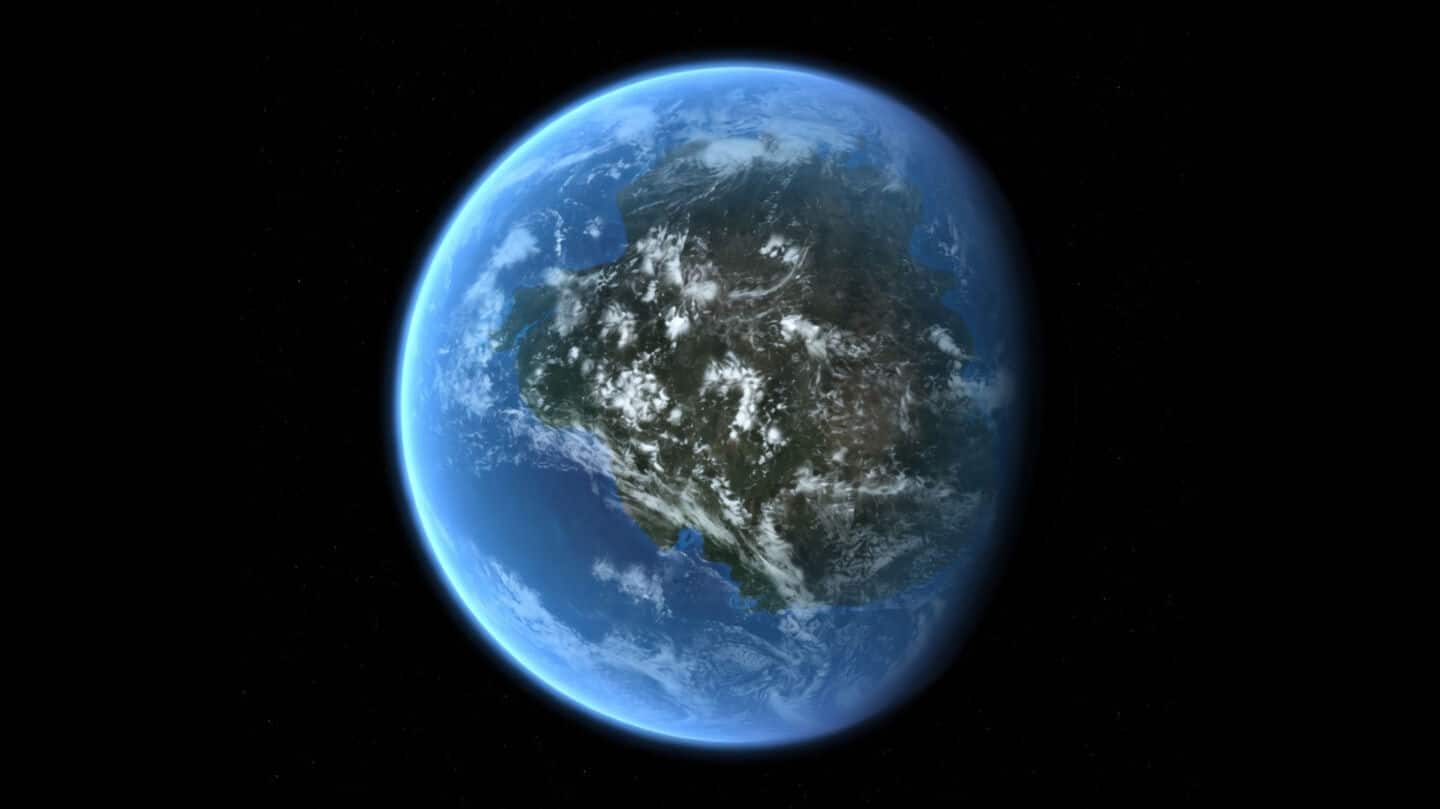
Remnants of long-lost 'Greater Gondwana' supercontinent have finally been found
What's the story
An international team of scientists, led by researchers from China, has discovered remnants of a long-lost supercontinent, dubbed "Greater Gondwana." The discovery was made deep within the modern continents that were once part of this ancient landmass. The study, published in the peer-reviewed journal Science Advances this month, reveals that Gondwana was much larger than previously thought and dominated Earth around 500 million years ago.
Geological impact
Geological activity of Gondwana
The study highlights the role of geological activity associated with Gondwana in creating favorable conditions for the Cambrian explosion.
This period is characterized by a rapid increase in the diversity and complexity of life on Earth.
The research was a collaborative effort between scientists from the Chinese Academy of Geological Sciences, Australia's Curtin University, and Zhejiang Lab in eastern China.
Size and influence
Massive landmass
The study reveals that Greater Gondwana was a massive landmass, covering about 80% of Earth's crust.
It was made up of several smaller supercontinents, including South America, Africa, Antarctica, Madagascar, Australia, and the Indian subcontinent.
The research highlights how the geological activity of this ancient landmass influenced the planet's geology and climate over millions of years.