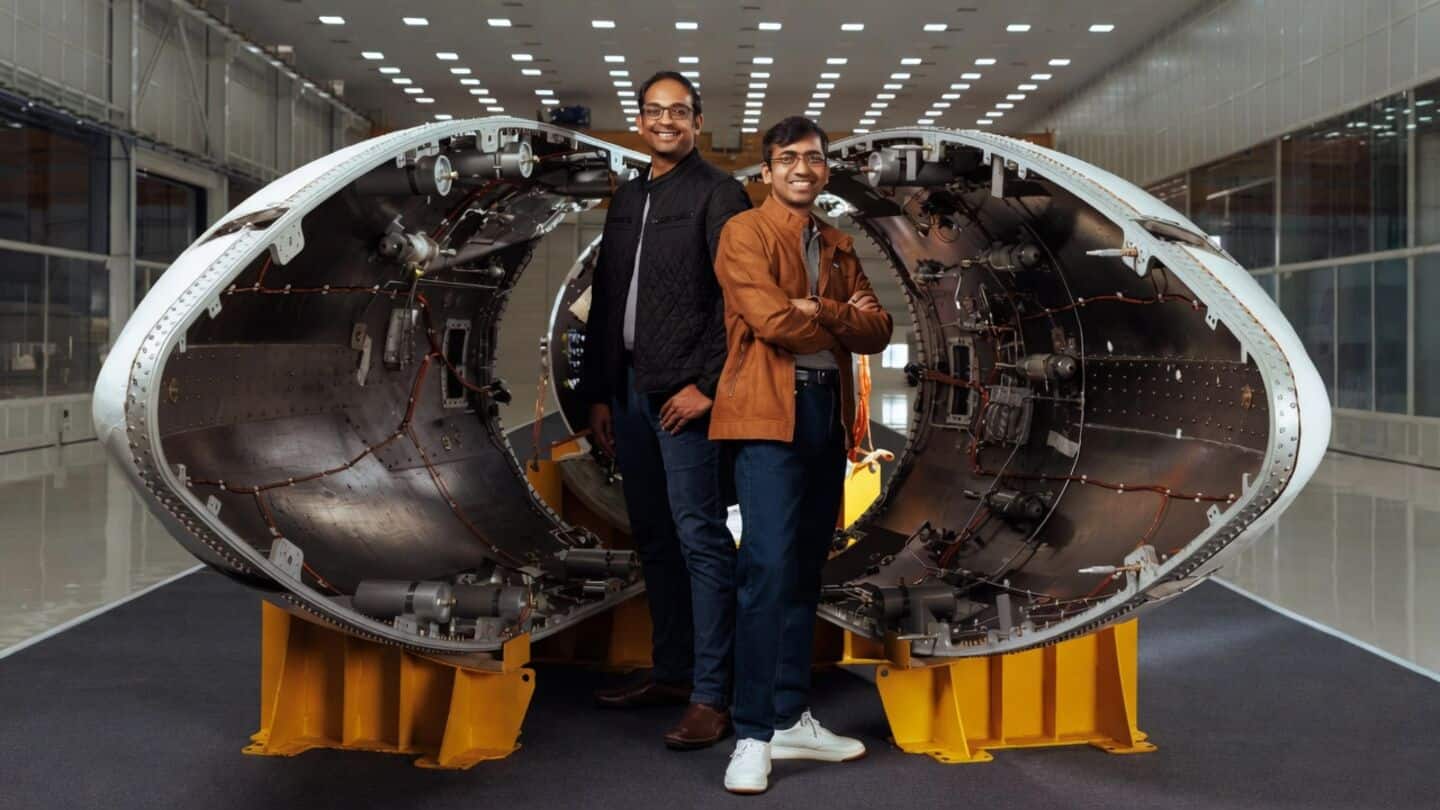
'Zero delays' for Vikram-1: Skyroot hails India's swift launch approvals
What's the story
Pawan Kumar Chandana, the CEO of Skyroot Aerospace, has praised India's efficient launch approval process after the successful flight of Vikram-1. The mission made history by becoming India's first privately developed orbital launch vehicle to reach orbit and deploy customer satellites on its maiden flight. Chandana thanked the Indian National Space Promotion and Authorisation Centre (IN-SPACe) for their role in facilitating this historic launch.
Information
Skyroot CEO's statements
After the mission, Chandana said, "I have seen countries and companies waiting for launch authorisation for so much time. India has proved that the government is the most efficient, and they enabled the launch in record time. There were zero delays."
Mission success
First Indian private company to complete an orbital mission
The Vikram-1 mission, dubbed Aagaman, took off from the Satish Dhawan Space Centre (SDSC) in Sriharikota. It carried a combination of domestic and international payloads.
This successful flight not only validates years of development by the Hyderabad-based start-up but also makes it the first Indian private company to complete an orbital mission on its maiden attempt.
Tech validation
Skyroot's strategic approach pays off
The successful mission of Vikram-1 comes after Skyroot's earlier flight of the Vikram-S suborbital rocket in the year 2022.
The data from that mission helped validate nearly 80% of the technology stack used in Vikram-1.
This strategic approach has been instrumental in ensuring a successful maiden orbital launch for the company.
Unicorn status
Skyroot's space technology unicorn status and future plans
Backed by investors such as GIC, Temasek, Sherpalo Ventures, and BlackRock-managed funds, Skyroot recently raised $60 million.
This funding round pushed its valuation over $1.1 billion, making it India's first space technology unicorn.
The company is now looking at overseas markets for future business with an estimated 70-80% of launch demand expected from the US, Europe, and Southeast Asia where dedicated launch opportunities are limited.