
'Ring of Fire' solar eclipse in February: When to watch
What's the story
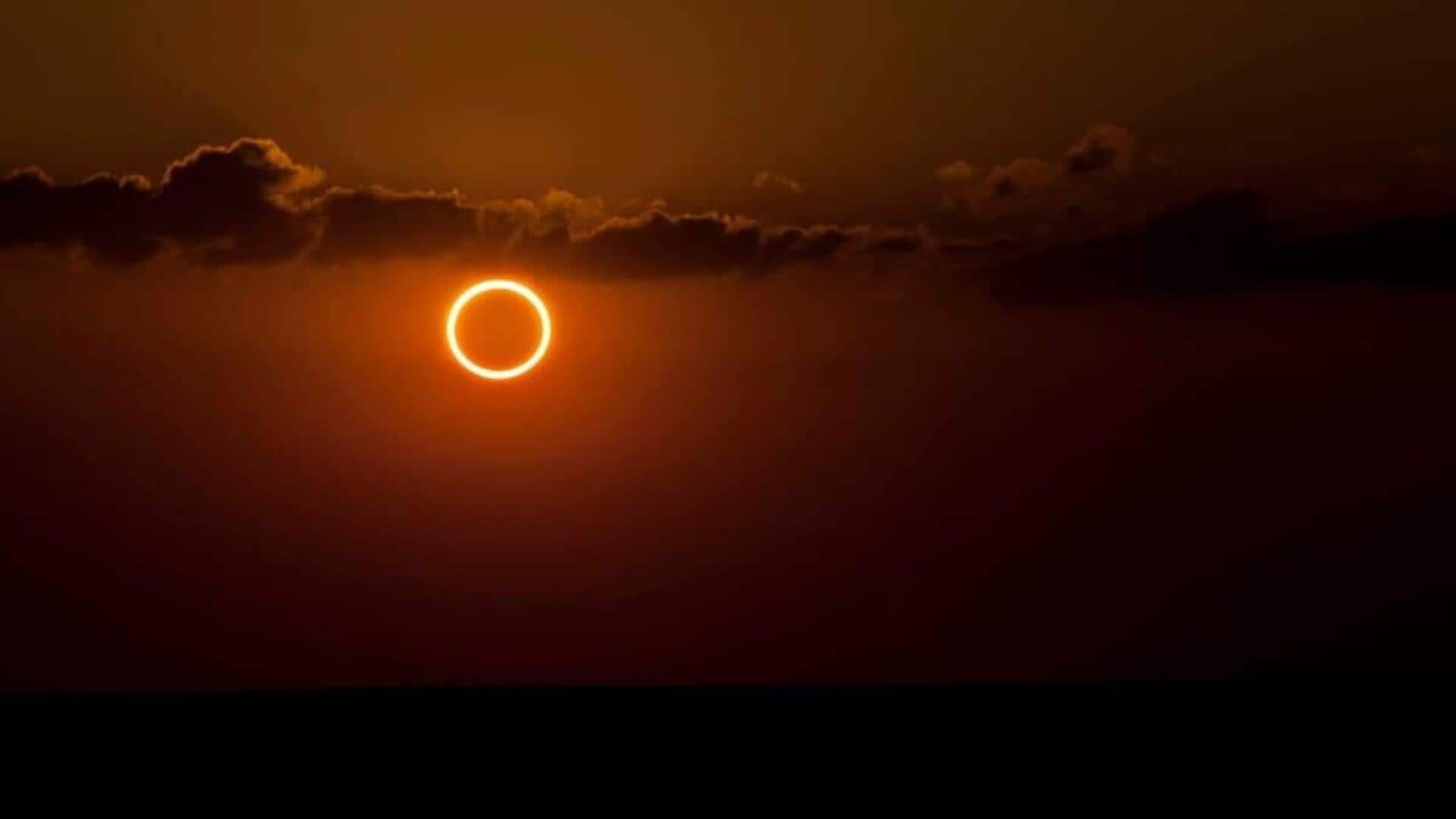
A rare annular solar eclipse will occur on February 17, 2026. This type of eclipse produces the striking "Ring of Fire" effect. The Moon covers the central part of the Sun but leaves a glowing ring around the edges because it doesn't completely block the Sun. This year, India won't get a glimpse of this phenomenon. Viewers will have to rely on online streams and space agency coverage for viewing.
Viewing tips
Viewing locations and safety precautions
The main eclipse will occur on February 17, with the best "Ring of Fire" view over parts of Antarctica. Surrounding areas may see partial phases, while some southern Africa and South America regions could get limited visibility. To safely watch this eclipse, viewers are advised to use special glasses or certified solar filters to protect their eyesight from permanent damage caused by direct sunlight exposure.
Eclipse details
Unique characteristics of the 'Ring of Fire' eclipse
An annular eclipse occurs when the Moon appears slightly smaller than the Sun, creating a bright burning ring in the sky. This happens because it is farther from Earth during its orbit. Unlike total eclipses, daylight never fully disappears during annular eclipses, giving rise to a slightly darkened but beautiful atmosphere. The event is a rare visual effect that fascinates scientists and skywatchers alike.
Research opportunities
Scientific significance of solar eclipses
Solar eclipses provide invaluable opportunities for scientific research and discovery. They help scientists study the Sun's atmosphere and solar radiation patterns. Temperature changes during these events reveal atmospheric behavior and cooling effects. Eclipses also allow testing of advanced telescopes and imaging technology, with data collected improving our understanding of space weather and solar storms.