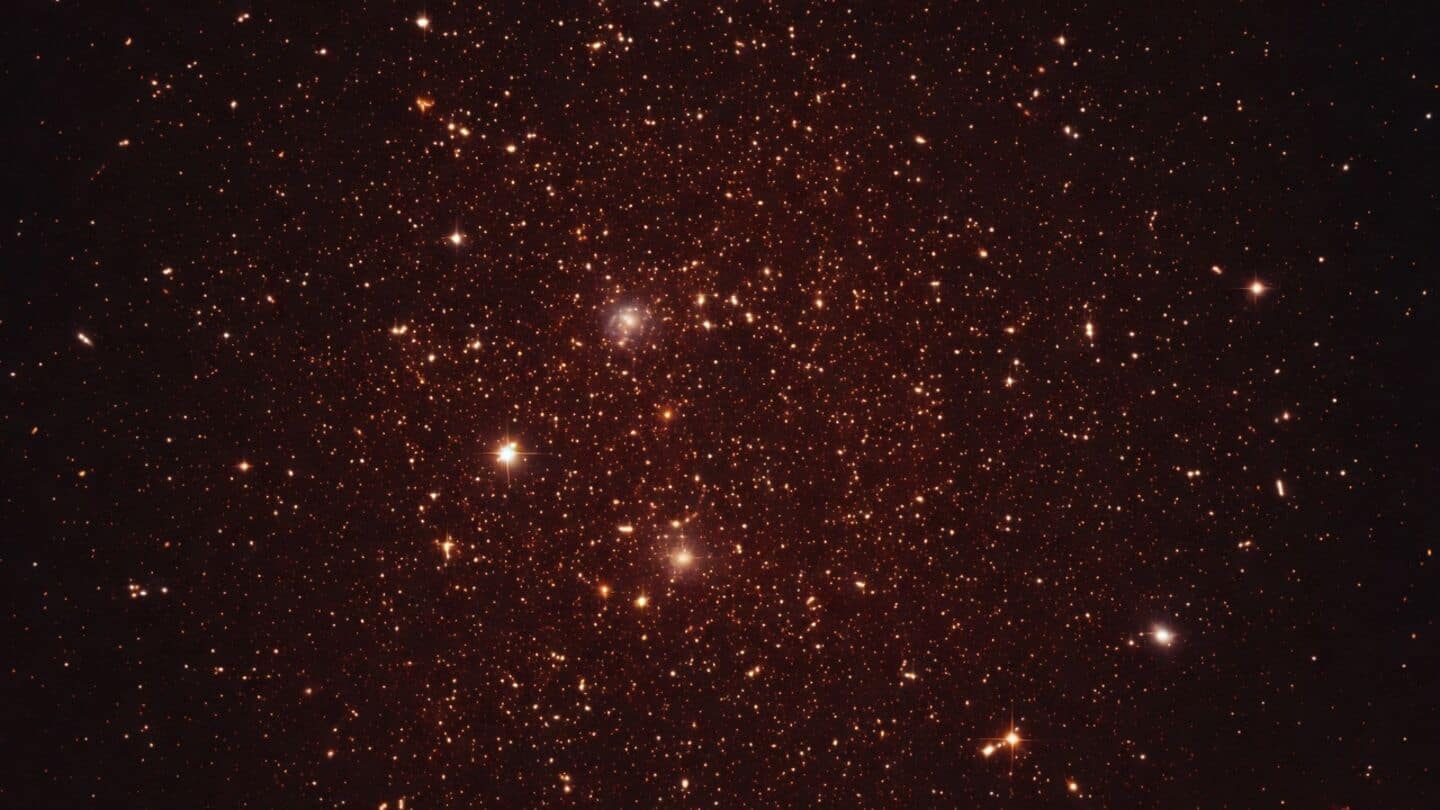
South Africa's MeerKAT detects hydrogen signals from 4-5 billion years
Astronomers just used South Africa's MeerKAT radio telescope to spot hydrogen signals from four to five billion years ago.
No need for visible-light surveys this time. They pulled this off with a technique called hydrogen intensity mapping, which helps track faint radio waves and lets scientists piece together how the universe looked way back when.
Cosmic map spans millions of light-years
By isolating these ancient signals (despite tons of interference), the team created a new kind of cosmic map, one that covers millions of light-years.
Their work sets the stage for even more detailed maps in the future, especially with bigger projects like the Square Kilometre Array Observatory coming soon.
Basically, we're getting closer to understanding how galaxies and matter spread out across the universe over billions of years.