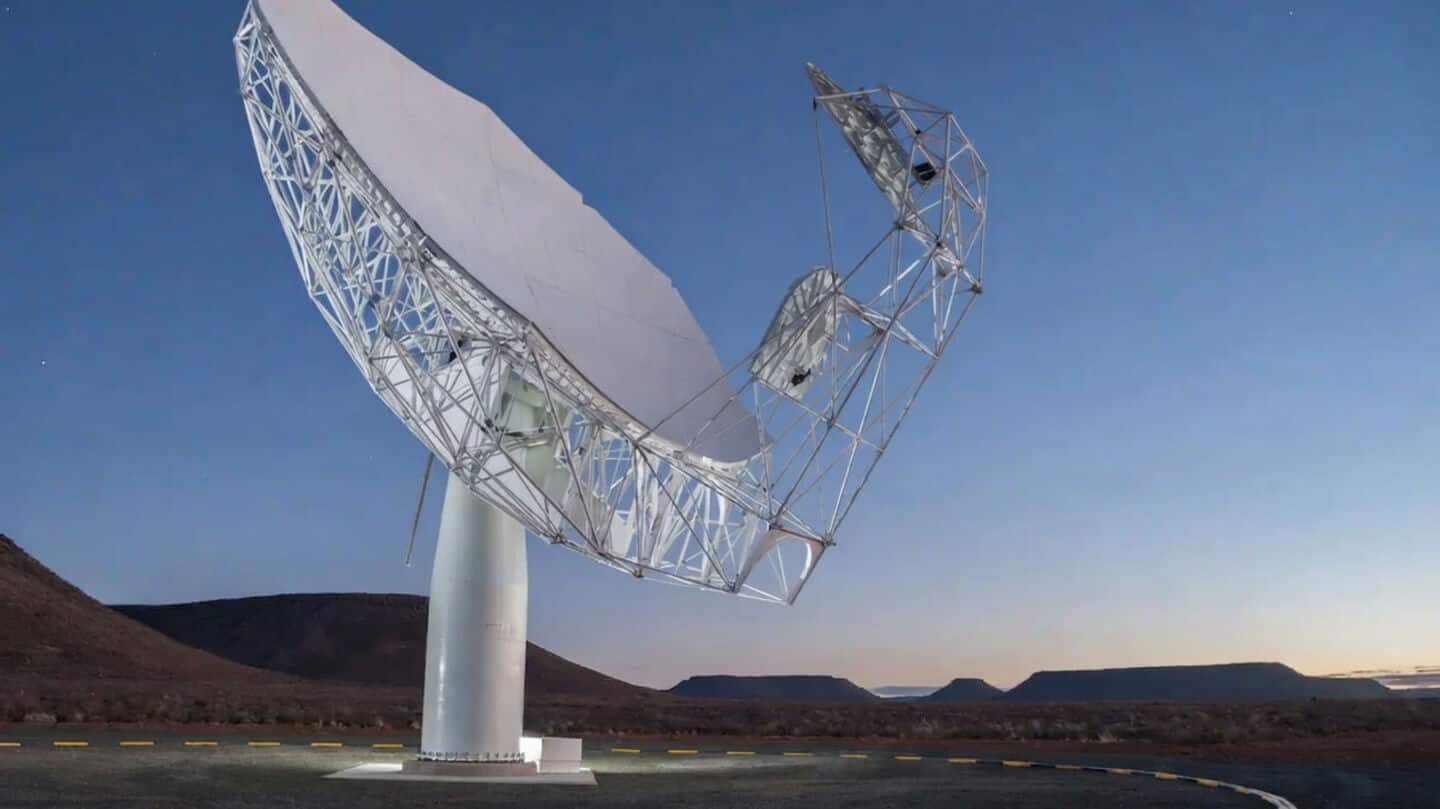
South Africa's MeerKAT telescope finds distant hydroxyl megamaser
South Africa's MeerKAT radio telescope just found the most distant hydroxyl megamaser ever, over 8 billion light-years from Earth.
This discovery, published on 2 March 2026, lets scientists look way back in time to when the universe was less than half its current age.
How did the discovery happen?
MeerKAT detected two special radio signals from hydroxyl molecules, boosted by a foreground galaxy acting like a cosmic magnifying glass.
In under five hours, the team got superclear data, helping them study this faraway galaxy's makeup and activity up close.
Why is this discovery important?
Gigamasers usually show up when galaxies are crashing together, triggering intense star formation and feeding central black holes.
Finding one this far out hints there could be hundreds more waiting to be discovered, and each one helps us understand how galaxies grew up in the early universe.