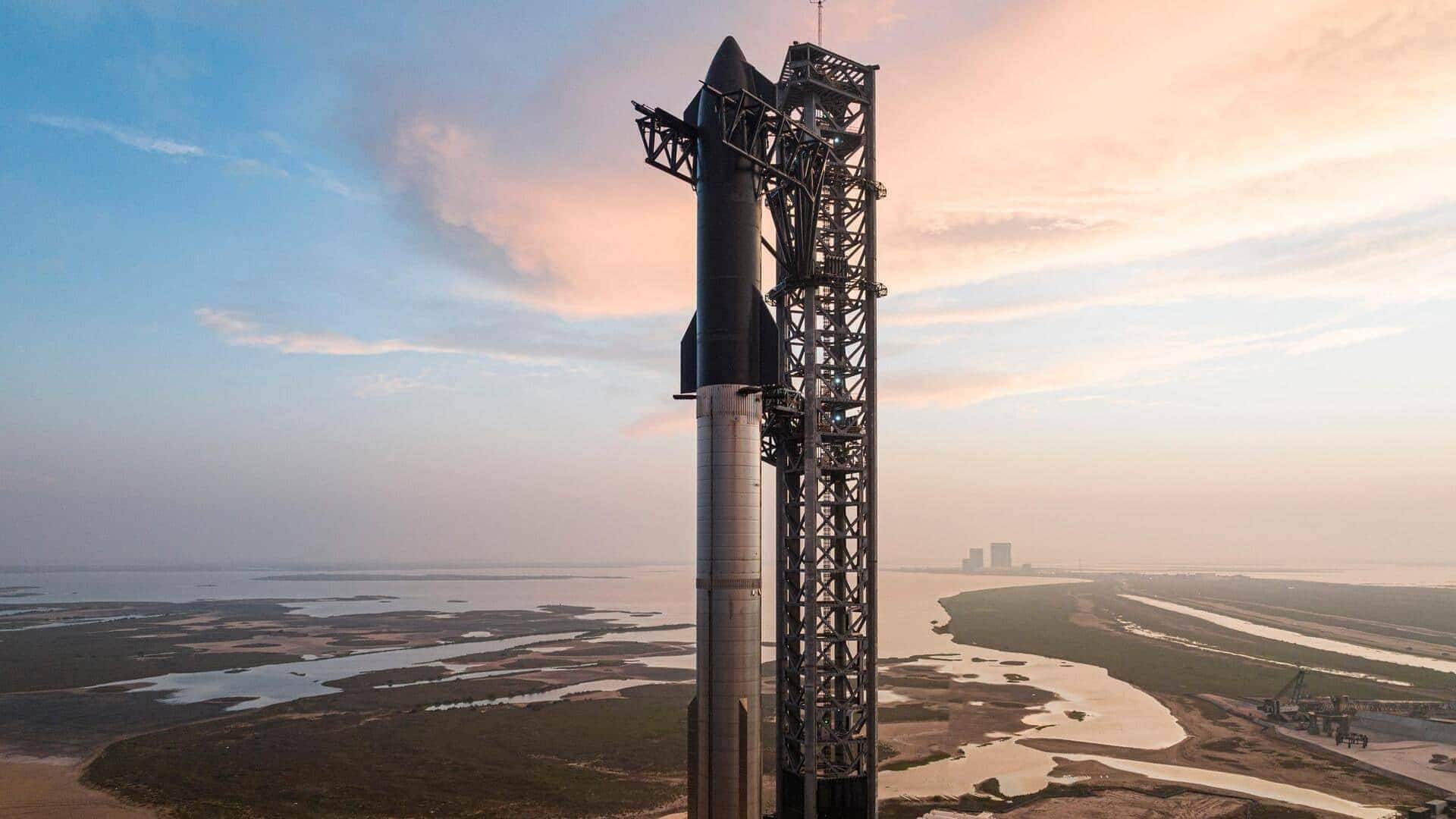
SpaceX delays Starship's first orbital test to September 28
What's the story
SpaceX has delayed the launch of its next Starship test flight by six days. The mission, dubbed Flight 14, was originally scheduled for September 22 but will now take place on September 28. The company has not given any explanation for this delay. The launch window will open at 5:45pm IST from SpaceX's Starbase facility in Texas, US, and is expected to remain open for 75 minutes.
Mission details
Flight 14 will mark Starship's first orbital mission
Flight 14 will be SpaceX's first attempt to send Starship into Earth orbit.
The spacecraft is expected to reach an altitude of some 275km and orbit Earth about six times during a nearly 10-hour mission. After that, it will re-enter the atmosphere and splash down in the Pacific Ocean west of Chile.
Meanwhile, the Super Heavy booster is expected to land in the Gulf of Mexico.
Satellite deployment
Mission will also deploy Starlink V3 satellites
Apart from the orbital mission, Flight 14 also has a practical goal. The Starship will deploy 26 Starlink V3 satellites, the first batch of these more powerful satellites meant to stay in orbit.
This specific batch of satellites will boost SpaceX's expanding Starlink internet network.
The success of this mission is crucial not just for SpaceX but also for future NASA missions, as a version of Starship has been chosen as a lunar lander for its Artemis program.
Test results
Last test in July reached space but did not orbit
The last Starship test in July reached space and deployed 20 upgraded Starlink V3 satellites but did not complete an orbit.
The upper stage splashed down in the Indian Ocean while the Super Heavy booster missed its planned landing.
Flight 14 will be another test, but a much bigger one. If successful, it could show that Starship is moving from experimental flights toward becoming the reusable space vehicle Musk has long envisioned.