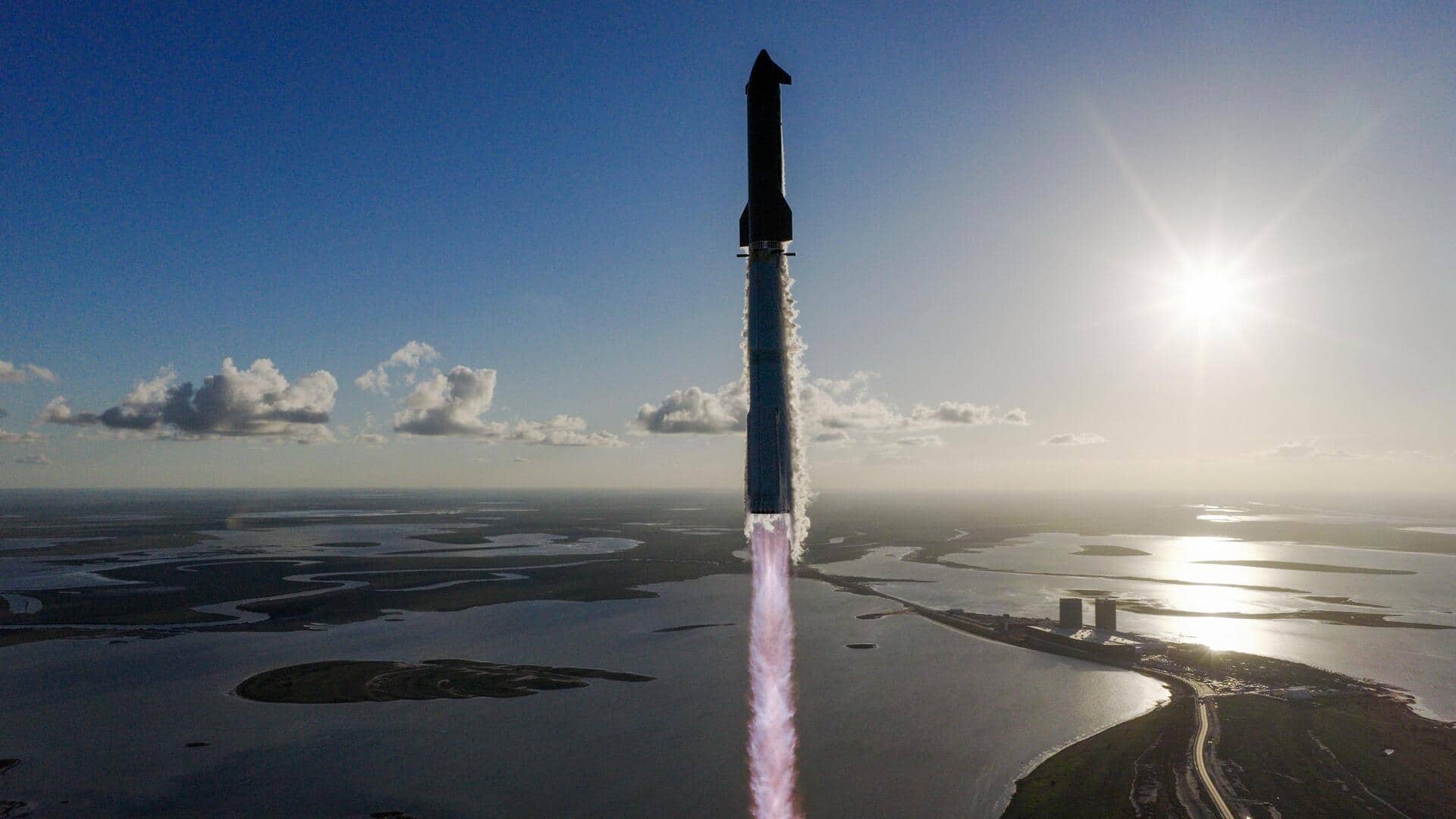
SpaceX's Starship megarocket blasts off to orbit
What's the story
SpaceX has performed its most crucial Starship launch today. The 400-foot-tall rocket took off from the company's Texas launch site at around 6:20pm IST. This is Starship's 14th test flight and its first attempt to reach orbit with real, revenue-generating cargo on board. The mission is also deploying 26 Starlink V3 satellites, SpaceX's latest low-earth orbit satellites providing global internet service through their constellation.
Landing strategy
SpaceX will not attempt to catch Starship's booster
For this flight, SpaceX is not planning to catch Starship's giant booster with the chopstick arms of its launch tower on return.
Instead, both the booster and upper stage will splash down in Gulf of Mexico and Pacific Ocean, respectively.
This strategy reduces landing failure risks but introduces more potential failure points than previous missions.
The rocket has to enter stable orbit, deploy satellites, keep systems working for almost 10 hours, reignite an engine to deorbit, and survive controlled reentry.
Strategic importance
Mission could open up more frequent launches
Reaching orbit and deploying Starlink satellites is a major milestone in Elon Musk's vision for Starship.
The billionaire has said the vehicle could launch as often as once a day within a year.
This is because launching larger V3 satellites on Starship, which has far greater capacity than Falcon 9, will allow SpaceX to expand its Starlink constellation significantly.
Cost efficiency
Aiming to reduce launch costs significantly
SpaceX executives have estimated that the fully reusable Starship could cut cargo launch costs by up to 10 times compared to Falcon 9.
This cost efficiency is crucial for SpaceX's plans to build and service massive satellite constellations while remaining profitable.
The company has also made Starship a key part of its long-term strategy to establish a human (and robot) presence on the Moon and eventually settle on Mars.