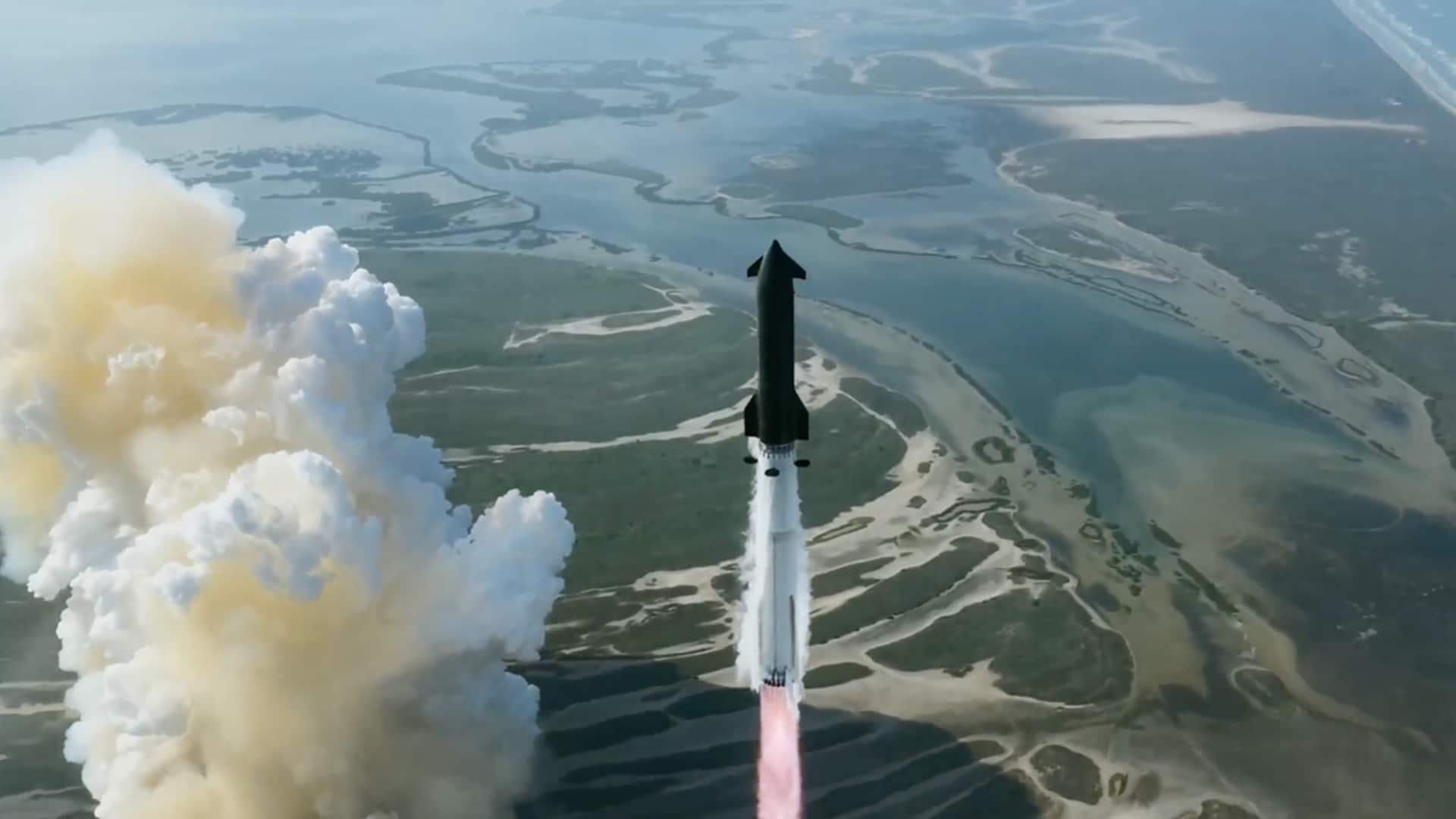
SpaceX's most powerful rocket, Starship V3, blasts off to space
What's the story
SpaceX has successfully launched its most powerful rocket, the Starship Version 3 (V3), into space for the first time. The launch took place from SpaceX's Starbase facility in South Texas today at 4:00am IST. This was the first flight of a Starship since October 2025, and marked a major milestone for SpaceX as it continues to develop this next-generation spacecraft.
Design overhaul
A look at Starship V3
The Starship V3 is a completely redesigned version of the rocket, with several upgrades and modifications over its predecessors. It consists of a first-stage booster called Super Heavy and an upper stage known as Ship. This mission was a major step toward operational missions for SpaceX, even though it was delayed by a day due to technical glitches that prevented the initial launch attempt yesterday.
Mission hurdles
Launch wasn't without its challenges
The launch wasn't without challenges. One of the 33 first-stage Raptor engines on Super Heavy shut down during liftoff, causing the booster to skip a critical "boost back" maneuver for its return to Earth. The Ship 39 upper stage also lost one of its six main engines during ascent but managed to reach space. SpaceX included 22 payloads for Ship to deploy during this flight: 20 dummy versions of Starlink satellites and two actual Starlink spacecraft equipped with imaging sensors.
Reentry process
Ship performed novel banking maneuver for landing burn
About 50 minutes into the flight, Ship began its reentry into Earth's atmosphere, falling as its belly became engulfed in a bright plasma. During descent, it performed a series of exercises to stress parts of the vehicle to their structural limit. It also executed a novel banking maneuver for its landing burn meant to mimic the trajectory as well as orientation needed for a launch tower catch on return to Starbase.
Mission outcome
SpaceX successfully deployed all payloads
Despite some hiccups, SpaceX successfully deployed all payloads over a 10-minute period, starting about 17 minutes after launch. The two modified Starlink satellites were tasked with scanning Starship's heat shield tiles in a test to assess their condition before reentry. After the successful deployment of the final two "Dodger Dogs," SpaceX broadcasted the footage they captured as they flew away from Starship.
Lunar mission
Next step is to get Starship certified to fly astronauts
The next step for SpaceX is to get Starship V3 certified by NASA to fly astronauts. The new vehicle has been designed with this goal in mind, featuring four passive connection ports on its back for docking and ship-to-ship fuel transfers. To fly beyond low Earth orbit (LEO), Starship needs help from other Ships meeting up in orbit to refuel. This is especially critical for its role as a lunar lander in NASA's Artemis program.