Study finds black hole jets appear at 2% Eddington limit
Turns out, black holes could be a lot more predictable than scientists once believed.
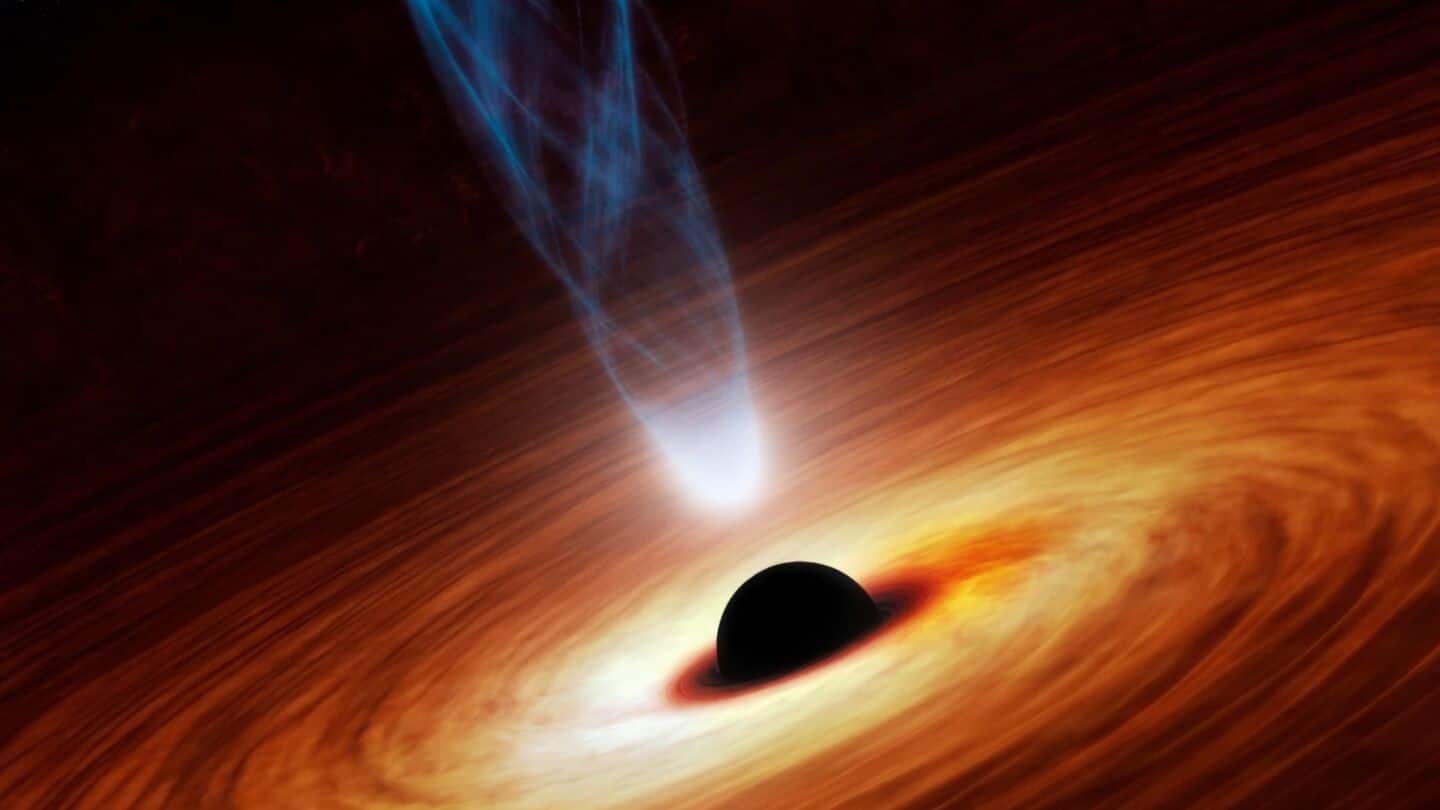
A new study found that when a black hole's feeding slows down to about 2% of its maximum limit (the Eddington limit), it can shoot out powerful jets of energy.
This pattern appears to hold for stellar-mass black holes in our galaxy and supermassive giants at the centers of galaxies.
Jets delayed after tidal disruption events
Scientists analyzed 20 cosmic events where stars got too close to black holes and were torn apart, called tidal disruption events, using everything from X-rays to radio waves.
They noticed that these energy jets often show up hundreds or even thousands of days after the star is destroyed, by which point the feeding rate hits that 2% mark.
This discovery could help astronomers better plan observations and understand how these cosmic powerhouses work.