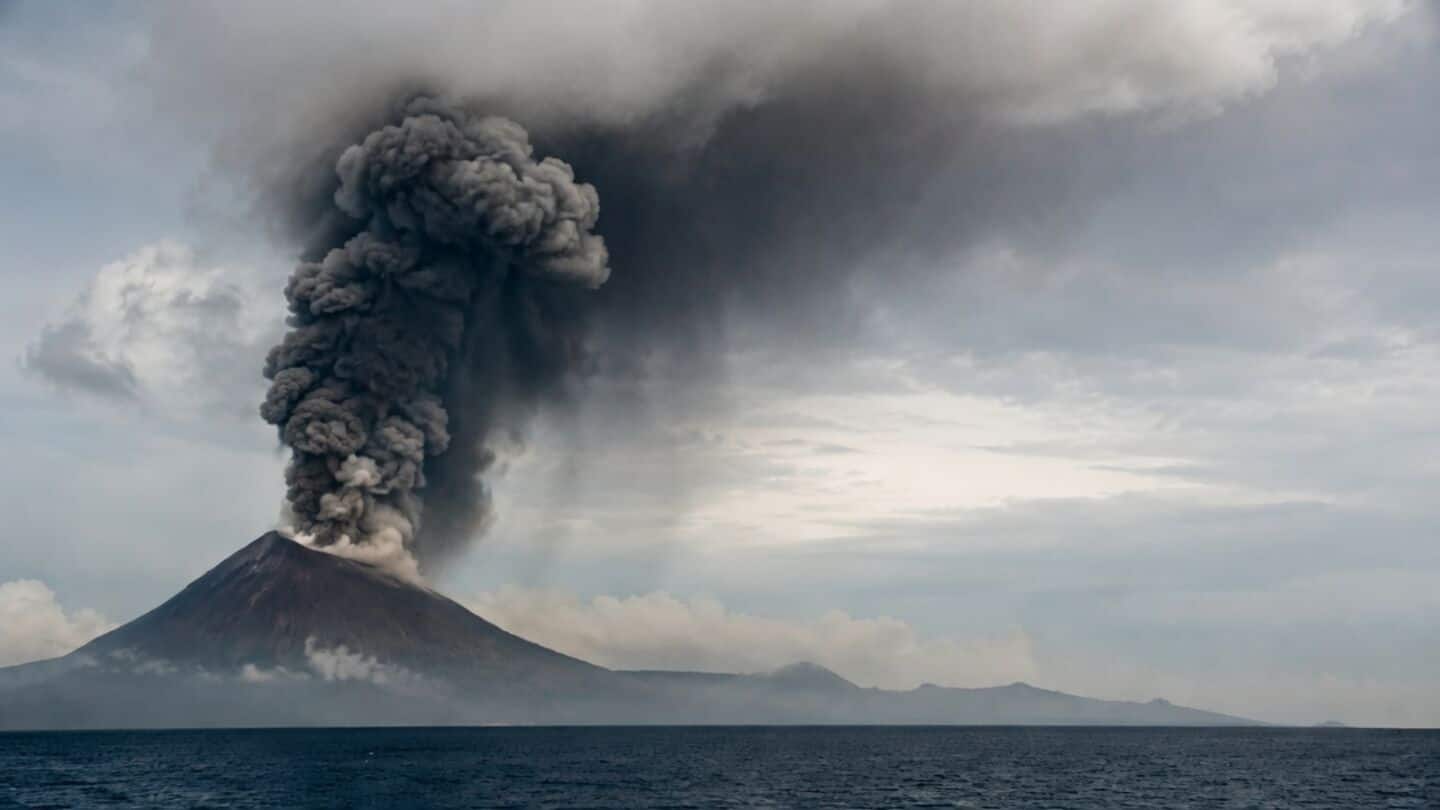
Study finds northern hemisphere eruptions drove most extreme 12,000-year cooling
Turns out, Earth's wildest cooling periods over the past 12,000 years were mostly kicked off by huge volcanic eruptions in the northern hemisphere.
A new study found that over 80% of major glacier growth events lined up with northern hemisphere eruptions of magnitude 7 or higher, basically, the biggest blasts you can imagine.
The research team pieced this together using ancient glacier records and radiometric dating, and their findings are rock solid (99% confidence, thanks to Monte Carlo simulations).
Sulfate aerosols and sea ice feedbacks
These mega-eruptions (like Kurile Lake and Kikai-Akahoya) spewed out more than twice as much sulfur as even the famous Tambora eruption.
All that sulfur formed a haze of sulfate aerosols that bounced sunlight back into space, dropping global temperatures fast.
Plus, feedback loops like expanding North Atlantic sea ice kept things chilly for centuries.
One standout example: closely timed blasts from Kurile Lake and Tao-Rusyr helped trigger a big cold snap known as the 8.2-ka event.