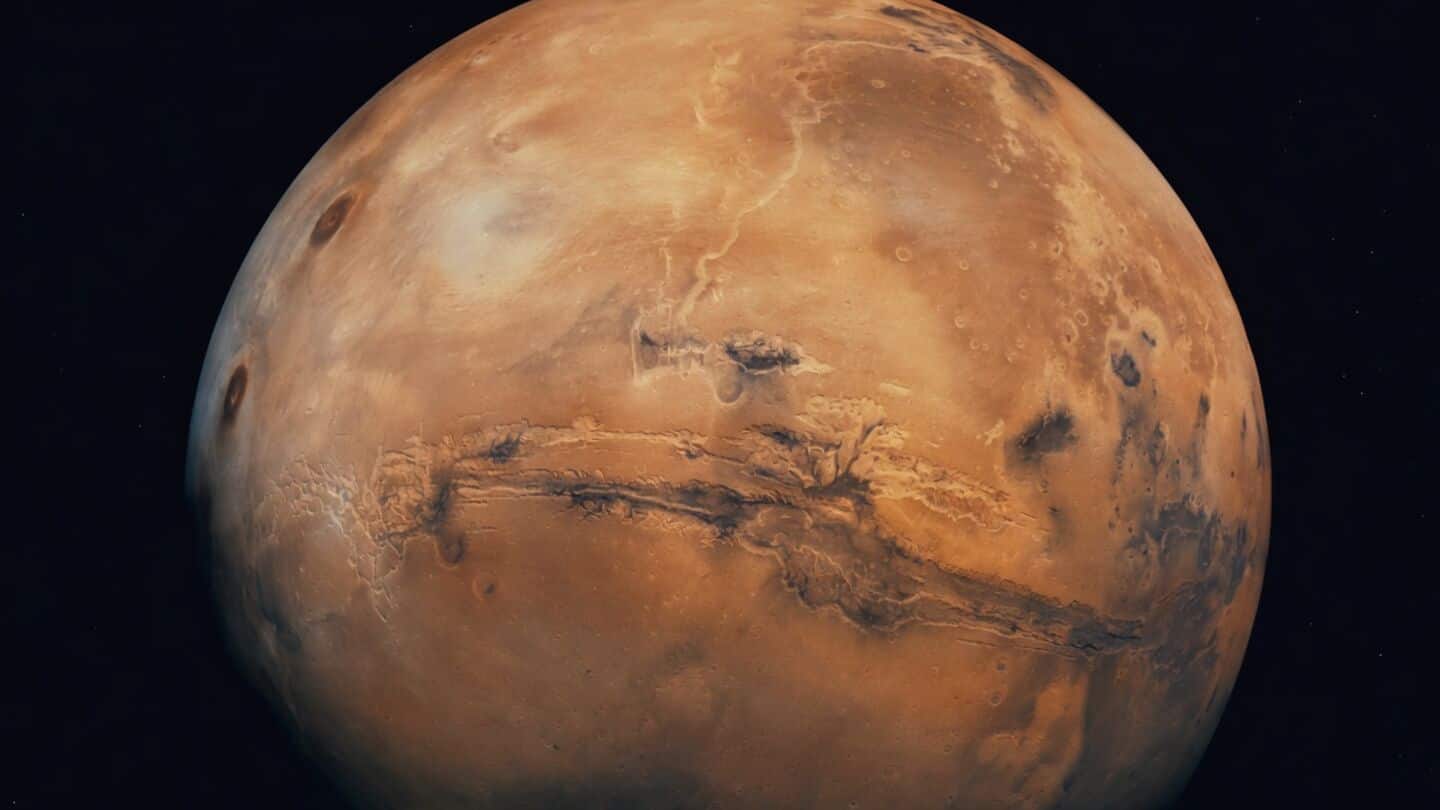
Study suggests Kelvin-Helmholtz waves helped Mars lose atmosphere over time
A new study suggests Mars may have gradually lost its atmosphere because it lacked a strong magnetic field to shield it from the Sun.
Solar wind, streams of charged particles from the Sun, slammed into Mars and created massive ripples called Kelvin-Helmholtz waves, which basically helped sweep away the planet's air into space.
MAVEN Tianwen-1 show plasma-driven atmospheric loss
Researchers used data from NASA's MAVEN and China's Tianwen-1 missions. MAVEN tracked how atmospheric particles escaped, while Tianwen-1 watched the solar wind in action.
Together, they found that these waves formed plasma clouds that sped up atmospheric loss, depending on how the solar wind hit Mars.
Chi Zhang, a research scientist at Boston University's Center for Space Physics and lead author of the new study, said this helps us understand why Mars changed so much and gives clues about whether other planets could keep their atmospheres (and maybe support life) too.