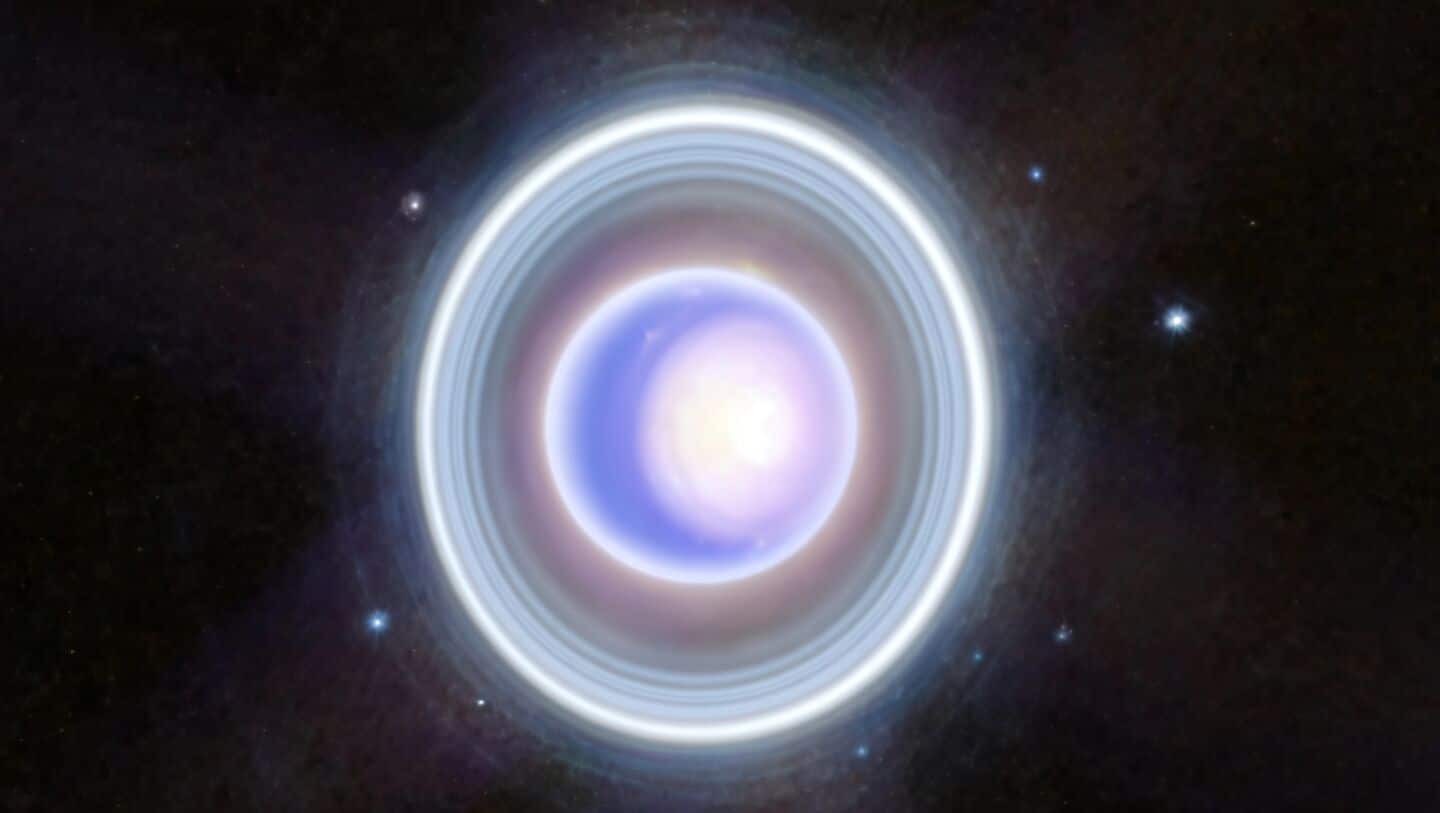
Study using JWST Hubble Keck suggests Uranus rings hide moons
Technology
A new study suggests Uranus's outer rings could be hiding moons we haven't spotted yet.
Using data from the James Webb Space Telescope (JWST), the Hubble Space Telescope, and the Keck Observatory, researchers found water ice in one ring—probably from tiny impacts on the moon Mab.
This discovery is making scientists rethink what else might be lurking out there.
Mu and Nu rings hint mini-moons
Turns out, the m (mu) ring is icy thanks to Mab, while the n (nu) ring has a surprising amount of carbon-rich material—hinting at mini-moons too faint for our current tech.
The recent find of a new moon (S/2025 U1) by JWST adds fuel to the theory that more hidden moons are waiting to be found.
A mission to Uranus could help answer questions about its mysterious rings and moons.