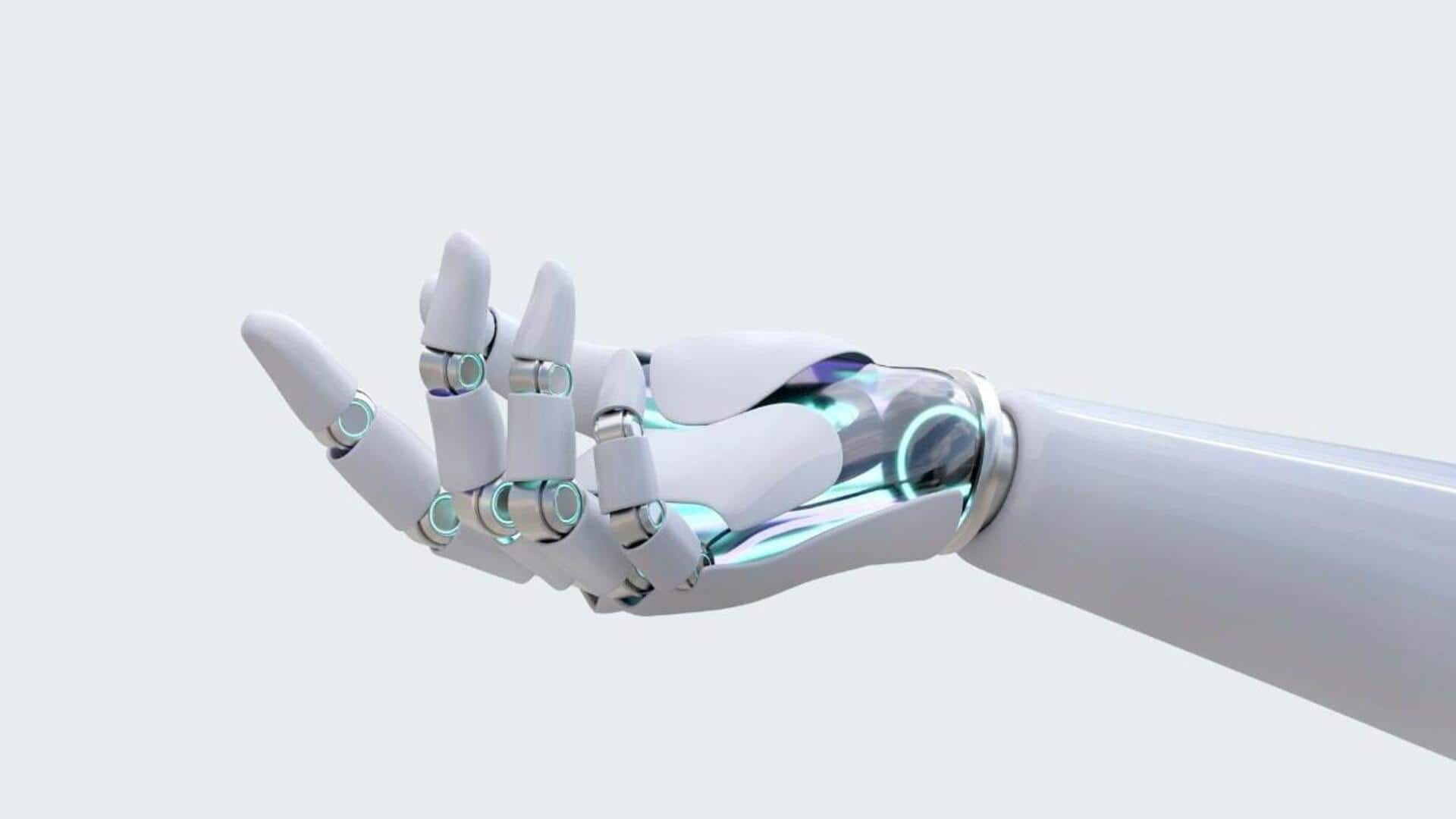
This sensor can help robots 'feel' objects without touching
What's the story
Chinese scientists have developed an innovative sensor, inspired by electric eels, that enables robots to "feel" objects without any physical contact. The groundbreaking work was published last month in the peer-reviewed journal Advanced Materials. The team behind this revolutionary technology was led by Zhang Weiqiang, a professor at Xidian University.
Technology inspiration
How the sensor works
The new sensor borrows from the electric eel's locating system.
Just like these creatures generate an electric field around themselves and detect distortions caused by nearby objects, the researchers have done the same with their technology.
The sensor is made of a specially treated fluoropolymer that acts like a tiny static battery, creating a steady electric field around it when charged.
Functionality
Sensor detects changes in electric field
When an object comes close to the sensor, it detects changes in the electric field.
These changes can then be used to infer details about the object's electrical conductivity, dielectric properties, and geometric shape.
This is similar to how electric eels use their natural radar system to hunt in pitch-black waters by generating electric fields around their bodies.
Objective
Implications for robotics and automation
The ultimate goal of this new sensor technology is to give machines the ability to sense an approaching target, and distinguish its material and surface condition before any physical contact.
This could have major implications for robotics and automation, making these systems more efficient and capable of interacting with their environments in a more sophisticated manner.