This genetically engineered microbe might help us settle on Mars
What's the story
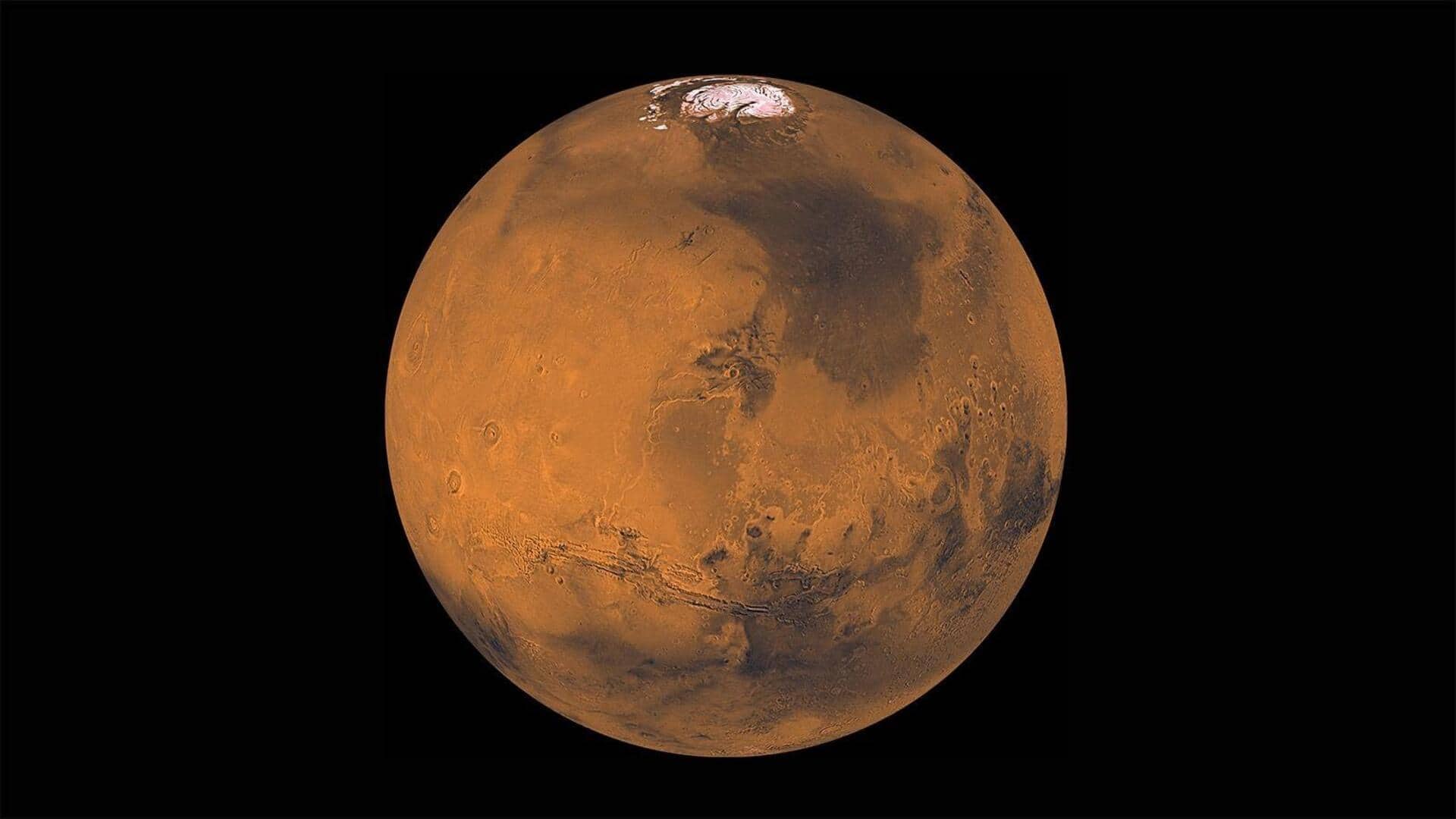
A team of scientists from Pioneer Labs, a nonprofit biotech research start-up in Emeryville, California, has developed a genetically engineered microbe that could help humans settle on Mars. The new organism, called sPL.001, can survive on artificial, chemically accurate versions of Martian soil, water and air with having the toxins removed, or with fertilizer added. The breakthrough is seen as a useful, safe first step toward terraforming Mars.
Terraforming prospects
Microbe could also produce bioplastics for building habitats
The development of sPL.001 could be a useful, safe first step toward terraforming Mars, or transforming the inhospitable planet into one that can support human life.
"On Mars, nature will do the same jobs for us that she does on Earth, create fertile soil, shelter, oxygen and food," said Erika DeBenedictis, CEO of Pioneer Labs.
The microbe could also produce bioplastics which could be used to build habitats on Mars.
Survival strategies
Microbe won't accidentally terraform Mars
The new microbe has been engineered to survive in a heated bioreactor that shields it from extreme temperatures, radiation, and the thin Martian atmosphere.
It also needs a processed form of air to survive as normal Martian air has nitrogen levels too dilute for the microbes to live off.
Despite these limitations, researchers believe their microbe won't accidentally terraform Mars or contaminate it as an invasive organism.
Colonization implications
Implications for Earth and beyond
In a study, the scientists estimated that with the help of their microbe, mission planners could fit everything needed to build a city on Mars onto a single rocket.
However, they also acknowledged that "simulated Mars isn't actual Mars" and "the real test will be doing this with actual Martian regolith."
The research could have implications beyond just Mars and may even help address climate change on Earth through gene editing techniques.