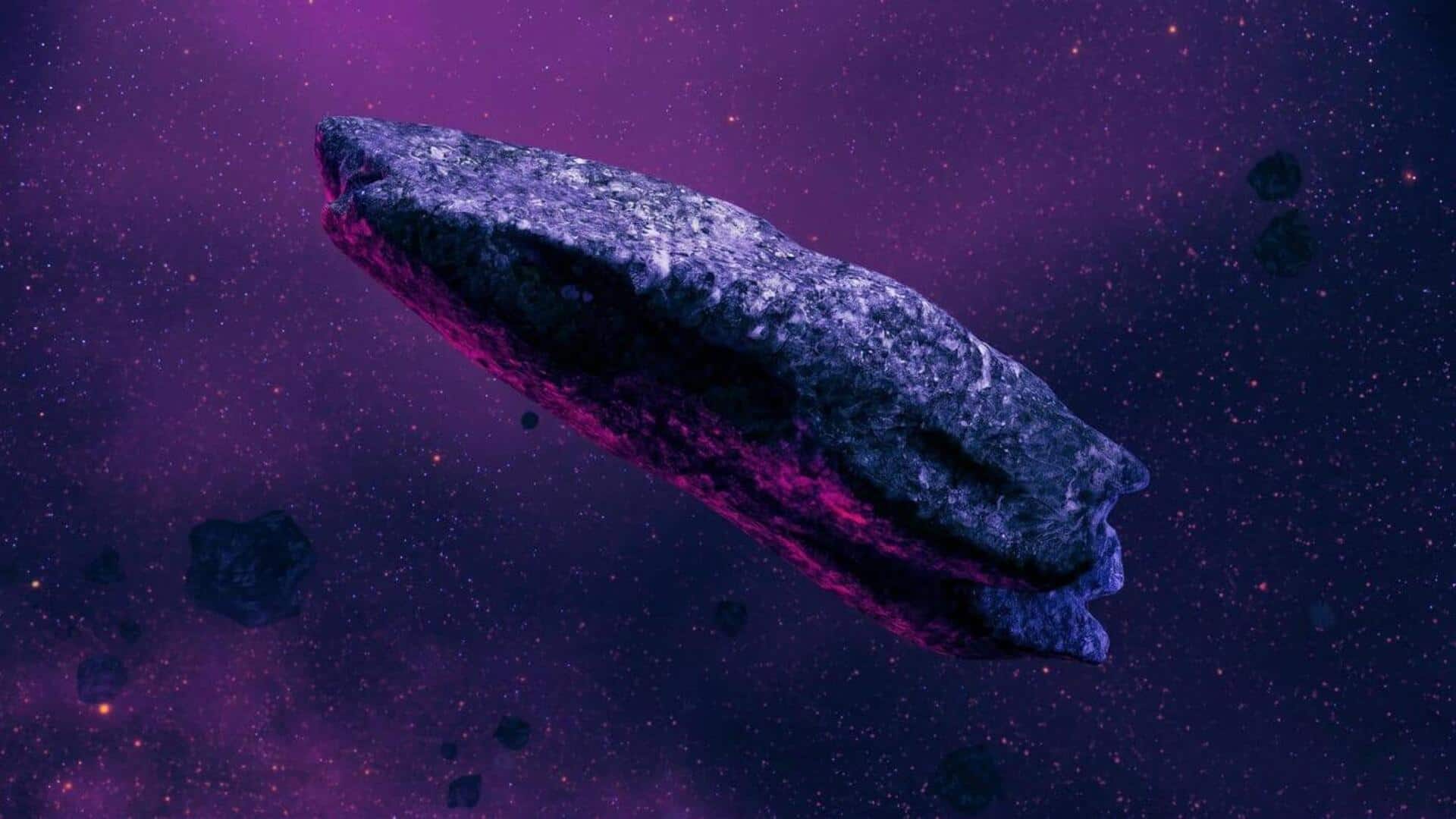
This comet might be 3 times older than solar system
What's the story
Astronomers have discovered that the interstellar comet 3I/Atlas could be nearly three times older than our solar system. The finding was made by studying the chemical elements of the comet with powerful telescopes, including NASA's James Webb Space Telescope and the Atacama Large Millimeter/submillimeter Array (ALMA) in Chile. The study suggested that 3I/Atlas could be up to 12 billion years old.
Chemical clues
Comet formed in extremely cold environment
The study, published in the journal Nature, found that 3I/Atlas has a high abundance of deuterium, a type of hydrogen commonly seen in heavy water.
This is unlike any other solar system body and suggests that the comet likely formed in an environment as cold as -243 degree Celsius.
The lead author Martin Cordiner from NASA's Goddard Space Flight Center said this could mean "maybe it's the oldest object to have been observed in our solar system."
Cosmic voyage
Comet's long journey through the galaxy
The exact origin of 3I/Atlas within the Milky Way galaxy is still a mystery.
However, Cordiner speculated that it could have spent billions of years on "vast unimaginable trajectories around our galaxy."
The comet also showed a strange lack of chemical enrichment, suggesting it may have formed relatively close to stars being born.
This could mean it is a "relic" from an era called "cosmic noon," when many stars were forming about 10 billion years ago.
Bright enigma
The 3rd known interstellar visitor to our solar system
3I/Atlas is only the third interstellar visitor ever observed, its unusual brightness providing scientists an unprecedented opportunity to study something from outside our solar system.
The comet was first spotted in July last year, triggering online speculation about its nature.
A prominent Harvard researcher even suggested it could be an alien spacecraft, a theory that NASA dismissed.
Cosmic exploration
Future observations will become more difficult
Peter Veres, an astronomer who helped identify the comet at the International Astronomical Union's Minor Planet Center, called the research "exciting."
He warned that as 3I/Atlas leaves our solar system, future observations will become more difficult.
Despite this, astronomers expect to discover many more interstellar objects in the coming years with new technologies like the Vera C Rubin observatory in Chile.