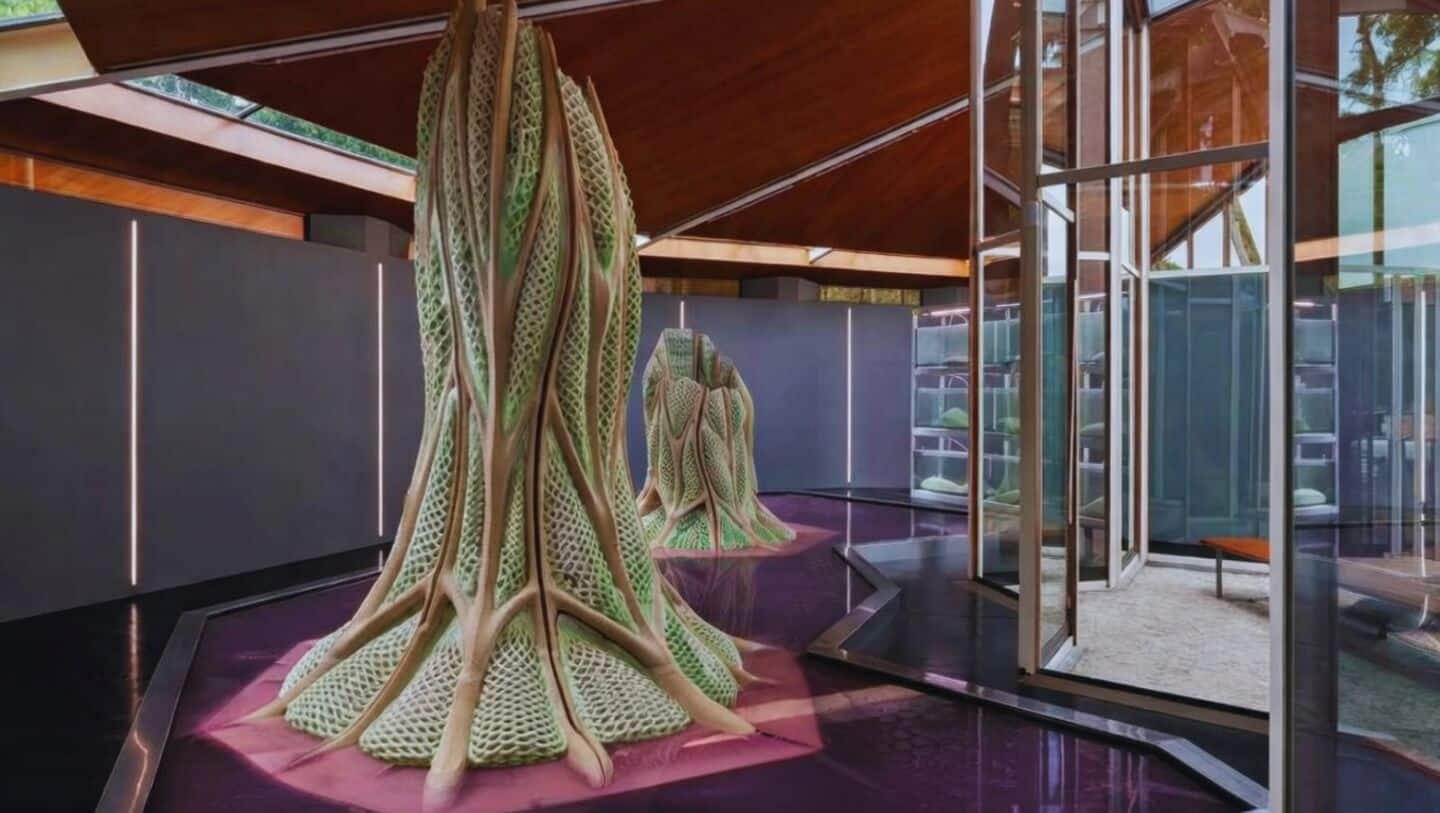
This living material can absorb carbon dioxide more efficiently than trees
Scientists at ETH Zurich have made a 3-D-printable hydrogel packed with cyanobacteria, tiny organisms that naturally absorb carbon dioxide (CO2).
This "living material" locks away about 26 mg of CO2 per gram in just over a year, way more than recycled concrete manages.
How does it work?
The cyanobacteria use sunlight, water, and air to make new material and minerals, which get stored inside the hydrogel.
The smart design spreads light and nutrients evenly, helping the bacteria stay active for over a year, it avoids the ammonia/urea waste produced by some ureolytic mineralization methods.
Potential applications
This tech could shake up how we trap carbon long-term.
It's energy-efficient and could be used in architectural applications (for example, facade coatings and building envelopes) and in experimental installations.
The material has been demonstrated and monitored in exhibition installations (Venice and Milan), where teams observed its performance in real-world-like conditions.