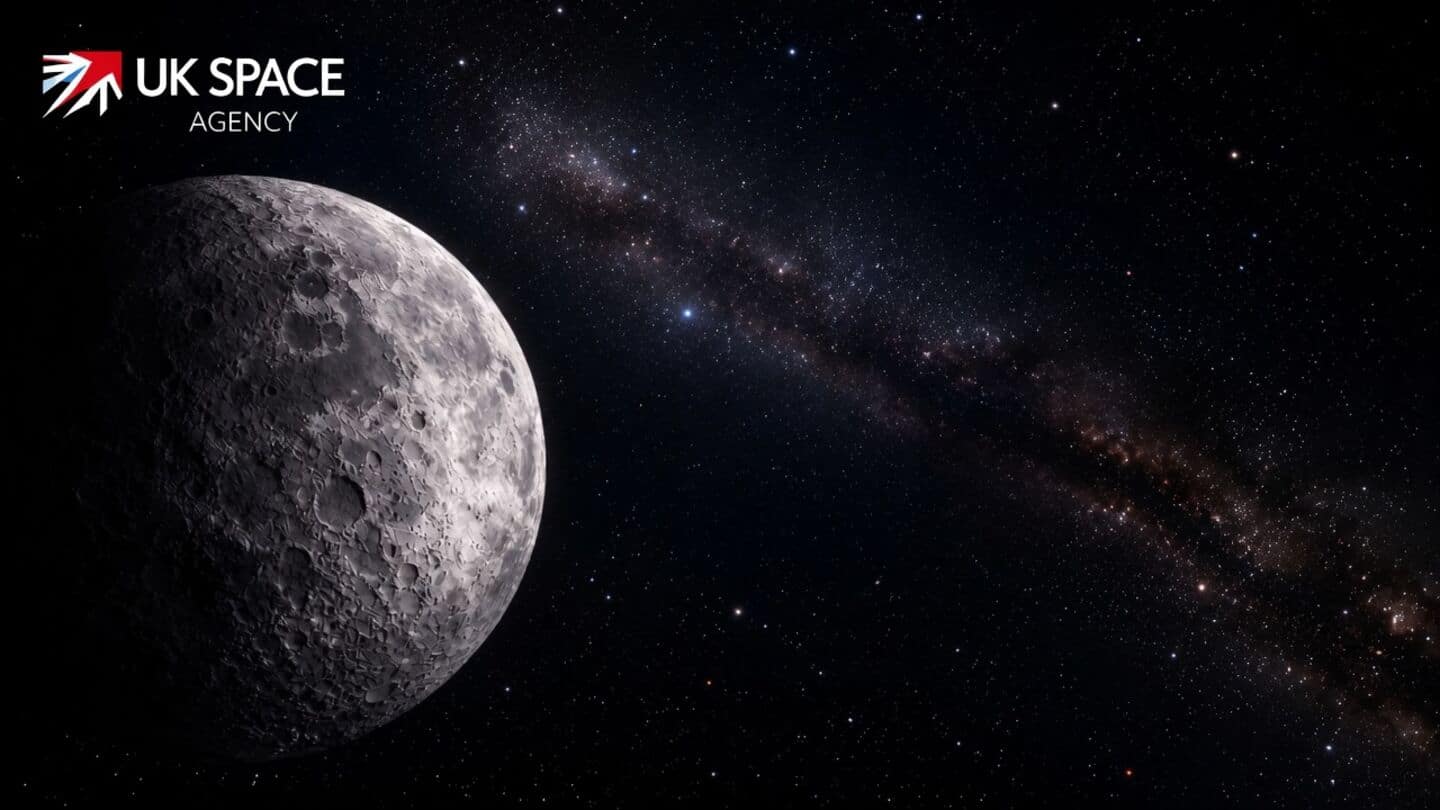
University of Cambridge builds CosmoCube to study dark ages signals
Technology
A team led by the University of Cambridge is building CosmoCube, a small satellite designed to study the cosmic dark ages, the mysterious era before stars and galaxies existed.
By tracking a faint radio signal from ancient hydrogen, CosmoCube hopes to reveal how the very first cosmic structures began to form.
CosmoCube to orbit Moon's far side
Instead of circling Earth, CosmoCube will orbit 100km above the far side of the Moon, using it as a shield against Earth's noisy radio signals.
This quiet spot lets scientists pick up signals that are extraordinarily difficult to catch from our planet.
Over two years, CosmoCube will map these ancient signals, potentially giving us new clues about dark matter and how our universe evolved.