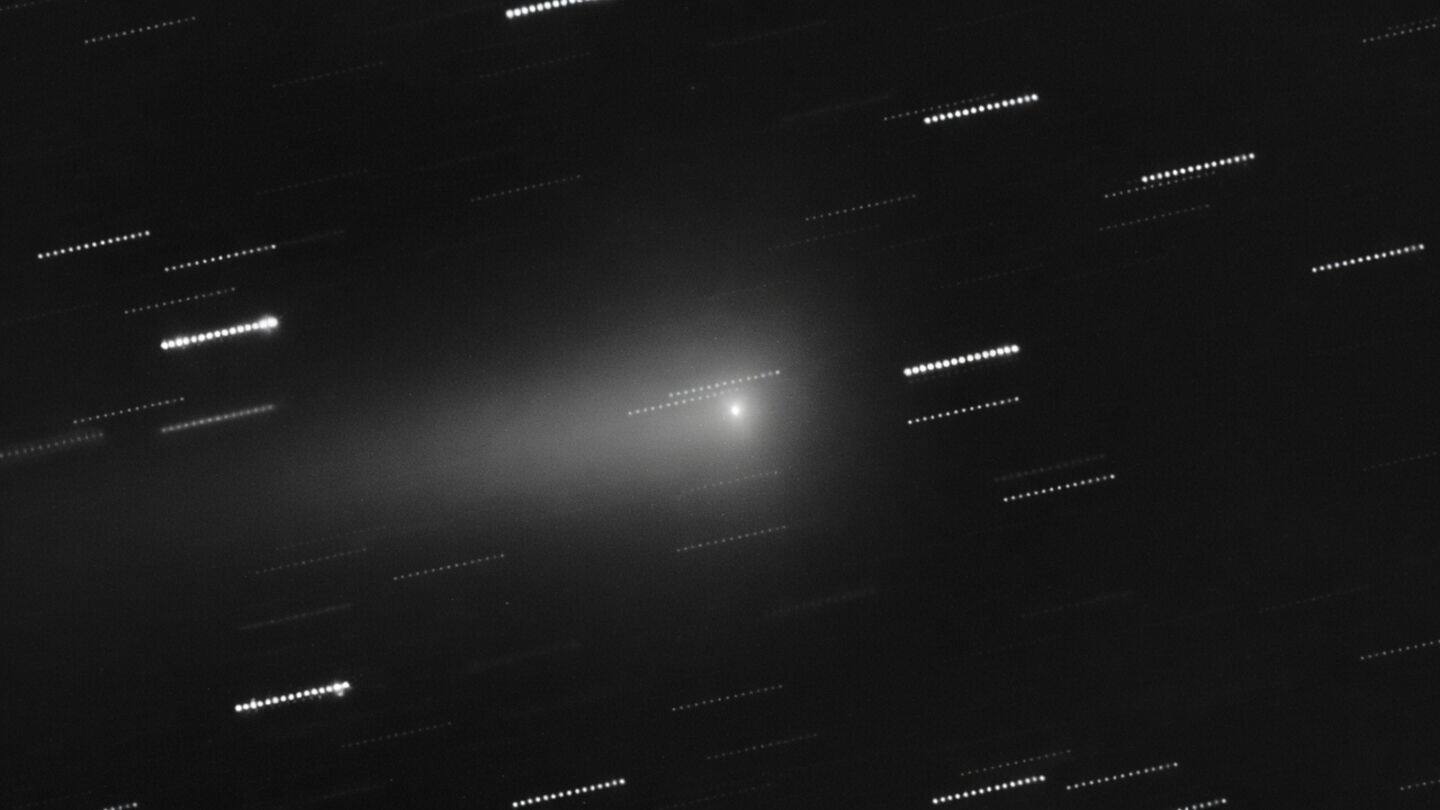
VLT study by Cyrielle Opitom supports JWST findings on 3I/ATLAS
Scientists have studied a very old comet called 3I/ATLAS (about 10 to 12 billion years old), and it's helping us understand how planets came together long before our own solar system existed.
The new VLT observations, led by Cyrielle Opitom of the University of Edinburgh, support earlier JWST findings led by NASA's Martin Cordiner.
The VLT results were published in Nature Astronomy.
Comet 3I/ATLAS preserves early planetary isotopes
3I/ATLAS was born far from its parent star, in a protoplanetary disk, and has far more carbon-12 than comets we know here.
This hints it formed when carbon-13 was very rare across the galaxy.
Its nitrogen ratios also match what we see at the edges of planet-forming zones like our Kuiper Belt.
Scientists think it was ejected into space by a passing star or a gravitational interaction, a dramatic journey that makes this comet a real time capsule for early planetary history.