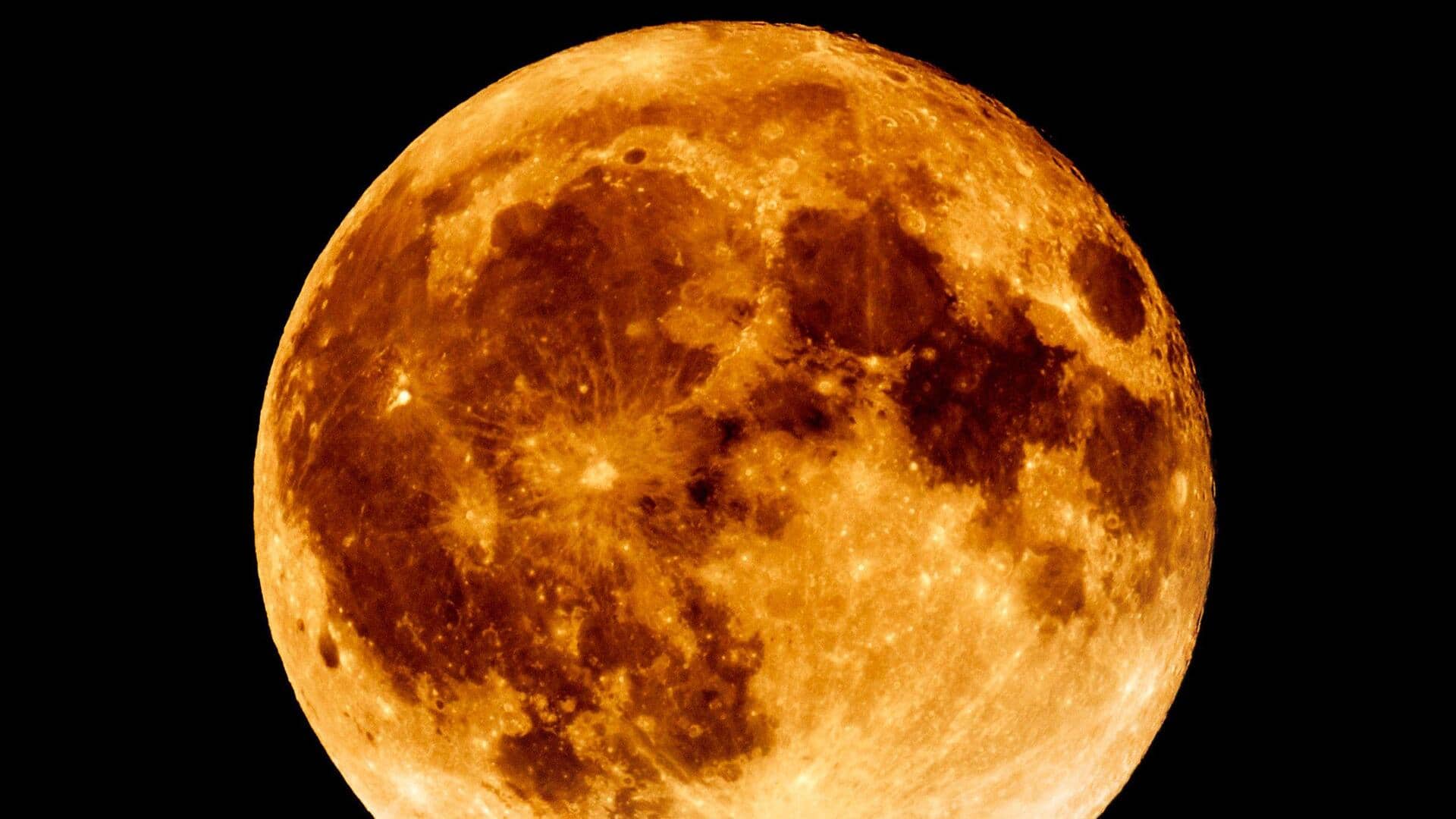
Wolf Supermoon rises this week: When, how to watch
What's the story
The first full Moon of 2026, popularly known as the Wolf Supermoon, will grace the night sky on January 3. This celestial event marks the last of four consecutive supermoons and promises a year filled with lunar and cosmic wonders. The term "Wolf Moon" comes from mid-winter and wolves' howling in North America. It will appear slightly larger and brighter than usual due to its proximity to Earth.
Viewing tips
Best locations to view
The Wolf Supermoon will reach its full phase at 5:03am EST (3:30pm IST). However, the best time to catch this lunar spectacle is during moonrise at dusk.
In New York, for instance, sunset will occur at 4:40pm EST and moonrise will follow shortly after at around 4:56pm EST.
Observers are advised to look for elevated or open eastern-facing locations for the best view of this supermoon event.
Astronomical significance
Wolf Supermoon: A unique event
The Wolf Supermoon is a special event as it occurs when a full Moon is near perigee, the closest point to Earth in its orbit.
This makes the Moon appear unusually bright and large to observers on the ground.
The January full Moon will be higher than other full Moons of the year, giving sky watchers an extended opportunity to catch this celestial spectacle.
Future phenomena
Upcoming celestial events to watch out for
A week after the Wolf Supermoon, Jupiter will reach opposition and shine its brightest in January.
The next full Moon, dubbed the Snow Moon, will occur on February 1, 2026.
Out of the 13 full Moons this year, three will be supermoons and two will feature eclipses.
The first total lunar eclipse of the Worm Moon is set for March 3, while a partial eclipse of the Sturgeon Moon is expected on August 27-28.