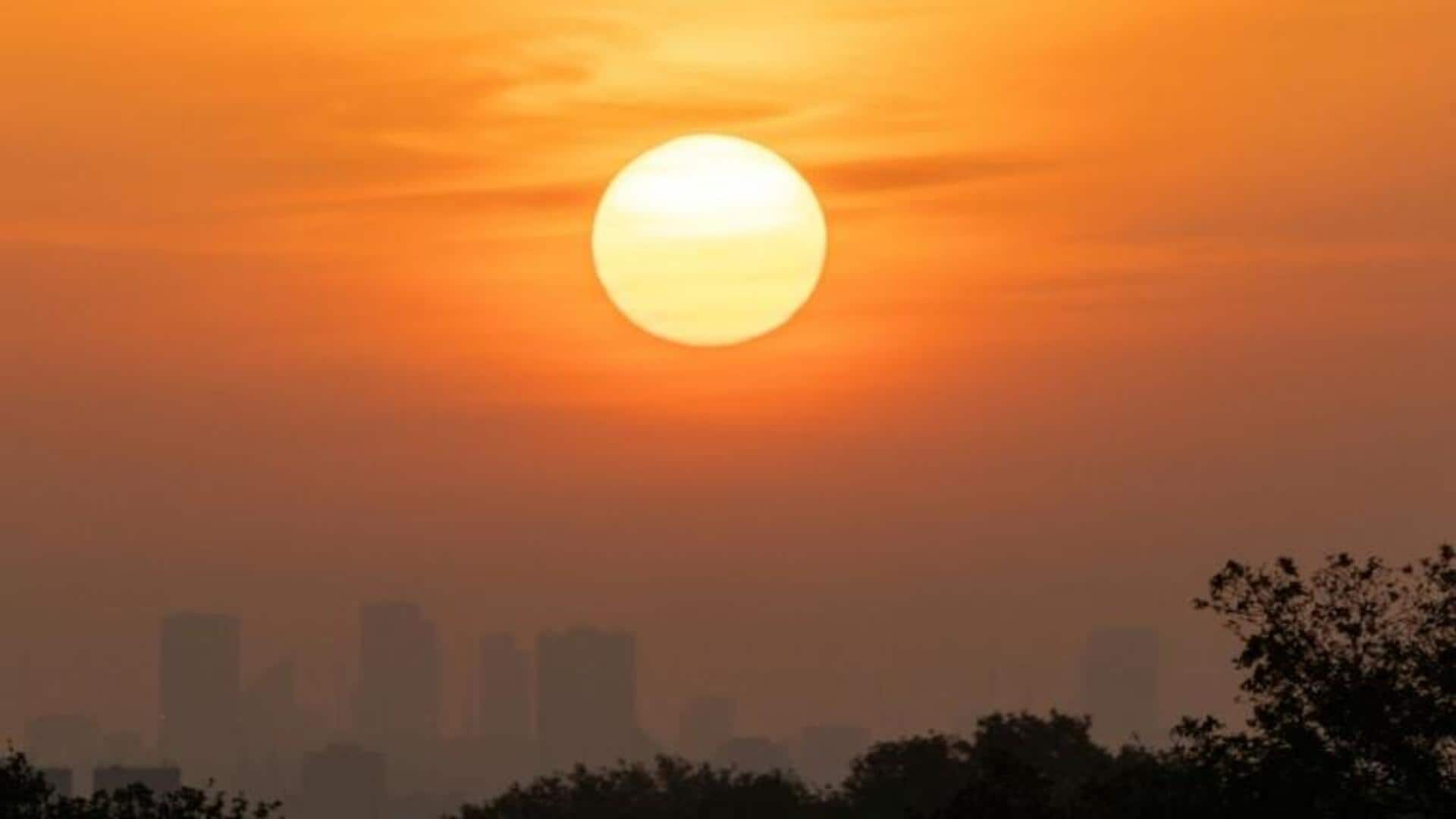
World may experience record-breaking hot year by 2030: UN report
What's the story
The United Nations' World Meteorological Organization (WMO) has warned that the world is likely to experience a record-breaking hot year by 2030. The warning comes as fossil fuel carbon dioxide emissions continue to rise, trapping more heat and causing extreme weather conditions. The WMO report, produced in collaboration with the UK Met Office, predicts an 86% chance of at least one year between 2026 and 2030 surpassing 2024 as the hottest on record.
Weather pattern
El Nino's impact on global temperatures
The WMO report also highlights the influence of the El Nino weather pattern on global temperatures.
The US National Oceanic and Atmospheric Administration predicts a 96% chance of an El Nino occurrence between December 2026 and February 2027, with a 35% chance of it being a super El Nino.
These events are caused by changes in Pacific Ocean winds, releasing heat stored in the ocean into the atmosphere.
Response required
Urgent action needed to address extreme heat costs
Simon Stiell, the UN climate chief, stressed the need for urgent action to protect human lives, businesses, and economies from extreme heat.
He said that "Protecting human lives, businesses and economies from extreme heat and the many other soaring costs of climate change is core business for every nation, and it starts with kicking the fossil fuel addiction much faster."
Stiell also emphasized that clean power is now cheaper than fossil fuels and faster to produce.
Climate consequences
Risks of exceeding 2°C temperature rise
Scientists have long warned that global warming beyond 1.5°C could trigger more intense heatwaves, droughts, storms, and floods.
The WMO report predicts a less than 1% chance of any single year from 2026 to 2030 exceeding 2°C above pre-industrial levels.
This is crucial as the Paris Agreement aims to limit global temperature rise to within 1.5°C above pre-industrial levels over a period of 20 years.