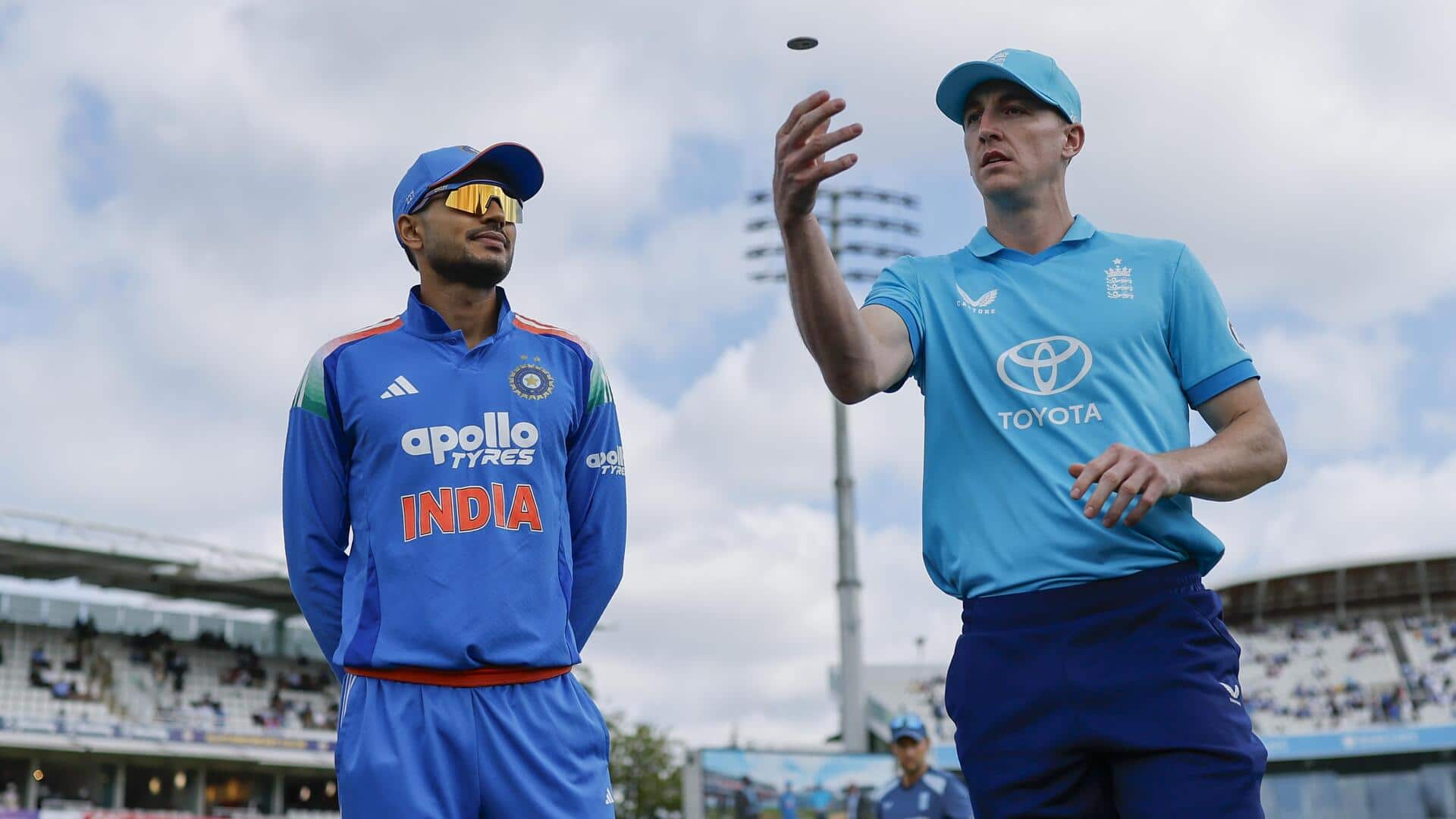
What's the future of 'randomly scheduled' bilateral series?
What's the story
Sanjog Gupta, the International Cricket Council (ICC) CEO, has said that the era of "randomly scheduled" bilateral series should come to an end. Gupta, who took over as ICC CEO in July last year, made these remarks while speaking to PTI. He emphasized the need for context, culture, competition and competitiveness in cricketing events. Here are further details.
Resource allocation
Need for investment in cricketing events
Gupta stressed that these elements require significant investment of resources, both financial and non-financial.
He said, "It's important to stay focused on the four levers which drive attention and affiliation - context, culture, competition and competitiveness."
He also pointed out that One-Day Internationals (ODIs) can not only survive but thrive in this environment.
Notably, the ODIs have lost context of late outside the quadrennial World Cup.
Tournament format
Next ODI World Cup
The next ODI World Cup will be hosted in October-November 2027 by South Africa, Zimbabwe, and Namibia.
The ICC had recently revamped the structure of this 14-team tournament to include a Super Series round before the group stages, and a new Super 7 before the semi-finals.
However, this new format has drawn criticism from two Associate boards - Cricket Scotland and KNCB (Netherlands Cricket Board).
Player opinions
Former players raise concerns
Former South Africa captain Graeme Smith had raised concerns over bilateral cricket last year, saying it lacked "context" and "consistency" when not played among top teams.
His former teammate Jonty Rhodes echoed similar sentiments at an event in Mumbai.
He said ODIs "might be in trouble" going forward but may not go away altogether.