'Salman Agha's run-out legal': MCC addresses spirit-of-cricket aspect
What's the story
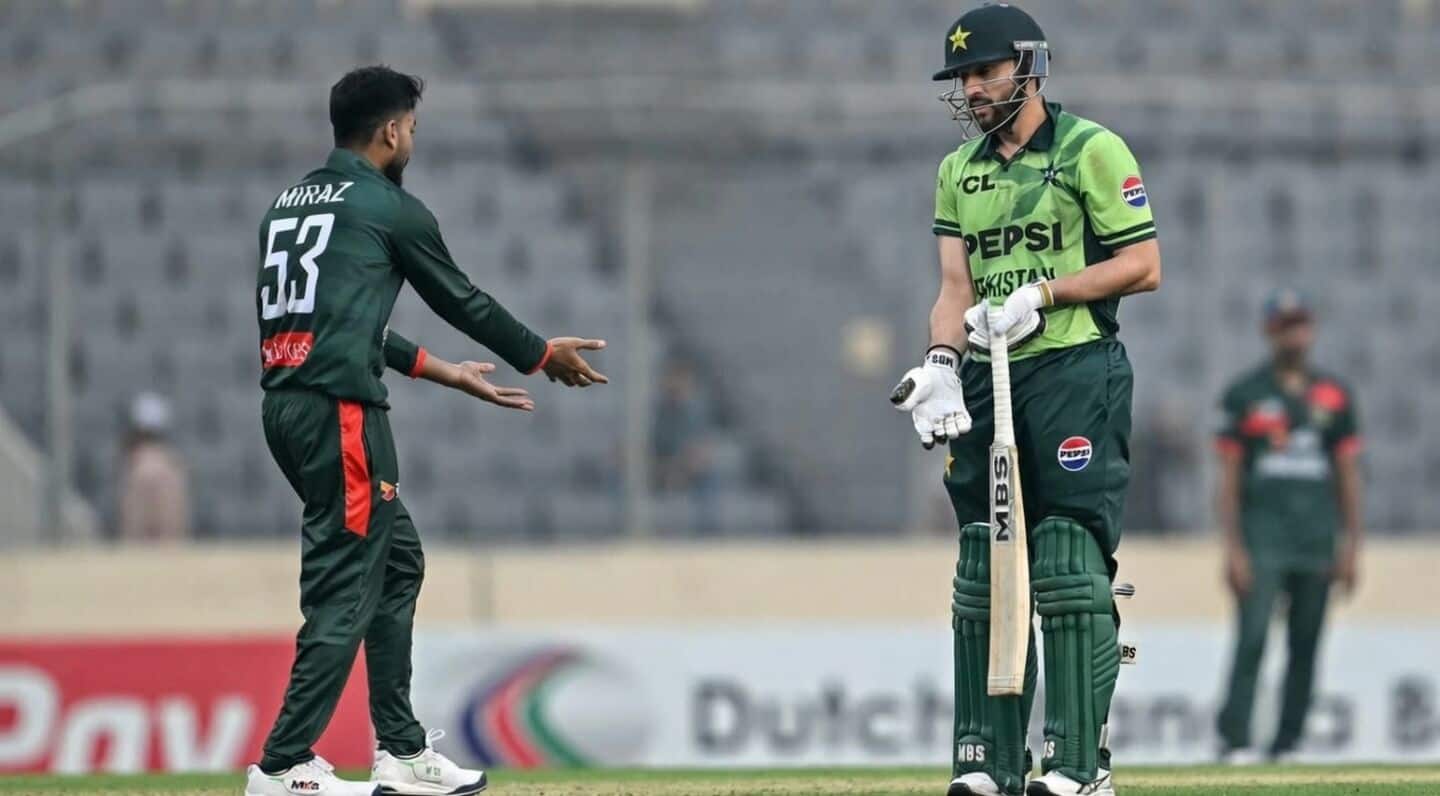
The Marylebone Cricket Club (MCC) has finally broken the silence on the controversial run-out of Pakistan batter Salman Agha during the 2nd ODI against Bangladesh in Dhaka. The cricketing body, which is responsible for maintaining the game's laws, said that Agha's dismissal was completely in line with these laws. However, it also hinted that Bangladesh could have withdrawn their appeal on spirit-of-cricket grounds due to the nature of Agha's exit from his ground.
Player's view
Agha calls for sportsman spirit
After the match, Agha referred to the Spirit of the Game, saying he would have acted differently if he were in the fielder's position. He said he would have "gone for sportsman spirit."
The Pakistan batter, who scored 64, was later reprimanded by match referee Neeyamur Rashid due to equipment abuse.
Despite the controversy surrounding Agha's reprimand, Pakistan went on to win the match by 128 runs via the DLS method.
Controversy
How did the incident pan out?
The incident occurred in the 39th over of Pakistan's innings when Agha was batting with Mohammad Rizwan.
After Rizwan played a flat delivery from Mehidy Hasan Miraz back to the bowler, Miraz blocked it with his boot.
As the ball slowed down, Agha stepped out of his crease to pick it up and return it.
However, Miraz quickly grabbed the ball and threw it onto the stumps, catching Agha short of his ground.
Official stance
What did the MCC say?
In a statement released on Monday, the MCC said that the umpires were right to rule Agha out.
They noted that "the non-striker was clearly out of his ground when the wicket was broken, and the ball was in play."
The cricketing body also emphasized that no batter should try to pick up the ball without the fielding side's consent, as this could lead to an obstructing-the-field dismissal.
Ball status
'Ball does not become dead...'
The MCC clarified that there was no question of the ball being dead in this case.
It said, "There have been some suggestions that the ball should have been treated as Dead. That is not viable under the Laws; the ball does not become dead when players collide - if it did, that would incentivise players to seek out collisions when the situation was advantageous."
Law update
Upcoming dead-ball law won't change anything
The MCC also addressed the upcoming dead-ball law, which gives umpires more discretion in deciding when the ball has "finally settled."
They said this would not change anything in Agha's case.
The cricketing body concluded by saying, "There is no case, therefore, to be made that this was Not out under Law, nor that the Law could be re-written to somehow make a situation like this Not out."
Spirit consideration
Spirit of cricket aspect
On the spirit-of-cricket aspect, the MCC said it was up to the "fielding team to withdraw the appeal."
"Agha clearly thought the ball was dead and was attempting to assist the fielding side after an unintentional collision which made it harder for him to regain his ground. The Laws allow a withdrawal for incidents where the batter is out in Law, but the fielding side feels that it would be better, within the Spirit of Cricket, to allow them to continue," it added.