What we know about the Russian plague scare
What's the story
Health authorities in Siberia's Irkutsk region have placed nearly 200 people under medical observation after a laboratory worker died from a suspected case of pneumonic plague. The researcher, a 28-year-old lab technician at the Irkutsk Anti-Plague Research Institute of Siberia and the Far East in Shelekhov, had contracted "pneumonia of unknown etiology," according to Russia's national public health agency Rospotrebnadzor.
Woman
She was admitted to the hospital on Tuesday
She reportedly told medical staff she had accidentally broken a test tube containing the pneumonic plague pathogen, Yersinia pestis, a bacterium usually found in small mammals and their fleas.
Some reported that she became ill after returning from a work trip.
She was admitted to the hospital on Tuesday with signs of severe pneumonia in Shelekhov. She was placed on a ventilator and died on Thursday.
However, Russian authorities have not officially confirmed that plague was the cause of death.
Emergency measures
Governor holds emergency meeting
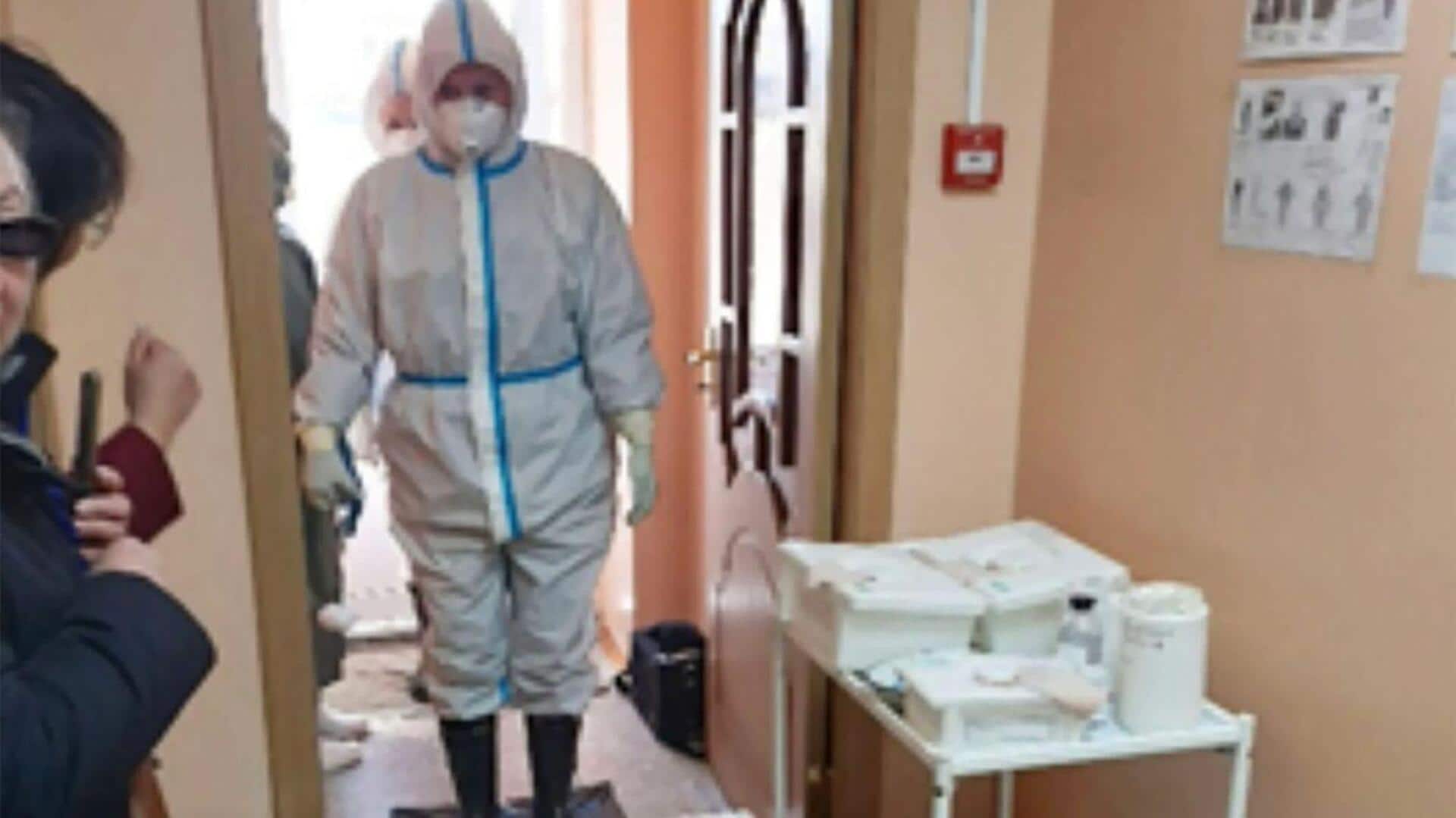
The Shelekhov district hospital has been placed under quarantine pending an assessment by a special panel, the Moscow Times reported.
At least 197 persons who may have had contact with her were reportedly kept in medical isolation, with over 100 in hospital wards.
"All identified contact persons have been placed under medical observation. As of today...contacts show no signs of illness, and their laboratory test results are negative," Igor Kobzev, governor of Irkutsk, said after meeting with regional anti-epidemic officials.
Health update
'Sanitary and epidemiological situation stable in Irkutsk and Shelekhov'
On Sunday, Rospotrebnadzor also confirmed that the "sanitary and epidemiological situation" in Irkutsk and Shelekhov is "stable."
The agency conducted extensive testing and found no pathogens related to the deceased patient's laboratory work.
However, it didn't clarify if her pneumonia was caused by any other disease or how she contracted the illness.
Testing of the deceased's contacts revealed two cases of COVID-19 and two rhinovirus infections, though their link to the patient's death remains unclear.
Disease details
What is the plague?
The World Health Organization defines plague as a disease caused by the bacterium Yersinia pestis, usually found in small mammals and their fleas.
The bubonic plague is transmitted through infected fleas from animals to humans, causing painful lymph node inflammation called "buboes."
Pneumonic plague is more virulent and can be transmitted through respiratory particles, making it highly fatal if not detected early.
Ongoing investigation
Unclear if she contracted any form of plague
As of now, the identity of the deceased researcher's "pneumonia of unknown etiology" remains unclear. It's also uncertain if she contracted any form of plague or if an incident occurred in the lab.
Axios reported that the White House is monitoring reports about the researcher's death and emergency quarantine measures by Russian authorities.
An unnamed official from Trump's administration said they are "aware, monitoring the outbreak, and assessing options," although President Donald Trump has not publicly commented on this matter.