'Offer made': Bhutan journalist rejects India's claims on E20 export
What's the story
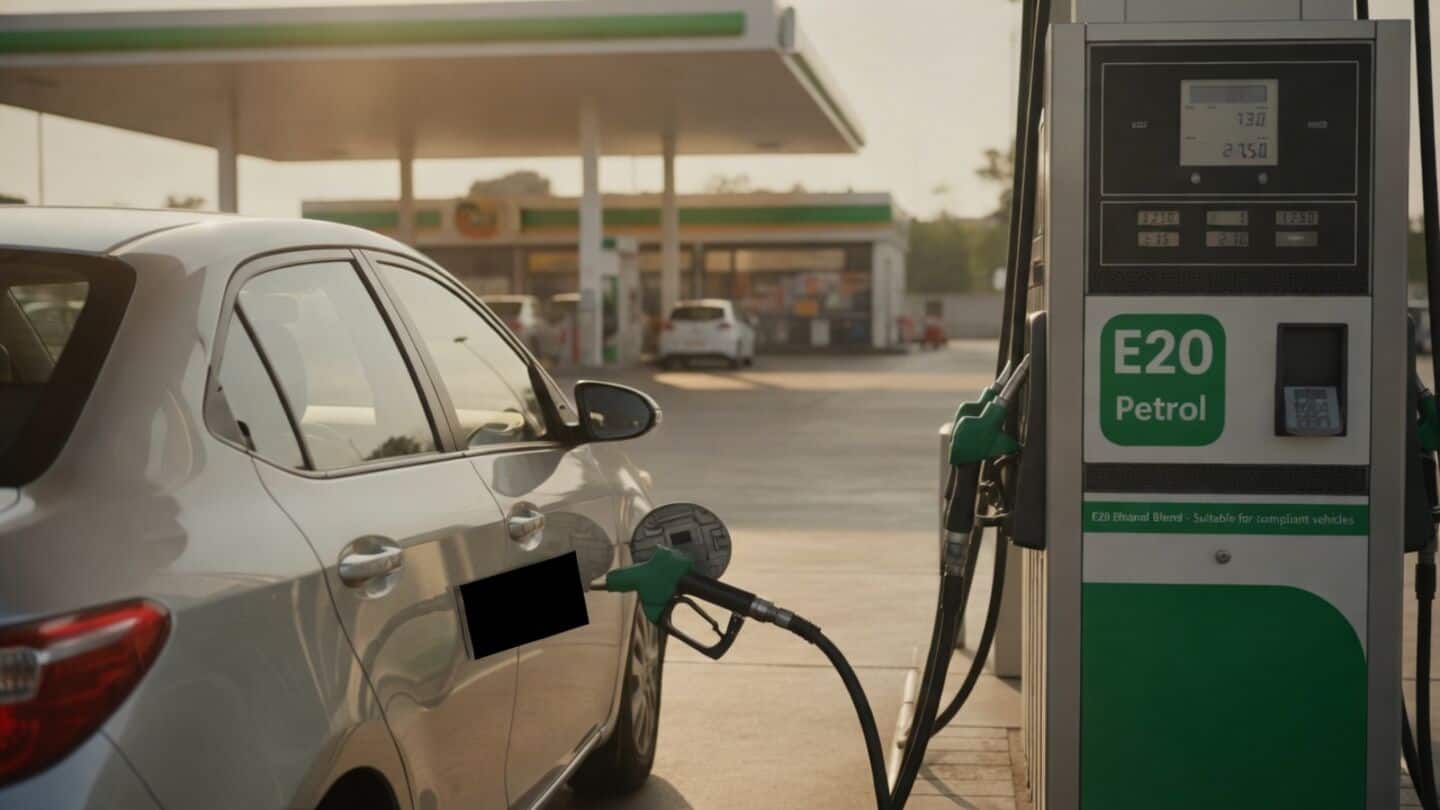
A controversy has erupted between India and a Bhutanese publication over the newspaper's report on E20 petrol imports. The Bhutanese claimed it raised the question of whether the country was importing E20 petrol from India to its Department of Trade. "The Department said...Bhutan is not importing E20 petrol," it said. Reacting, India's Ministry of Petroleum and Natural Gas (MoPNG) denied that any Indian Oil Marketing Companies (OMCs) had offered E20 petrol to Bhutan or formalized any proposal for its export.
Editor's stance
Editor defends report, shares response from Bhutan's Department of Trade
Hours after the MoPNG's clarification, Tenzing Lamsang, The Bhutanese newspaper's editor, defended its report on X.
"We stand by the story," he said.
He shared a written response from the Department of Trade, which confirmed that no E20 petrol is being imported from India and that it had asked Indian fuel suppliers to continue providing conventional petrol.
The Trade Department cited concerns over water contamination due to ethanol's hygroscopic nature as a reason for not accepting E20 petrol.
Official denial
MoPNG calls reports of Bhutan rejecting E20 export proposal 'incorrect'
The MoPNG has called reports of Bhutan rejecting an E20 export proposal "incorrect."
The ministry reiterated that no such offer was made by Indian OMCs and no formal proposal exists.
It urged reliance on official information from the ministry and OMCs.
"No such offer has been made by OMCs and there is no proposal for export of E20 petrol to Bhutan. Please rely only on official information from (the ministry) ..." it said.
Fuel request
What Trade Department said
According to The Bhutanese, the Trade Department stated that, unlike conventional MS (petrol), ethanol-blended petrol includes a hydroxyl (−OH) group, making it hygroscopic. This means it easily absorbs and mixes with water.
When water contaminates ethanol-blended fuel, it is difficult to separate the water from the fuel, which may impact vehicle performance.
"Further, considering the existing condition and quality of several of the underground storage tanks...the import and handling of ethanol-blended fuel may pose challenges in ensuring fuel quality."