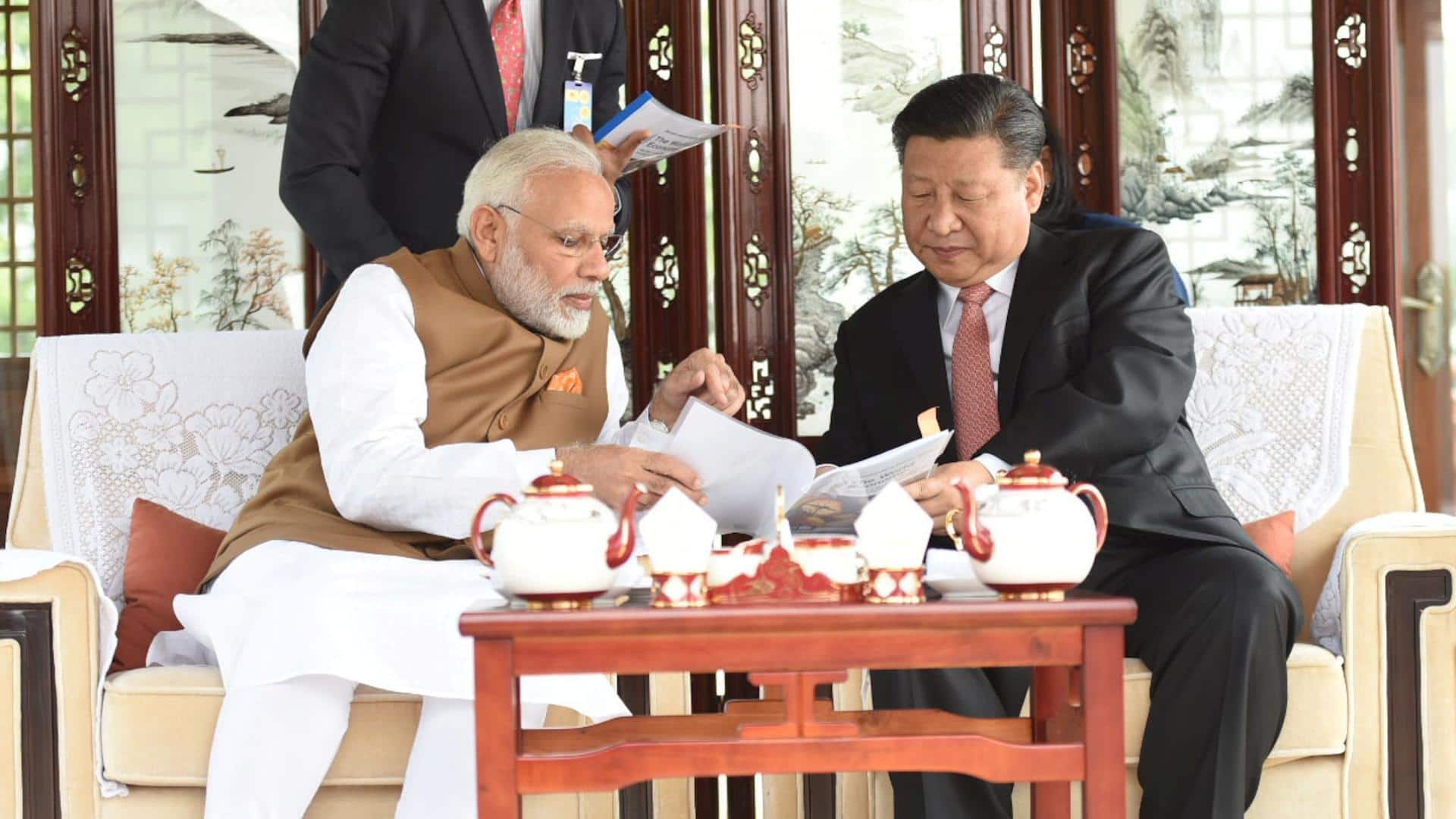
Xi will attend BRICS in India: China confirms
What's the story
China has confirmed that President Xi Jinping will attend the upcoming BRICS summit, which will be held from September 11 to 13 in New Delhi. "At the invitation of Prime Minister of the Republic of India Narendra Modi, President Xi Jinping will attend the 18th BRICS Summit in New Delhi from September 12 to 13," China's foreign ministry said, ending the suspense over the visit. This would be his first visit to India in seven years.
Diplomatic significance
If Xi attends, it could improve India-China relations
The two countries have had a strained relationship since their 1962 war, followed by the border clash in Galwan Valley in 2020.
However, ties have improved recently with Prime Minister Narendra Modi's visit to China last year and both nations' complex relationships with the United States.
Former BRICS Sherpa and Indian diplomat Sanjay Bhattacharyya emphasized that multilateral gatherings like the BRICS Summit are also opportunities for bilateral interaction.
Trade growth
Record bilateral trade between India and China
Sanjay Bhattacharyya, former BRICS Sherpa and Indian diplomat, said, "It is true that the Chinese have not formally confirmed the presence of Xi Jinping, but these occasions where we have multilateral gatherings are also opportunities for bilateral interaction."
Bilateral trade between India and China reached a record $155 billion last year, more than double the figure from a decade ago.
In the first seven months of this year, trade grew by another 23% compared to the same period last year.
Trust issues
India relaxed some of restrictions on Chinese investment
In March, India relaxed some of the restrictions on Chinese investment imposed after the 2020 border clash, with a focus on the electronics, capital goods, and solar cell sectors.
The government is also exploring faster approvals for joint ventures between Indian and Chinese enterprises in certain industries, Reuters reported.
China's foreign ministry told Reuters that Xi and PM Modi think the two countries are "partners, not competitors, and they represent opportunities, not threats, for each other's development."