Chinese researchers discover hidden gold, silver deposits in Pacific Ocean
What's the story
Chinese scientists have discovered a massive underwater deposit of gold and silver in the Pacific Ocean. The find was made by a joint research team from Tsinghua University, Qingdao Institute of Marine Geology, and Shanghai Jiao Tong University. They discovered three large seafloor massive sulfides (SMS) or hydrothermal sulfide deposits with high concentrations of these precious metals.
Mining potential
Ore samples more valuable than land counterparts
The ore samples from this discovery were found to contain more gold and silver than their land counterparts.
Preliminary analysis showed gold concentrations of up to 0.45 troy ounces per US short ton of ore, while silver grades reached 36.3 troy ounces per US short ton.
The potential polymetallic sulfide resources could rival world-class seafloor deposits, making this find economically significant.
Expedition details
Discovery made during an 18-day expedition
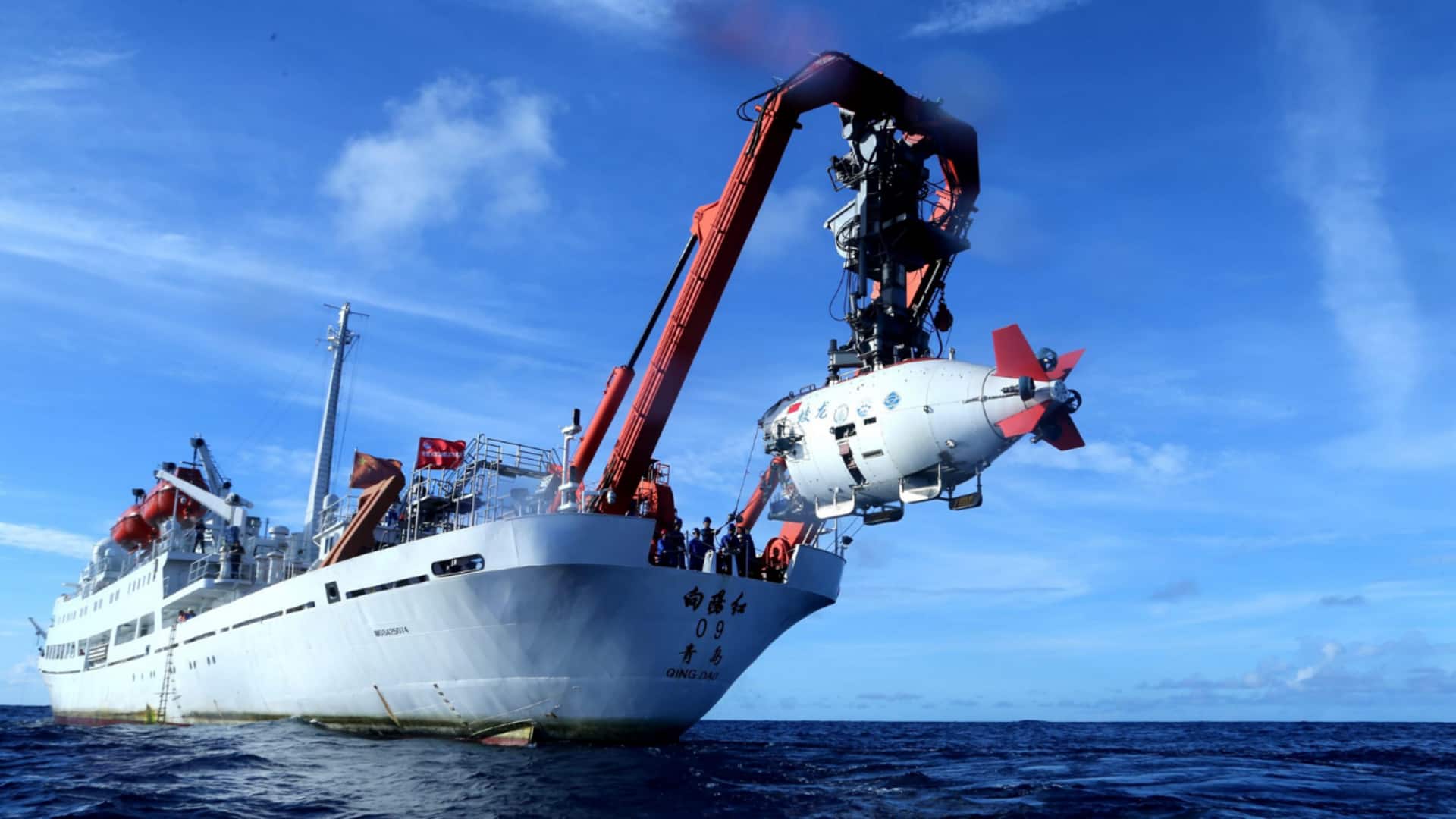
The discovery was made during an 18-day expedition that started from Shenzhen on August 10 aboard the Chinese oceanographic research ship Xiang Yang Hong 10.
The researchers conducted seven dives in a back-arc basin in the western Pacific.
This area is characterized by extremely hot fluids rich in minerals seeping through cracks on the ocean floor, creating hydrothermal fields with high economic value.
Mining area
Researchers previously detected dozens of hydrothermal vents
The researchers had previously detected dozens of hydrothermal vents at depths between 2,300 and 4,920 feet with temperatures above 315 degrees Celsius. They later found a large hydrothermal mining area within the basin.
The ore bodies were analyzed on board the ship and were mainly composed of chalcopyrite, pyrite, and sphalerite, minerals with high economic value.
Economic zone
The discovery raises questions about the future of mining
According to maritime tracking data, Xiang Yang Hong 10 traveled through waters north and east of Taiwan and north of the Philippines during its expedition.
Chinese state media CCTV reported that this basin is within China's exclusive economic zone, although exact coordinates have not been disclosed.
The discovery raises questions about the future of mining in these areas owing to the risk of permanent damage to fragile, unexplored marine ecosystems.