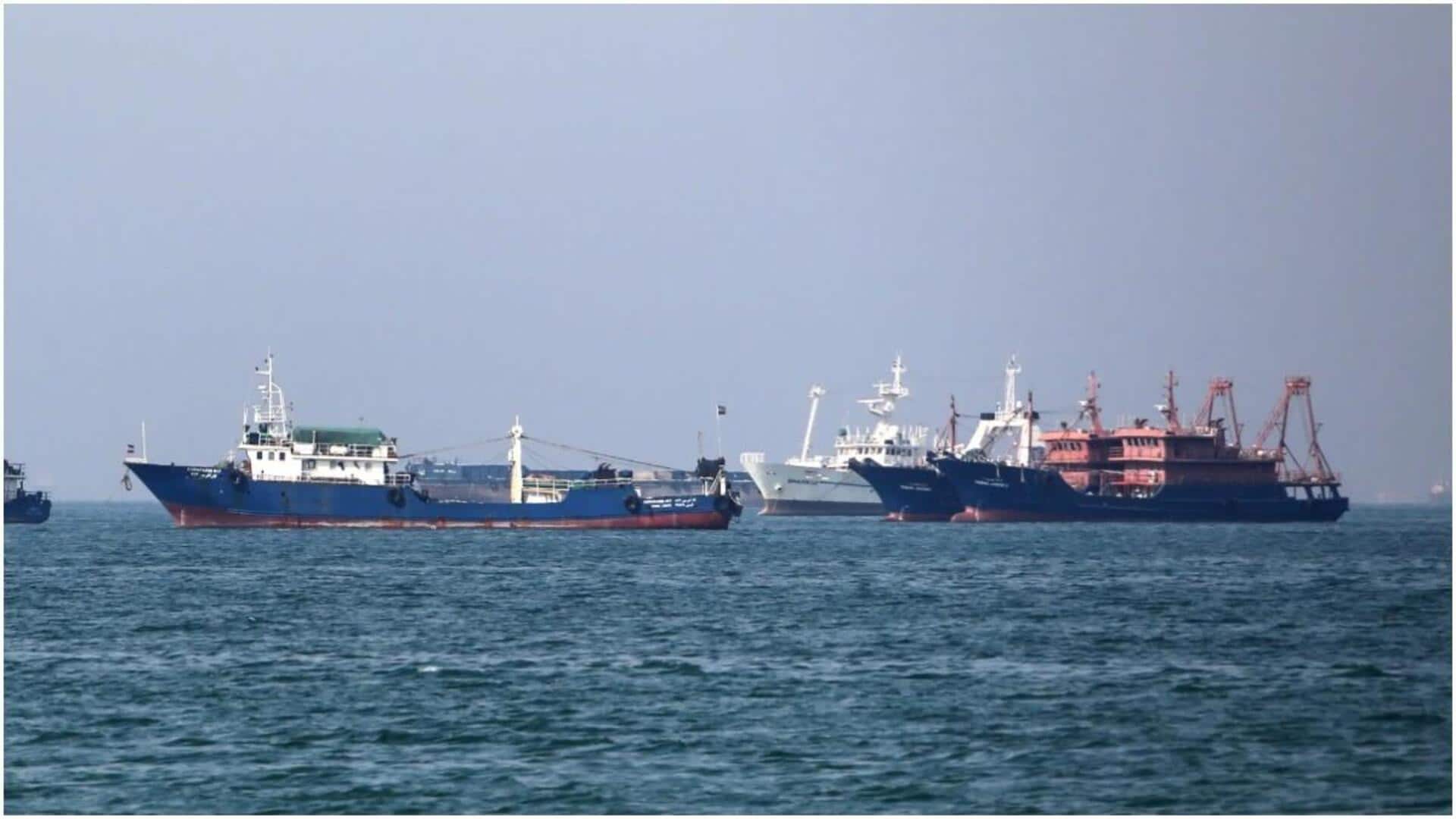
Scammers demand crypto payments for safe passage through Hormuz strait
What's the story
Shipping companies with vessels stuck west of the Strait of Hormuz have been targeted by scammers. The fraudulent messages promise safe passage through this critical waterway in exchange for cryptocurrency payments. Greek maritime risk management firm MARISKS issued a warning about these scams, confirming that they are not authorized by Iranian authorities.
Geopolitical implications
Status of vessels around the Strait of Hormuz
The US has kept its blockade on Iranian ports, while Iran has alternated between lifting and re-imposing its own blockade on the Strait of Hormuz. This strategic chokepoint sees nearly 20% of the world's oil and liquefied natural gas passing through it. The ongoing ceasefire talks have seen Tehran propose tolls for vessels seeking safe passage through this vital route.
Scam details
Scammers impersonating Iranian authorities
MARISKS has warned shipowners about unknown actors impersonating Iranian authorities. These fraudsters have been sending messages demanding transit fees in cryptocurrencies like Bitcoin or Tether for "clearance." The firm confirmed that these messages are scams and were not sent by any Iranian authorities. Hundreds of ships and roughly 20,000 seafarers remain stranded in the Gulf amid these geopolitical tensions.
Incident report
Shots were fired at ships attempting to pass
On April 18, when Iran briefly opened the strait under certain checks, some ships attempted to pass. However, at least two of them (which included a tanker) reported that Iranian boats had fired shots at them, forcing the vessels to turn around. MARISKS believes that one of these vessels which tried to exit on Saturday and was hit by gunfire may have fallen victim to this cryptocurrency scam.
Text
A look at the fraudulent message
The fraudulent message cited by MARISKS reads, "After providing the documents and assessing your eligibility by the Iranian Security Services, we will be able to determine the fee to be paid in cryptocurrency (BTC or USDT). Only then will your vessel be able to transit the strait unimpeded at the pre-agreed time." This highlights how scammers are using official-looking language and procedures to trick shipping companies into paying these bogus fees.