Iran's power struggle deepens amid hardliner attacks on leaders
What's the story
Iran is witnessing a power struggle within its political establishment, with hardline factions accusing leaders of a "soft coup" over a deal with the United States. The tensions were evident during former Supreme Leader Ayatollah Ali Khamenei's funeral in Tehran last week. President Masoud Pezeshkian was met with chants of "death to the compromiser" as he walked alongside Khamenei's coffin.
Accusations
Foreign minister attacked
Foreign Minister Abbas Araghchi, who negotiated a ceasefire and sanctions relief deal with the Trump administration, was also reportedly attacked.
He reportedly left the funeral after being pelted with stones by mourners accusing him of being a "traitorous sellout."
The hostility highlights a narrative gaining traction among Iran's hardline groups, alleging that senior officials negotiating with Washington are sidelining revolutionary leadership.
Leadership void
Absence of Mojtaba Khamenei
Supreme Leader Mojtaba Khamenei, who succeeded his father, has been largely absent from public life amid security concerns.
Critics have speculated that this could be due to health issues, but no official confirmation has been provided.
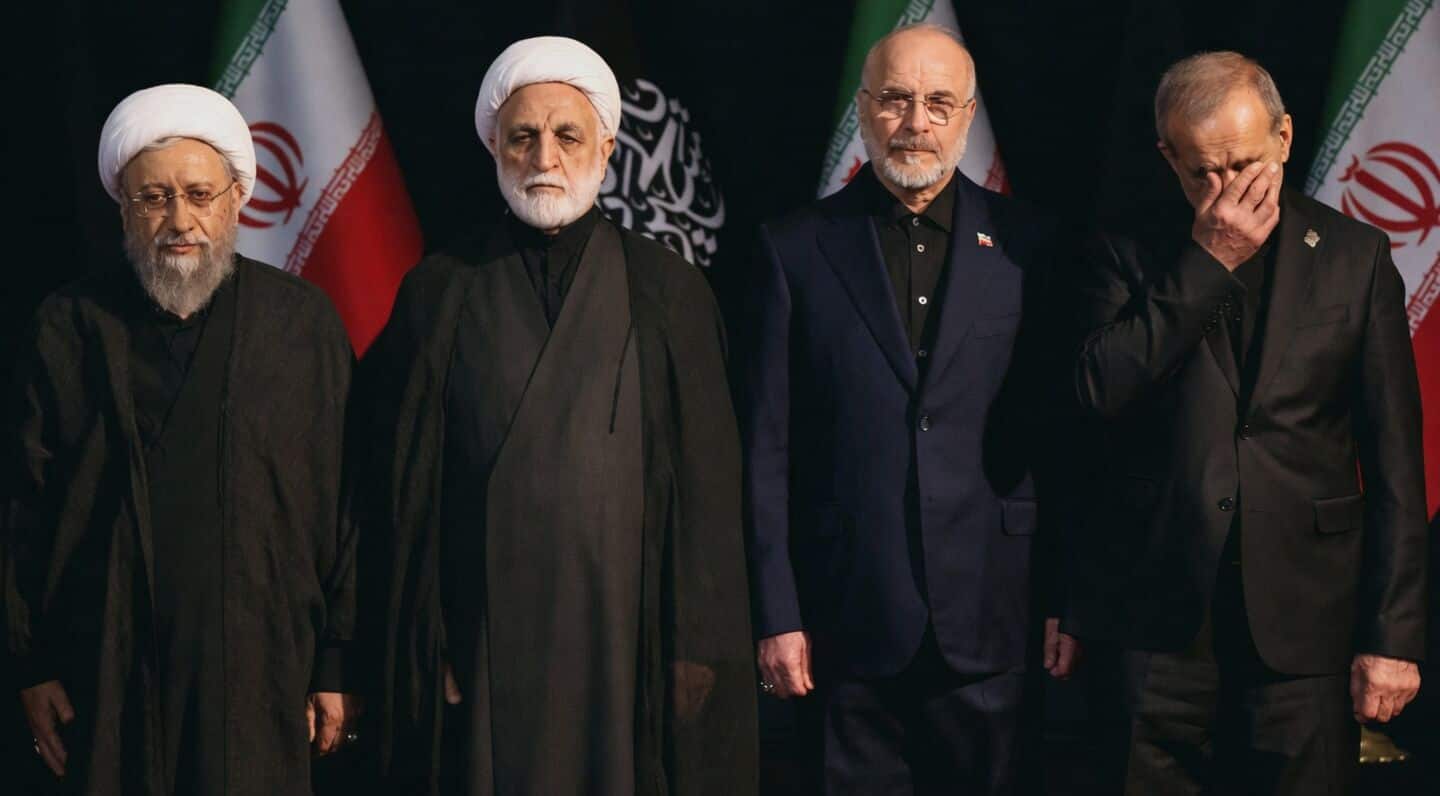
In Khamenei's absence, Parliament Speaker Mohammad Bagher Ghalibaf, President Pezeshkian, and Foreign Minister Araghchi have become the public faces of Iran's post-war administration.
Retaliation calls
Funeral ceremonies provide platform for hardliners
The week-long funeral ceremonies provided a platform for Iran's uncompromising factions to demand military retaliation against the United States and reject diplomatic engagement.
The Revolutionary Guards launched attacks on shipping in the Strait of Hormuz, prompting US strikes and renewed calls from hardliners to abandon the truce.
Prominent figures within this camp have publicly threatened government members over their agreement with Washington.
Political fallout
Internal battle continues in Iranian parliament
The internal battle has also played out within the Iranian Parliament.
Conservative lawmaker Mahmoud Nabavian was removed from the National Security Commission after opposing the US agreement.
Analysts say Iran's current leadership is trying to curb the influence of ultraconservative groups like Jebhe-ye Paydari (Endurance Front).
Despite being relatively small, these groups remain influential in parliament and other institutions.
Strategic objectives
Broader Iranian establishment remains united on key strategic objectives
US President Donald Trump has called Iran "seriously fractured," but analysts say the broader establishment remains united on key strategic objectives.
These include securing sanctions relief and maintaining control over the Strait of Hormuz.
Mojtaba Khamenei's absence, conditional backing of the ceasefire, and radical voices demanding tougher military responses against the US and Israel have further complicated matters.