Indian diplomat objects to 'incorrect' map of India in Bangladesh
What's the story
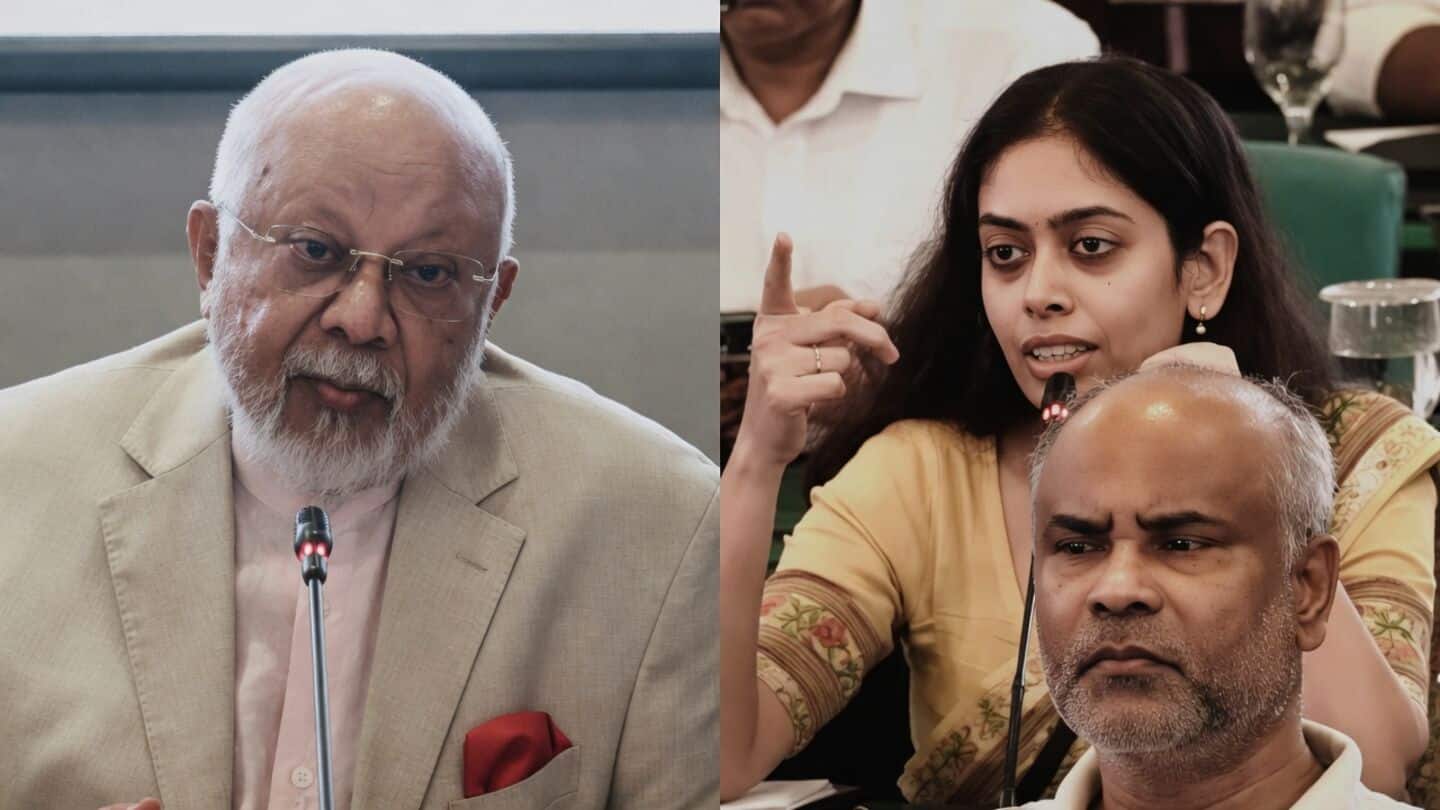
An Indian diplomat has raised concerns over an incorrect map of India displayed at a seminar in Bangladesh. The incident occurred during a presentation by former Bangladesh High Commissioner to India, Ahmed Tariq Karim, at the Bangladesh Institute of International and Strategic Studies (BIISS). The seminar was titled Rebuilding Trust, Renewing Regional Integration: Pathways for Revitalizing SAARC.
Map controversy
Map for 'representational purposes only': Karim
Pooja Kumari Jha, a second secretary at the Indian High Commission in Dhaka, objected to the map showing Jammu and Kashmir as part of Pakistan.
She said, "The map of India depicted is incorrect. Jammu and Kashmir is an integral part of India."
Karim clarified that the map was for "representational purposes only" and "doesn't project actual boundaries."
Acknowledgment
Pre-colonial South Asia was a region of empires, networks: Karim
Karim acknowledged Jha's concerns but continued with his presentation.
He spoke about how colonialism reshaped political imagination in South Asia, creating "congested identities, uneven institutions, and deep anxieties about territorial integrity."
He added that pre-colonial South Asia was a region of empires and networks, not just territorial containers.
"It was a layered region of empires, princely states, trading rules, pilgrimage networks, linguistic continuance, renovations, and ecological zones," he said.
Regional cooperation
Bangladesh's plans to coordinate closer cooperation among SAARC countries
Bangladesh's State Minister for Foreign Affairs, Shama Obaed, was the chief guest at the event. She stressed deeper regional cooperation in South Asia and bridging gaps between potential and performance.
"The organisation needs stronger implementation capacity, greater financial strength, more effective specialised mechanisms and a practical culture of follow-up," she said.
Obaed also spoke about Bangladesh's plans to coordinate closer cooperation among SAARC member countries through confidence-building initiatives.