Iran's Pezeshkian says enemies misrepresenting remarks to isolate Tehran
What's the story
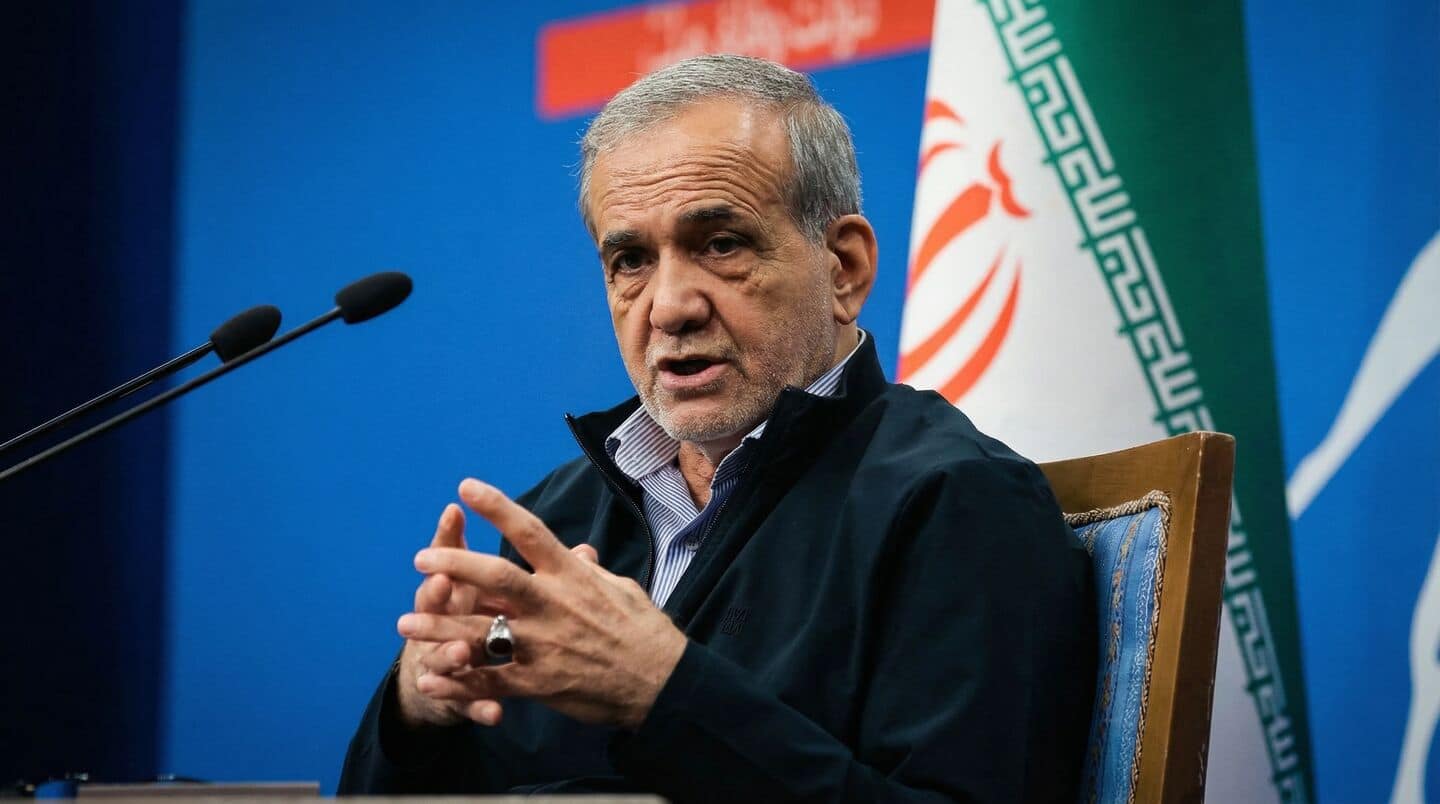
Iranian President Masoud Pezeshkian has clarified that his recent comments on attacks in the Gulf were "misinterpreted by the enemy." His earlier apology to neighboring countries for Iranian strikes on US military facilities had sparked debate both domestically and regionally. In a televised address, Pezeshkian reiterated Iran's commitment to maintaining good relations with its neighbors, saying, "It has repeatedly been said we are brothers and must have good relations with neighbors."
Apology fallout
Temporary leadership council decides to suspend attacks on neighboring states
Pezeshkian had earlier apologized to Gulf countries affected by Iranian strikes, asking them not to support the US-Israel campaign against Iran.
He also rejected US President Donald Trump's demand for unconditional surrender as "a dream."
The Iranian president said Tehran's temporary leadership council had decided to suspend attacks on neighboring states unless they were launched from those territories.
Rising tensions
War enters 2nd week, Trump rules out negotiations with Iran
US President Donald Trump indicated Washington wasn't interested in negotiations with Iran, suggesting the conflict could end only if Tehran's military capabilities and leadership were eliminated.
The war has now entered its second week, with Israel launching fresh strikes across Iran and explosions reported in parts of Tehran.
Iranian authorities claim the US-Israeli campaign has killed at least 1,332 civilians, while Iranian missile and drone attacks have killed 10 people in Israel.
Widening war
Conflict spreads to Lebanon, killing around 300 people
The conflict has also spread to Lebanon, with Israeli airstrikes targeting Hezbollah strongholds. The death toll from these attacks has risen to around 300 since Monday, March 2.
The escalating war has impacted global energy markets, pushing oil prices to multi-year highs and forcing regional producers to cut output.
Countries and firms dependent on oil from West Asia have also cut down refining.