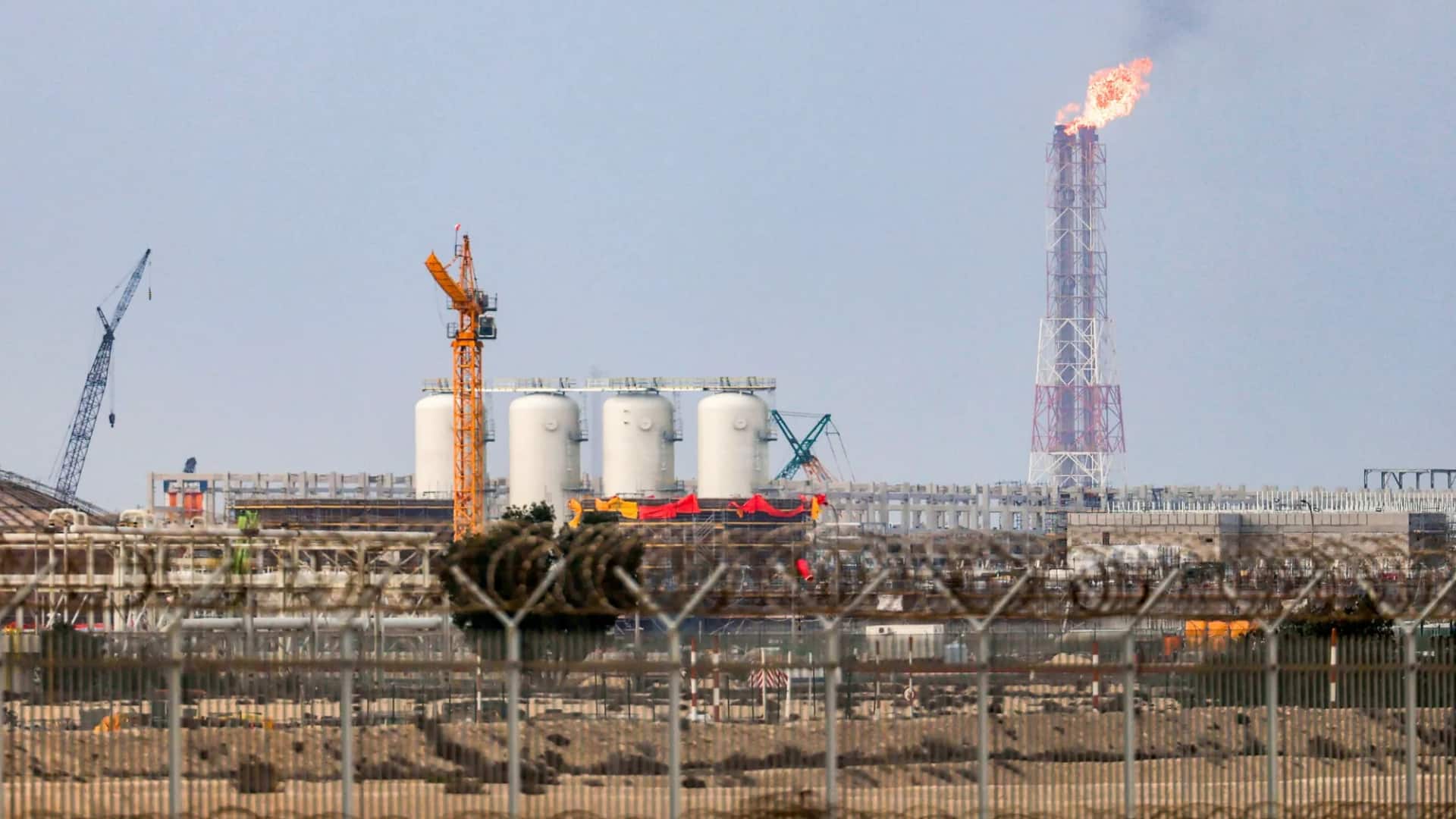
Iran strikes Qatar LNG plant, exports disrupted for 5 years
What's the story
Qatar's liquefied natural gas (LNG) export capacity has been severely affected by recent Iranian attacks, resulting in an estimated $20 billion in annual revenue lost, according to Saad al-Kaabi, QatarEnergy's CEO and state minister for energy affairs. The strikes have damaged at least two of Qatar's 14 LNG trains and one of its two gas-to-liquids (GTL) facilities. This is expected to affect exports by up to five years, to Europe and Asia, including China and India.
Contract impact
QatarEnergy to declare force majeure on long-term contracts
QatarEnergy, the state-owned company, has announced it will declare force majeure on long-term contracts for up to five years. This affects LNG supplies bound for Italy, Belgium, South Korea, and China.
Al-Kaabi said repairs will sideline 12.8 million tons of LNG per year for three to five years.
"These are long-term contracts that we have to declare force majeure. We already declared, but that was a shorter term. Now it's whatever the period is," he said.
Escalating conflict
Damage set region back by decades
The Iranian attacks on Gulf oil and gas facilities have intensified after Israeli strikes on its own infrastructure.
The situation worsened with an Iranian missile attack on Ras Laffan, Qatar's largest LNG plant.
Al-Kaabi said production can only resume once hostilities cease, adding that the damage has set the region back 10 to 20 years.
Facility repairs
Partners in affected facilities
The damaged units cost around $26 billion to build. ExxonMobil and Shell are partners in the affected LNG and GTL facilities, respectively. Repairs will take up to a year for the GTL facility.
Al-Kaabi also noted that no work is currently being done on Qatar's North Field expansion project, which could be delayed by over a year due to these developments.
Export decline
Other condensate losses expected
Initial estimates show Qatar's condensate exports will drop by around 24% due to the strikes. LPG exports are expected to fall by 13%.
Helium output will decrease by 14%, while naphtha and sulfur production will fall by 6%.
These losses could have far-reaching implications for countries dependent on these resources.
Shock
'Never thought Qatar would be under attack'
Speaking to news agency Reuters, Al-Kaabi said, "I never in my wildest dreams would have thought that Qatar would be, Qatar and the region, in such an attack, especially from a brotherly Muslim country in the month of Ramadan, attacking us in this way."
The losses have implications ranging from LPG used in restaurants in India to South Korea's chipmakers, which use helium. The damaged units cost approximately $26 billion to build, al-Kaabi said.