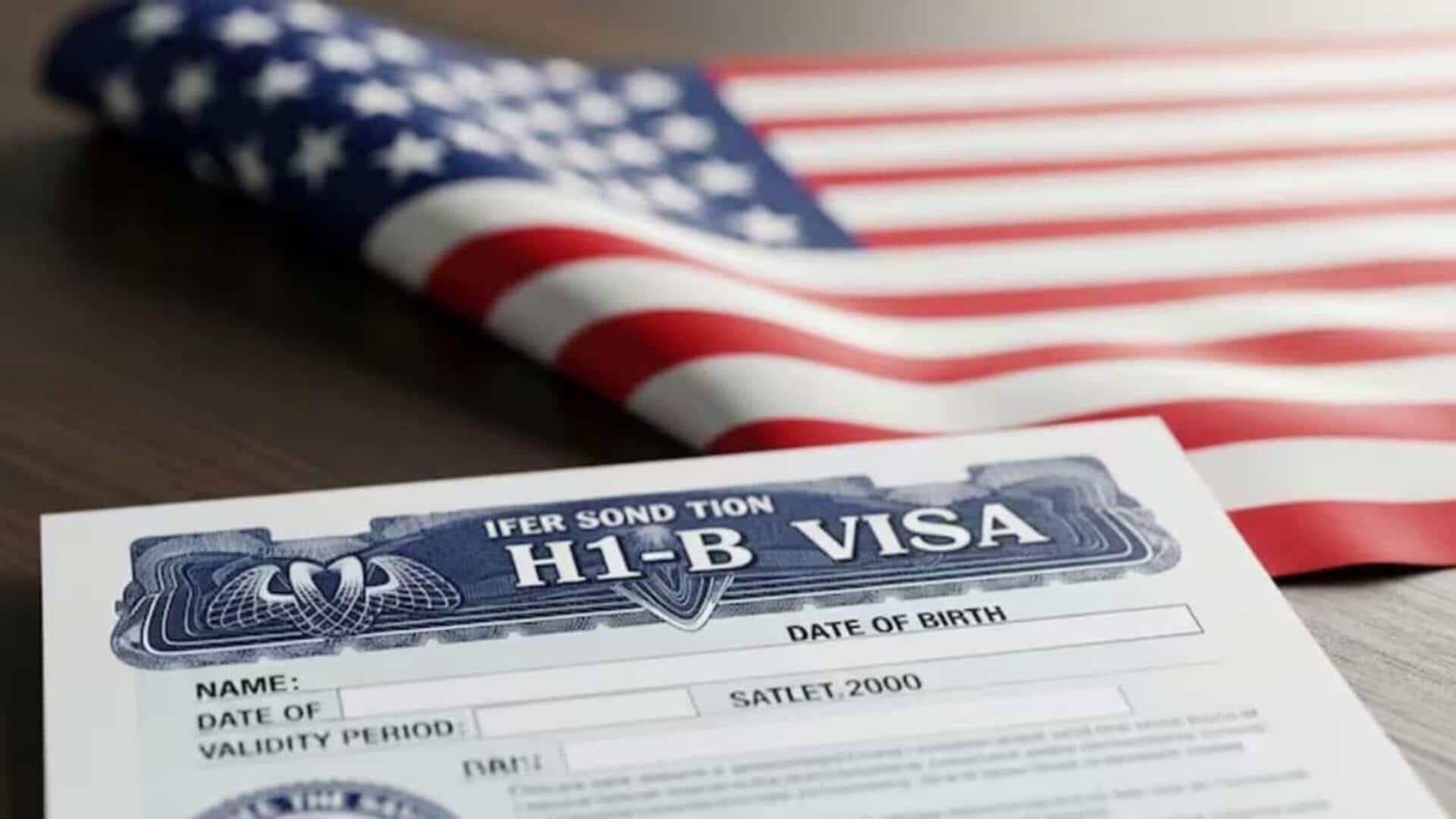
Issue with signature? Your H-1B, green-card applications might be rejected
What's the story
The US Department of Homeland Security (DHS) has introduced a new interim rule, tightening the signature requirements for immigration applications. The rule, which will come into effect from July 10, 2026, applies to all types of immigration benefit requests including H-1B visa petitions and Green Card filings. Under this regulation, if any signature-related issues are found after an application has been accepted for processing, USCIS can reject or deny the request.
Consequences
Applicants may lose filing fees, have to refile
The new rule also makes it clear that applicants could lose their filing fees and might have to refile their applications if their signatures are found invalid.
This change is expected to affect employment-based visa filings, adjustment of status applications, and employer-sponsored Green Card cases.
Although the signature requirement isn't new, DHS said earlier rules weren't consistently applied and applicants often didn't understand how USCIS dealt with deficient signatures.
Expanded powers
Immigration officers get more powers
The new rule gives immigration officers more power to reject or deny cases at later stages if they discover signature defects during processing.
USCIS has clarified that there's no way to "cure" a deficient signature after filing, meaning applicants would have to submit a fresh application.
For paper filings, USCIS continues to accept handwritten signatures as the standard format.
Signature acceptance
Acceptable and unacceptable signatures
USCIS will also accept scanned copies of original wet-ink signatures, faxed or photocopied versions of originally signed documents, and certain electronic signatures in limited USCIS-authorized online filing systems.
However, several forms of signatures won't be accepted for paper filings.
These include copy-paste signatures, digitally generated ones, signature stamps, auto-generated ones created using software tools, and those made by someone other than the applicant or petitioner (including attorneys in most cases).