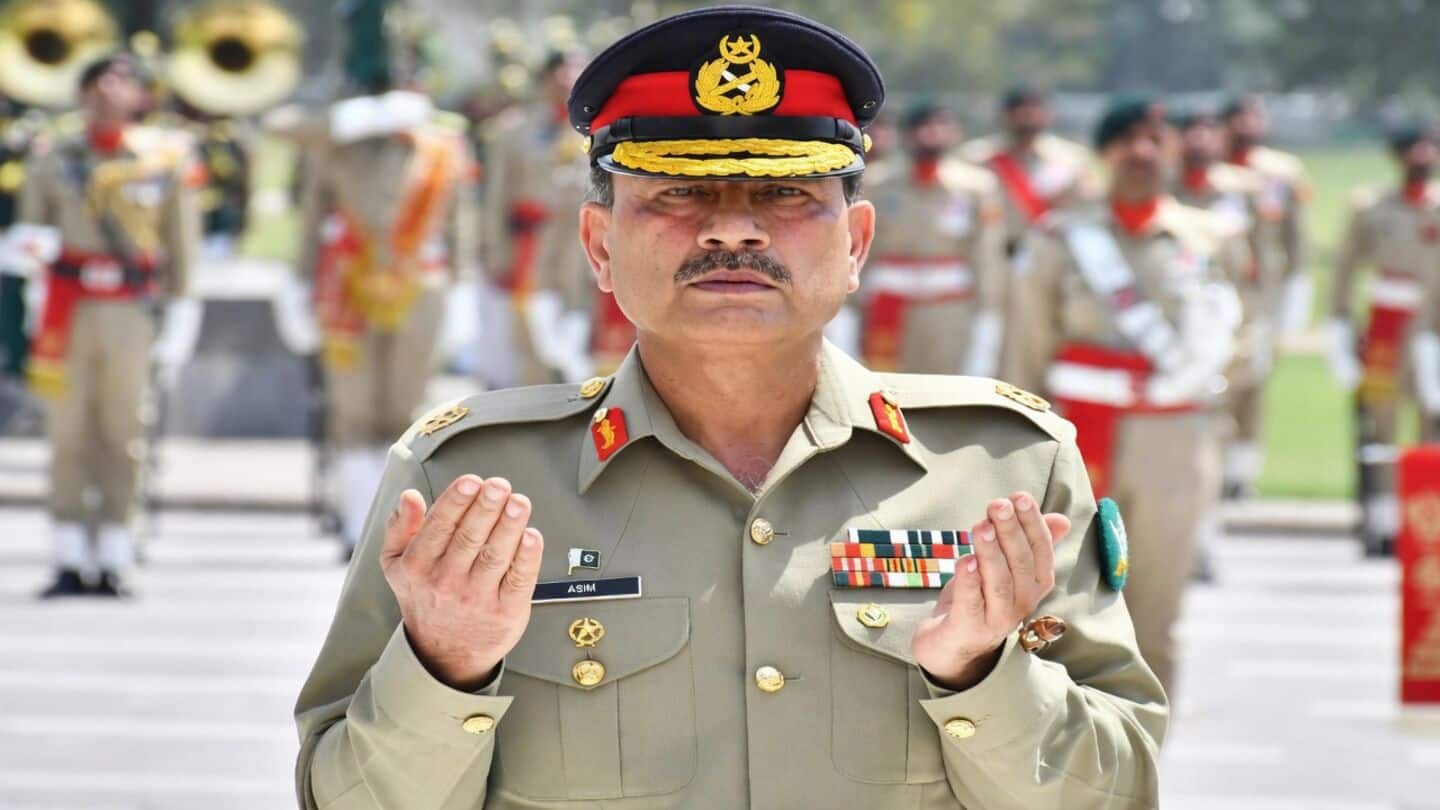
Pakistan: JUI-F leader challenges Asim Munir to contest elections
What's the story
A prominent Pakistani political leader has publicly challenged Army Chief General Asim Munir to leave the military and contest elections. "If you truly believe the public stands behind your policies and your hand-picked government, I dare you: take off your uniform, form your own political party, and step onto the field," the leader said. The challenge was made by Maulana Fazlur Rehman, the chief of Jamiat Ulema-e-Islam-Fazl (JUI-F), at a rally in Punjab's Qasur.
Political tension
Rehman slams military for failing to restore order in Balochistan
Rehman also slammed the military for failing to restore order in Balochistan, where attacks on security forces and infrastructure have increased.
He said, "The country is falling apart. Where are the rulers?"
He also criticized Pakistan's security strategy, warning that asking civilians to confront armed groups would deepen social divisions and fuel violence for generations.
"You will leave, but you are pushing my homeland toward personal vendettas for generations to come, pushing it forever toward murder and plunder," he said.
Civilian resistance
Rehman's remarks come after General Munir's appeal
Rehman's remarks come after General Munir's appeal for civilians to join the military in combating terrorism.
He rejected this, saying defending the country is a constitutional responsibility of the military.
"They say our youth are becoming martyrs. Your youth wear the uniform for this very purpose," he said.
The criticism marks a major escalation in Pakistan's civil-military tensions, with past instances leading to legal action against politicians and activists under national security laws.
Political influence
Military's role in Pakistan
Rehman accused the military of overstepping its constitutional role and meddling in politics, particularly in Balochistan and Khyber Pakhtunkhwa, where violence has escalated.
He also spoke about the weakening of opposition parties and the restriction of independent media.
He said, "You roam around army headquarters like a dictator, yet under your watch, the state has lost its grip."
The military remains one of Pakistan's most influential institutions, with a significant role in security policy, foreign relations, and domestic affairs.