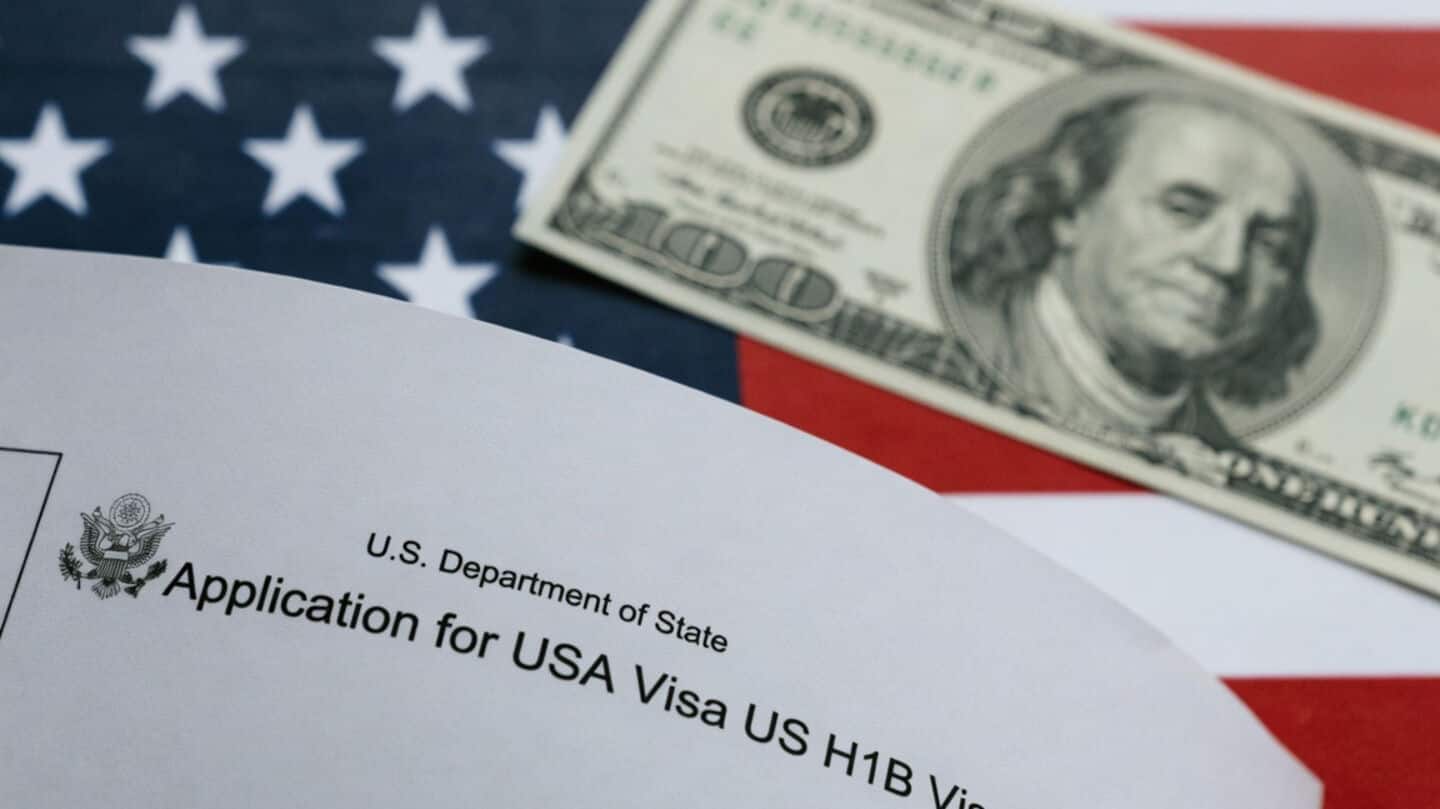
Trump extends $100,000 H-1B fee rule for another year
What's the story
United States President Donald Trump has extended an executive order that mandates employers to pay a $100,000 fee while applying for certain H-1B non-immigrant visas. The White House announced the extension on Friday. The H-1B program allows US employers to hire skilled foreign workers in various sectors, including technology. Before Trump's September 2025 order, H-1B petition fees typically stood between $2,000 and $5,000. The contentious surge to $100,000 triggered swift corporate backlash and faces legal challenges.
Controversy continues
Fee hike has been challenged in court
The fee hike has been challenged in court, with a federal judge ruling in June that the administration acted illegally in collecting the higher fee.
A Boston-based appeals court is currently reviewing that decision. The US Chamber of Commerce has also filed a challenge against the fee increase.
Economic implications
Technology companies especially impacted by restrictions
The H-1B program was created by Congress in 1990 and is especially important for technology companies hiring professionals from India and China.
The restrictions have had a major impact on hiring and expansion plans, with some major users of the program, such as Google parent Alphabet, expanding their operations in India.
Business groups argue that higher fees would make it harder to recruit skilled professionals where qualified US workers are not available.
Policy rationale
Restrictions effective in curbing abuses of H-1B program: Trump
The proclamation signed by Trump on Friday states that the conditions necessitating the restrictions "persist." It adds that the restrictions have been effective in curbing abuses of the H-1B program.
The entry of H-1B specialty occupation workers covered by the proclamation will remain restricted unless their petitions are supplemented by a $100,000 payment.
Limited exceptions exist for cases deemed by the Homeland Security to be in US national interest and not a threat to the country's security or welfare.