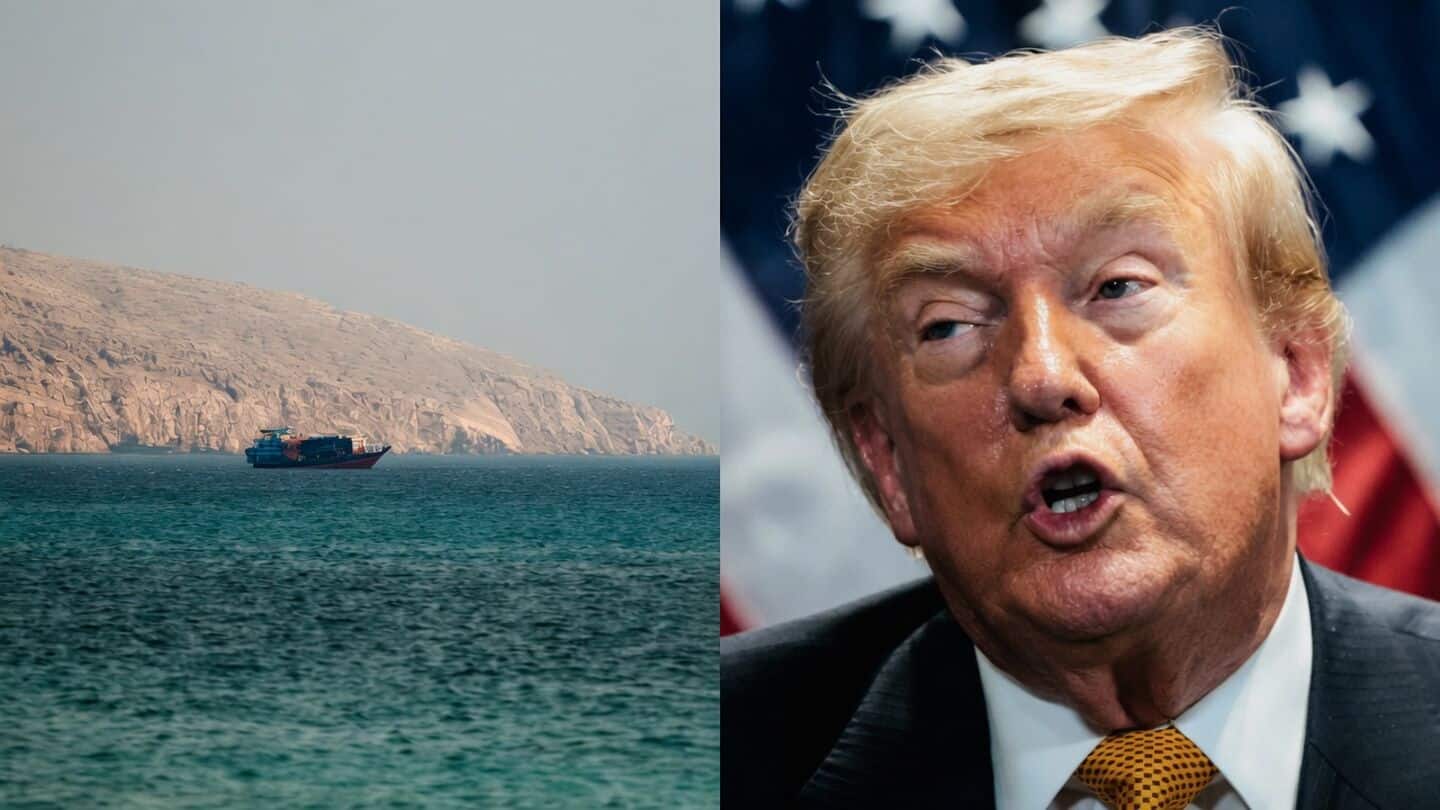
US strikes Iran after Tehran announces Strait of Hormuz closure
What's the story
The United States has launched a fresh round of strikes on Iran after the latter announced an indefinite closure of the Strait of Hormuz. The decision was made after an incident in which a vessel allegedly took an "unauthorized route." The US justified its strikes by citing attacks on a Cyprus-flagged ship, which resulted in a fire and left one crew member missing.
Closure announcement
What led to the closure of Strait of Hormuz
Iran's Revolutionary Guards announced the closure of the Strait of Hormuz after firing on a vessel they claimed was taking an "unauthorized route."
They said several vessels "disregarded our warnings and instructions to correct their course and proceed along the approved route."
One vessel "was struck by a warning shot and brought to a stop," leading to the indefinite closure of this vital energy conduit.
Escalating tensions
US launches third round of strikes on Iran
Shortly after Iran's announcement, the US launched its third round of strikes on Iran this week.
The US Central Command (CENTCOM) said the strikes were in response to "blatantly attacked" on a Cyprus-flagged container ship transiting the Strait of Hormuz.
A civilian crew member is missing, and the vessel cannot continue due to an onboard fire and significant damage to the engine room.
Official statement
Strikes began under Trump's direction
US Defense Secretary Pete Hegseth said, "Iran made a poor choice. Now they pay," in response to CENTCOM's post on X.
The strikes began at 7:15pm ET Saturday under President Donald Trump's direction, according to CENTCOM.
The US said it was imposing a high cost by continuing to degrade Iran's ability to attack civilian mariners and commercial ships freely transiting the strait.
Twitter Post
Pete Hegseth's social media post
Iran made a poor choice. Now they pay. https://t.co/8m4fEfgrXv
— Pete Hegseth (@PeteHegseth) July 11, 2026
Domestic impact
Explosions reported at several locations along southern coast
Iran's state-run media reported explosions at several locations along the country's southern coasts, including Bushehr and Asalouyeh.
Blasts were also heard in Bandar Abbas and Bandar-e Dayyer, as well as Sirik near the Strait of Hormuz.
The United Arab Emirates' defense ministry confirmed air defenses were engaging missile and drone threats, while Bahrain sounded air raid sirens.
Agreement jeopardized
Strikes threaten fragile interim agreement
The latest strikes threaten an already fragile interim agreement aimed at ending the Middle East war.
The deal, signed by Trump and Iranian President Masoud Pezeshkian on June 17, called for an immediate halt to military operations and a commitment to pursue a final agreement within 60 days.
However, Trump announced on July 8 that the deal was "over."