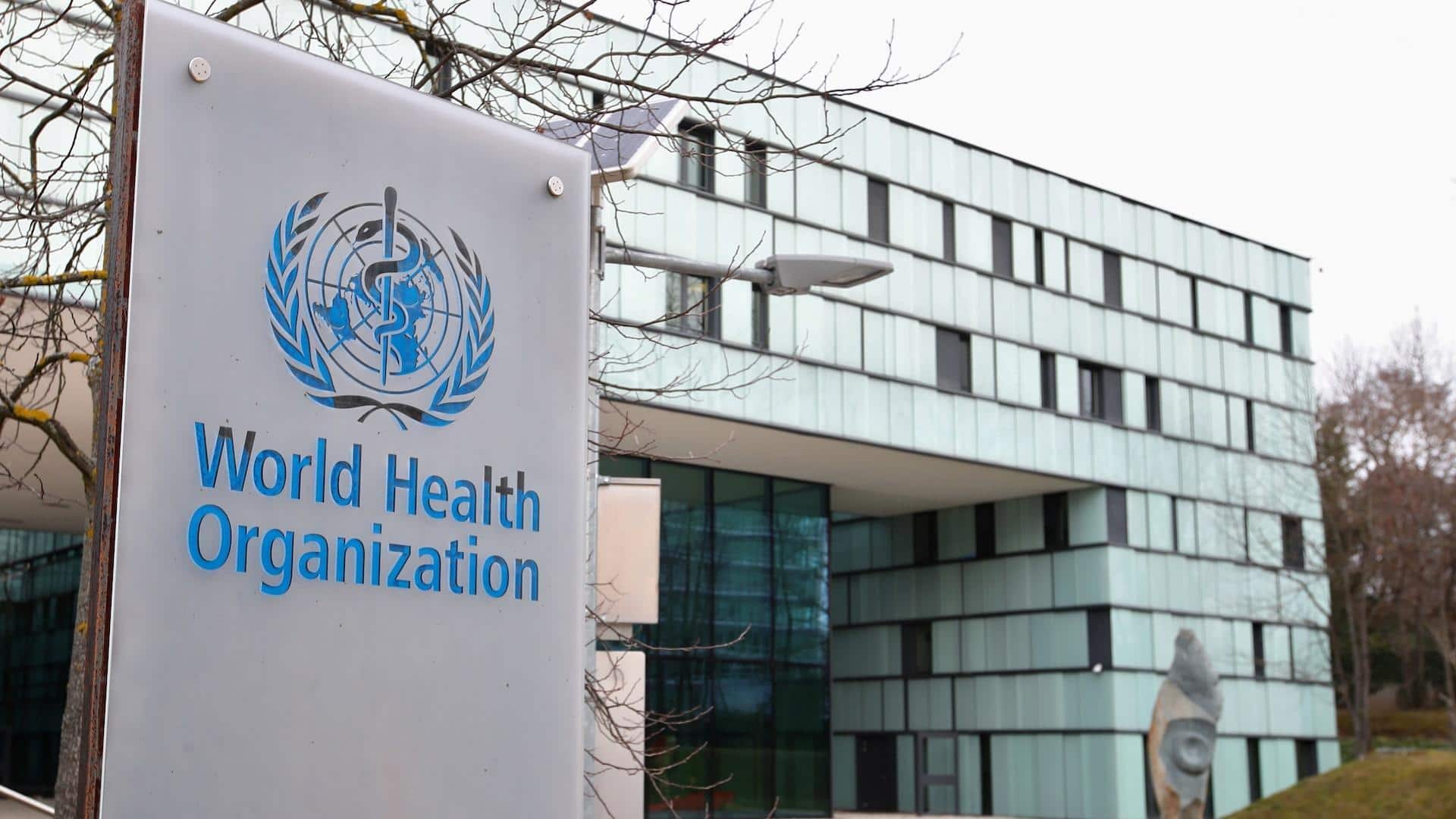
Why WHO has declared a global health emergency
What's the story
The World Health Organization (WHO) has declared a public health emergency of global concern over an Ebola outbreak in the Democratic Republic of Congo's Ituri province. The outbreak has resulted in approximately 246 suspected cases and 80 deaths. However, the WHO clarified that it doesn't meet the criteria for a pandemic emergency. The current strain is caused by the Bundibugyo virus, which lacks approved treatments or vaccines.
Outbreak expansion
Virus spreads to neighboring Uganda
The WHO has confirmed eight laboratory-confirmed cases in Ituri province's Bunia, Mongwalu and Rwampara. The virus has also spread to neighboring Uganda with two confirmed cases.
A 59-year-old man who died on Thursday tested positive for the virus in Uganda.
Due to population mobility and trade activities, countries bordering DR Congo are at a high risk of further spread.
Preventive measures
WHO recommends establishment of emergency operation centers
The WHO has recommended the establishment of emergency operation centers in DR Congo and Uganda to monitor and implement infection-prevention measures.
To prevent further spread, confirmed cases should be isolated immediately until two Bundibugyo virus-specific tests are negative at least 48 hours apart.
The health agency also urged countries bordering affected regions to enhance surveillance and health reporting systems.
Travel advisory
Border closures, travel restrictions not recommended
The WHO has advised against border closures or travel restrictions outside the affected region, calling such measures "usually implemented out of fear and have no basis in science."
Ebola was first discovered in 1976 in what is now DR Congo and is believed to have originated from bats.
The virus spreads via direct contact with bodily fluids, causing severe bleeding and organ failure.
Historical context
Ebola claimed nearly 2,300 lives in DR Congo
The average fatality rate for Ebola is around 50%, with no proven cure.
The Africa CDC has expressed concern over the potential spread of the virus due to urban settings and mining activities in affected areas.
The deadliest outbreak in DR Congo was between 2018 and 2020, claiming nearly 2,300 lives.
Last year, an outbreak in a remote region resulted in 45 deaths.